
Evening viewers sitting in different places
You watch dark episodes together and want the picture to look convincing from the side, too. The Consumentenbond highlights black levels and viewing angle as features worth considering.


For detective series in a shared living room, OLED is a good choice if you often watch in the evening and people sit at an angle to the screen. In a room with lots of daylight, a mini-LED LCD TV may be more practical. The Consumentenbond generally describes OLED as offering deeper blacks and a wider viewing angle, while some LCD TVs are brighter; RTINGS discusses mini-LED as a possible choice for bright rooms. Check how light subtitles, reflections and viewing angles look on each model, and assess screen size, dialogue and energy use separately.
You watch dark episodes together and want the picture to look convincing from the side, too. The Consumentenbond highlights black levels and viewing angle as features worth considering.
You also watch during the day, so you need to weigh brightness and reflections against the picture from the seats at the sides. The Consumentenbond highlights visibility in daylight and screen reflections as points to consider.
You want to follow voices and subtitles easily, without treating picture quality, sound and ease of use as a single feature. The Consumentenbond assesses sound quality and speech clarity separately from picture quality.
Best suited if: you mostly watch in the evening and several viewers sit at an angle to the screen.
Bear in mind: some LCD TVs may be brighter in a very well-lit room, so check the performance of the specific model. The Consumentenbond and RTINGS describe general differences, not a guarantee for every variant.
Best suited if: your shared living room is often bright and daytime visibility is a priority.
Bear in mind: viewing angle and local dimming vary by model. RTINGS describes local dimming as independently controlled zones of the backlight; the name of a technology alone won't tell you how subtitles look against a dark scene.
Best suited if: you mostly watch from directly in front of the screen and want to choose a size that suits your room.
Bear in mind: QLED is a type of LCD, not a self-emissive panel technology. Check black levels, reflections and the picture from the seats at the sides on the exact model.
When choosing a TV for this shared viewing space, priorities can vary. Use these checks to weigh up panel technology against incoming light, seating, screen size and running costs.
| What to consider | What should you check? | Who should consider this? |
|---|---|---|
| Dark scenes and viewing angle | Watch the same dark scene from the middle and side seats; compare black levels and visible detail. | If I'm sitting apart from others, I want dark details to remain visible from the side, too. Around 29% of consumers put dark scenes and viewing angle first. |
| Visibility in daylight | Assess the screen in your usual daylight conditions and look out for reflections and dark scenes. | I often watch in daylight and don't want reflections to dominate a scene. Around 23% of consumers prioritise daytime visibility. |
| Dialogue and subtitles | Listen to spoken dialogue at a normal volume and view light subtitles against a dark background. | I want to follow the dialogue and read subtitles without assuming that good picture quality means good sound, too. Around 18% of consumers put speech clarity and subtitles first. |
| Size and placement | Measure the viewing distance and check the TV's external dimensions and the position of its feet or mount. The Consumentenbond suggests around 2.4 times the screen diagonal as a starting point for viewing distance. | I want to watch comfortably from the furthest seat while making sure the TV will physically fit. Around 18% of consumers prioritise size and placement. |
| Purchase and running costs | Compare the energy label for the exact model variant; the European Commission uses a scale from A to G for electronic displays. Consider energy use separately from the purchase price. | I want to factor in both the purchase price and electricity use, rather than infer them from picture technology alone. Around 12% of consumers put total costs first. |
These are different types of LCD TV; backlighting, viewing angle and local dimming precision vary by model.
Watch a dark scene with light subtitles from the side seats instead of relying on the technology name alone.
The Consumentenbond notes that shop settings are often brighter than necessary at home.
Compare the picture under your usual lighting and adjust the TV's settings again at home.
The Consumentenbond assesses speech clarity separately from picture quality.
Listen to spoken dialogue at a normal volume before deciding whether you need additional audio equipment.
The C5 OLED range is represented here by the 65-inch OLED65C54LA.
The 65C7K is a QD mini-LED option to compare with OLED.
According to Philips, the 65OLED810/12 combines an OLED screen with Ambilight.
The BRAVIA 8 K-65XR80PAEP is a 65-inch OLED model with Google TV.
The 43E7Q is a more compact QLED/LCD option to consider alongside larger screens.
The Joybuy options below include OLED models for viewers weighing up dark scenes and different seating positions, plus QNED Mini LED models for those who also need to consider daylight. Choose a screen size to suit your viewing distance and available space.
 Image unavailable
OLED is worth considering for dark scenes and viewers who sit at an angle to the screen. The Consumentenbond describes these features in general terms, rather than as a model test.
65 inch, 4K, Dolby Vision and Dolby Atmos are listed in the product name.
 Image unavailable
This OLED model is worth comparing if dark scenes and viewers sitting away from the middle seat are important; check the picture quality of the exact model.
48 inch and 4K are listed in the product name.
 Image unavailable
OLED is a panel technology worth including in your comparison for dark scenes; whether it's suitable for side seating still depends on this model's performance.
55 inch and 4K are listed in the product name.
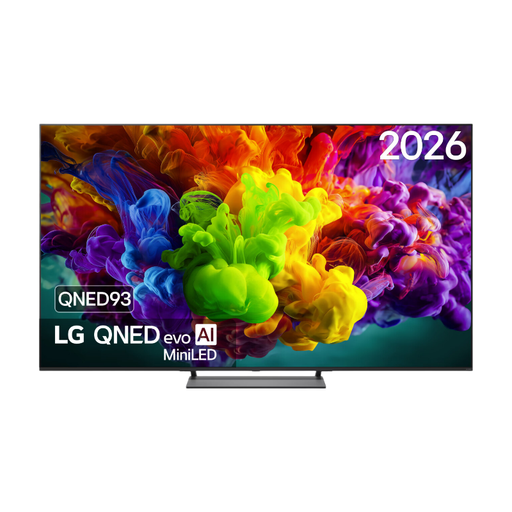 Image unavailable
This QNED Mini LED model is worth comparing if daylight is a factor in your shared living room; check the viewing angle and subtitles in dark scenes on the exact model.
65 inch, 4K, Dolby Vision and Dolby Atmos are listed in the product name.
Image unavailable
This QNED Mini LED model is worth comparing if the room is often bright; also check how dark scenes and light subtitles look from the side seat on the exact model.
55 inch, 4K, Dolby Vision, HDR10 and Dolby Atmos are listed in the product name.
Measure the distance from where you plan to put the screen. The Consumentenbond suggests around 2.4 times the screen diagonal as a starting point for viewing distance; then check that the picture is comfortable to watch from both the nearest and furthest seats.
Start with the home setting rather than the shop mode. Assess a familiar scene with both light and dark areas under your usual lighting; changing the settings can affect energy use.
The European label for electronic displays gives an efficiency class on the A–G scale and information for comparing SDR and HDR use, among other things. Check the label for the exact model variant; the class alone won't tell you what your annual bill will be.
No. A two-year manufacturer's warranty doesn't automatically end your statutory rights. According to the Dutch Government, the Netherlands has no fixed statutory warranty period: you are entitled to a product that meets what you could reasonably expect. If something goes wrong, the retailer is your first point of contact.
For a private purchase in the Netherlands, the retailer must take back a similar old appliance free of charge when you buy a comparable new one. The Dutch Government also explains what options are available if the old appliance can't be collected at the same time as delivery.