What should you look for when choosing?
First decide whether one storyteller or everyone at the table should take priority. Then consider whether you’ll be recording with a computer or want to record without one too.
Directional microphone for one storyteller
Suitable when: mainly one person is speaking and can stay close to the microphone.
Trade-off: voices beside or opposite the microphone may be less prominent; Shure describes unidirectional microphones as being most sensitive to sound from the front.
Omnidirectional microphone
Suitable when: several people around a quiet table matter roughly equally.
Trade-off: the microphone also picks up sound from other directions, and it can’t guarantee that every voice will be equally clear.
Portable recorder with built-in microphones
Suitable when: you want to record in different places or without a computer connected.
Trade-off: check the power and storage requirements, and take care with positioning; Zoom warns that reflections from a desk can reduce clarity when using the H1essential.
| What to consider |
What should you check? |
Who should pay particular attention? |
| Several voices around the table |
Check the recording pattern and seating arrangements, then listen back to a sample recording. |
If I want to hear everyone’s stories and reactions, I’ll check that the setup works around the table. Consumers with this as their main priority make up around 42% of consumers with this recording need. |
| One storyteller among desk noise |
Check the directional pattern, the side you speak into, and whether the recording device accepts USB or XLR. |
If one voice needs to stand out while there’s noise from other workspaces, I’ll want to know whether the microphone can be positioned directionally. Consumers who consider this most important make up around 33% of consumers with this recording need. |
| Recording without a fixed computer |
If you’re using a recorder, check the recording setup and positioning, and make a sample recording. |
If I want to record in different places without a fixed computer, the recorder also needs to suit my setup. Consumers who prioritise standalone recording make up around 25% of consumers with this recording need. |
Joybuy products for voice recording
These product options suit portable recording and setups that focus mainly on one storyteller.
 No image available
Digital Voice Recorder 64 GB with transcription function
An option for recording spoken sessions if you’re also looking for a transcription function.
The product title lists 64 GB and a transcription function.
View at Joybuy
 No image available
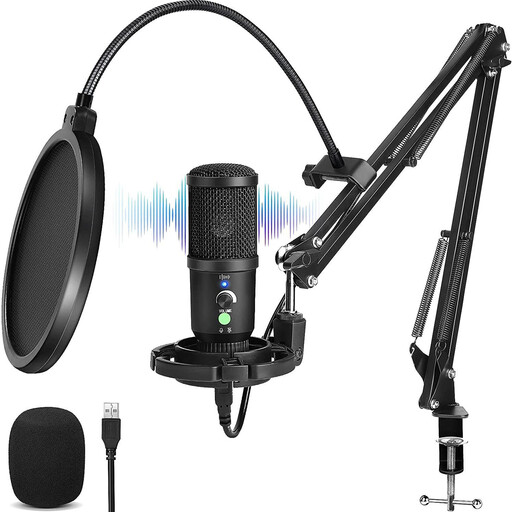
USB condenser microphone with cardioid recording pattern
A possible choice if you want to focus mainly on one speaker in front of the microphone. A cardioid pattern is directional, picking up sound from the front, so also check where others around the table will be sitting.
The product title lists USB, a cardioid pattern and monitoring through a headphone output.
View at Joybuy
 No image available
Rexsun portable digital voice recorder, 128GB, grey, L357
A portable recorder to consider if you want to make voice recordings in different places. Before the session, check that the recording settings suit how you plan to use it.
The product title lists 128GB, an LCD screen, a grey finish and L357.
View at Joybuy
Frequently asked questions
Is an omnidirectional microphone always better for a shared desk?
No. An omnidirectional microphone suits voices coming from several directions, but it also picks up sounds from elsewhere in the room. If one storyteller takes priority and the desk is noisy, compare it with a directional setup and test it with the actual seating arrangements.
Can I plug in a USB microphone and record straight away without a computer?
A USB output doesn’t automatically mean the microphone itself saves files. Check which device will store the recording; the H1essential, for example, is a standalone recorder. Test the power, storage and positioning beforehand too.
What should I check when positioning the microphone and saving the recording?
Before the storytelling session, make a short test recording from the intended speaking positions and listen back to it. For the H1essential, Zoom suggests considering a tripod if reflections from the tabletop affect clarity. Save and check the recording files afterwards.
What are my rights if a microphone bought online is disappointing or faulty?
According to ACM ConsuWijzer, online consumer purchases generally come with a cooling-off period of up to 14 days after delivery, subject to legal exceptions. Your statutory guarantee is separate from any voluntary manufacturer’s warranty. If a product is faulty, the assessment depends on what you could reasonably expect from it under normal use.
Can I record a storytelling session in the Netherlands and publish it online?
That depends on the purpose, the people involved and how the recording will be used. The Dutch Data Protection Authority states that publishing personal data online generally requires consent in most cases. Under the GDPR, processing personal data requires a valid legal basis, and consent is one option. Discuss the recording and how you plan to use it with the participants beforehand.


