
Families sharing their breakfast supplies
If several people in your household regularly eat the same cereal on weekdays, it helps to compare the contents of a box with how much you actually get through and the storage space you have available.


Choose a pack that suits the number of people eating and how often they have the same cereal. A larger box is little use if it takes a long time to finish. The Dutch supermarket ranges mentioned here include 500 g boxes of cornflakes, as well as a 375 g branded pack. Compare the nutritional information per 100 g too, and check the ingredients and allergens. If you prefer a soft cereal breakfast, choose a different type of product from crunchy cornflakes.
If several people in your household regularly eat the same cereal on weekdays, it helps to compare the contents of a box with how much you actually get through and the storage space you have available.
If you keep an eye on sugar, fibre or salt, the clearest way to compare similar breakfast cereals is by their nutritional information per 100 g. The Netherlands Nutrition Centre recommends this basis for comparison because serving sizes can differ.
If someone in your household needs to avoid a particular allergen, the ingredients and allergen information on the current pack should guide your choice, not the box size.
First decide what kind of breakfast everyone wants and how much you usually get through. Then compare the pack sizes and labels of products that suit those preferences.
| What to consider | What to check when buying | Who is this most important for? |
|---|---|---|
| Pack size and how quickly you use it | Compare the net weight with the number of people eating and how often they have this cereal. | When we share a box for breakfast on weekdays, I want to have enough in the cupboard without the cereal sitting around for too long. An estimated 40% of consumers put having enough in stock first. |
| Nutritional information | For similar breakfast cereals, compare sugar, fibre and salt per 100 g. | When choosing between familiar breakfast cereals, I want to see how their nutritional values differ, even if the stated serving sizes are not the same. An estimated 30% of consumers prioritise comparing labels. |
| Taste and product type | Check whether it is cornflakes, another type of flakes or a cereal breakfast that is prepared differently. | A large box only gets finished in our house if everyone likes that type of cereal. Crunchy cornflakes are not the same as a soft cereal breakfast. This preference comes first for around 20% of consumers. |
| Allergens | Read the current ingredients and allergen information, including any warnings about cross-contamination. | If someone at home needs to avoid a particular allergen, I check the label before looking at the pack size. An estimated 10% of consumers give this check top priority. |
A 500 g pack is not automatically right for every family. If people in your household eat the cereal less often than expected, some of it may sit in the cupboard for a long time.
Base your choice on how much you use at home and follow the storage instructions on the pack. A smaller box may be more practical if not everyone eats the same variety.
The stated serving size can vary: product information for AH Cornflakes lists a 40 g serving, while Kellogg's lists a 30 g serving for Corn Flakes. This means that nutritional values per serving are not an equal basis for comparison.
First compare similar breakfast cereals per 100 g, then use the serving size to estimate how much you will use at home.
Ingredients and potential allergens vary by product. For example, product information for AH Cornflakes lists barley, while Brinta Volkoren graanontbijt lists wheat and cereals containing gluten.
Check the current pack every time you buy, including any warning about cross-contamination.
Brinta Volkoren graanontbijt, made with wheat, is a different kind of breakfast from crunchy cornflakes. The same pack weight does not make these products interchangeable.
First decide which texture and preparation your household prefers, then compare products within the type you have chosen.
Kellogg's Corn Flakes is a branded variety of cornflakes. The Jumbo category mentioned here lists a 375 g pack.
AH Cornflakes is a supermarket own-brand product, listed by Albert Heijn in a 500 g pack.
Jumbo lists its own-brand cornflakes in a 500 g pack.
ALDI Netherlands lists Golden Bridge Cornflakes in a 500 g pack.
Brinta Volkoren graanontbijt in a 500 g pack is an alternative if you are looking for a different kind of breakfast from crunchy cornflakes.
These products include two smaller packs of cornflakes and a 500 g pack of wholegrain cereal. First choose the product type you want, then decide whether the pack size suits how much you use on weekdays.
 No image available
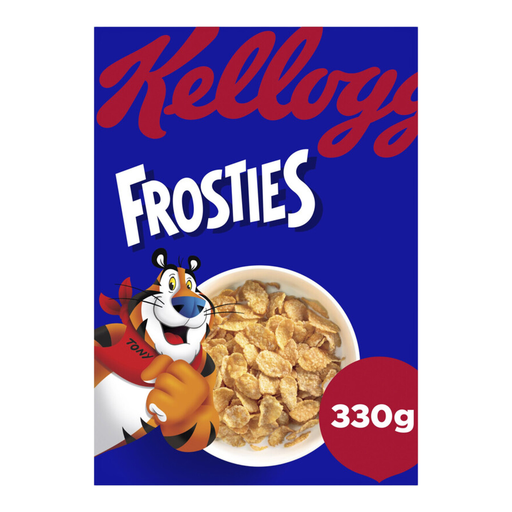
For a household that specifically wants Frosties and finds a 330 g box suits how much it uses on weekdays. Check the current pack if ingredients or allergens affect your choice.
 No image available
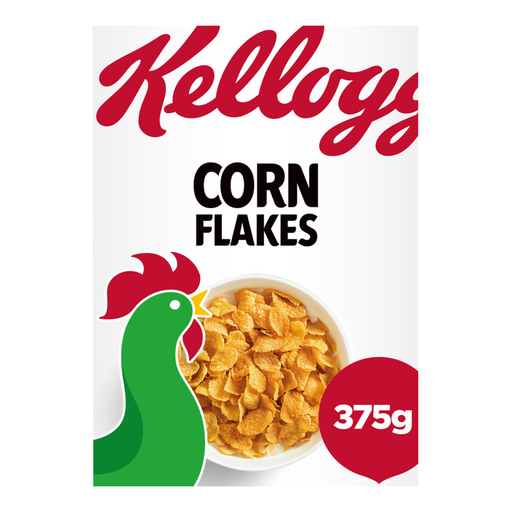
For anyone who specifically wants these cornflakes and expects 375 g to suit how much they use at home. Kellogg's Netherlands lists 8,0 g of sugar and 3,0 g of fibre per 100 g for Corn Flakes. If you have allergies, check the current pack.
 No image available
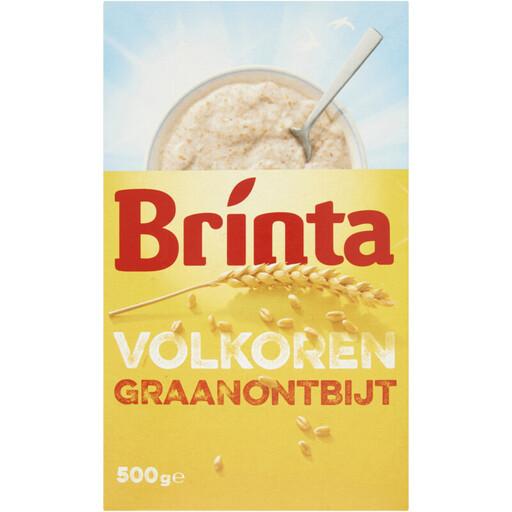
For a household that wants a wholegrain cereal breakfast instead of crunchy cornflakes. The product information lists 10,0 g of fibre per 100 g, with wheat and cereals containing gluten as allergens.
A 500 g box may be suitable if several people in your household eat it regularly and you finish the pack in good time. Use how much you actually get through at home as your guide: Albert Heijn lists 40 g servings for AH Cornflakes, while Kellogg's lists a 30 g serving for Corn Flakes.
First compare similar breakfast cereals per 100 g. The Netherlands Nutrition Centre recommends this because manufacturers may use different serving sizes. Then check the stated serving size to estimate how much you will use for breakfast at home.
Follow the storage instructions on the pack and close the box securely after use. Albert Heijn recommends storing AH Cornflakes in a cool, dark, dry place. For another product, check the instructions on its own pack.