
当日/次日达

品质保障

开启新人专享福利: 全场免邮 | 低至 2 折 | 免费试用 30 天 JoyPlus 会员
下载 Joybuy
Shanxi knife-cut noodles are dried Chinese noodles with a firm bite and a broad, irregular shape. In Chinese, they are often known as dao xiao mian. They work well in noodle soups, stir-fries, hotpot and dishes with a rich, flavourful sauce.
However, not all packs are the same. If you focus only on words such as “traditional”, “chewy” or “authentic”, you may choose a size that does not suit the recipe or your household. Use the points below to compare Chinese knife-cut noodles based on verifiable product information.
The thickness and width of the noodles partly determine how long they need to cook. A product that is ready in just a few minutes may be more convenient for a quick lunch, while thicker cut noodles take longer to soften.
Pay attention to the stated cooking time, but also check the texture while cooking. Cooking times in product descriptions are guidelines; your preferred bite and the final preparation also make a difference.
A 1,8 or 2 kilogram pack can offer good value for a family, a high-volume user or someone who regularly cooks Asian dishes. For a household that only eats noodles occasionally, 240 or 400 gram packs are easier to manage.
Dried noodles keep well when stored in a cool, dry place away from direct sunlight. After opening, it is sensible to seal the pack securely and follow the instructions on the label.
Most of the Shanxi-style noodles in this selection are made with wheat flour, water and salt. Some varieties also contain ingredients such as konjac flour, starch or spinach powder. All the wheat products listed contain gluten.
Always check the current packaging for ingredients, allergens, nutritional values and the best-before date. A brand’s claims about flavour, texture or production methods are not a guarantee for every user. The information below is based on the product specifications provided.
Broad Chinese noodles absorb more sauce and stock than thin noodles. According to the product description, the Bai Xiang variety has an 8 mm width, with a thicker centre than the edges. This can create variation in bite within a single portion.
The Kuai Lai Kuai Wang noodles are listed as approximately 20 cm long, 0,5 cm wide and 0,9 cm thick. Details like these are useful when you are specifically looking for firm noodles for soup or hotpot.
The instructions vary by product:
Use plenty of boiling water and stir gently at the beginning to help prevent the noodles from sticking together. For stir-fries, you can drain the noodles and briefly rinse them if desired. For soup, you can finish cooking them directly in the stock, provided you allow for the extra starch in the pan.
Choose 240–400 grams if you want to try a variety first. A pack of 800 grams, 1 kilogram, 1,816 kilograms or 2 kilograms is better suited to families, meal prep or regular use.
The ingredients list also highlights differences between products. JinShaHe lists wheat flour, water and salt. Bai Xiang lists wheat flour, wheat gluten, starch, salt and konjac flour, among other ingredients. According to the product information, Youniyimian contains 0,4% spinach powder. This gives it a different colour and composition, but in itself says nothing about any health benefit.
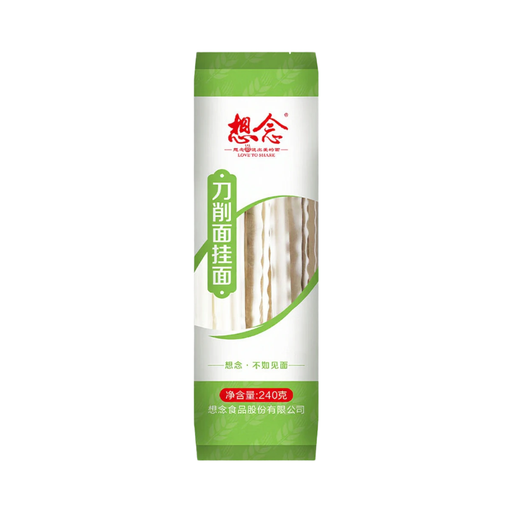
Why it suits this profile: The 240 gram pack is practical for trying a variety without immediately buying a large bulk pack.
The smaller size helps reduce waste when you are not yet sure how much of the noodles you will use.
According to the product information, suitable for soup, mixed noodles and fried noodles; cooking time approximately 3–5 minutes.
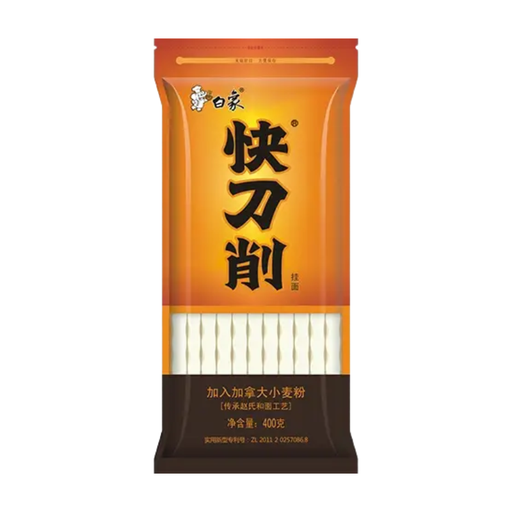
Why it suits this profile: If shape and texture matter to you, this product offers a clearly specified 8 mm-wide noodle with a thicker centre and thinner edges.
The product information gives more than just a marketing name: it also states a specific width and a cooking time of 5–7 minutes.
According to the label, contains wheat flour, wheat gluten, starch, salt and konjac flour; suitable for sauces or soup.
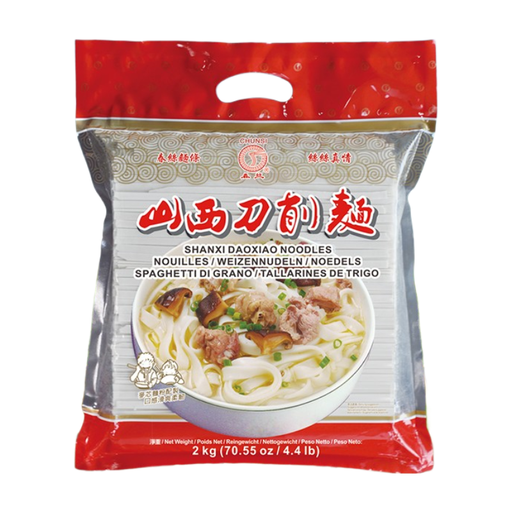
Why it suits this profile: The 2 kilogram size is aimed at families, festive meals, hotpot and regular preparation of Chinese noodle dishes.
The generous supply suits frequent use, meaning you are less likely to need to buy several smaller packs.
According to the product information, suitable for soup, stir-fries and saucy dishes; stated cooking time is 8–12 minutes.
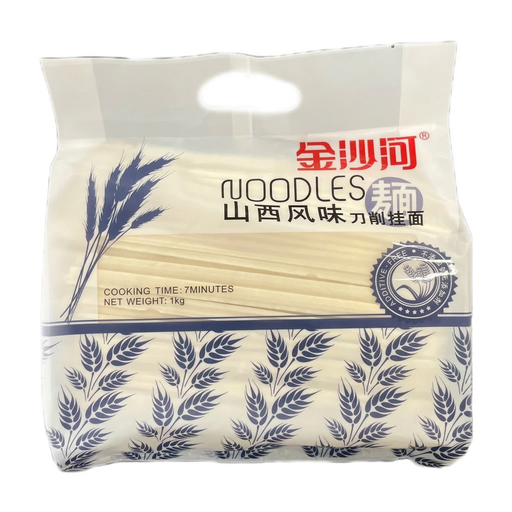
Why it suits this profile: A 1 kilogram pack offers a middle ground between a trial pack and a 2 kilogram bulk pack.
The clearly stated net weight makes it easier to match the quantity to several diners or repeated use.
According to the product details, contains wheat flour, water and salt; suitable for a range of Chinese noodle dishes.
We have put together a complete, up-to-date list of products that fully meet these strict selection criteria and the applicable European safety regulations.
When making Chinese noodles for soup, it is best not to leave the noodles in the stock for too long. Otherwise, they may continue cooking. For Chinese noodles intended for stir-fries, you can cook them for slightly less time, drain them and then finish cooking them in the wok.
The terms are often used for the same type of noodles. Dao xiao mian refers to the Shanxi style, in which dough is traditionally cut into strips with a knife. Dried varieties are machine-produced, but according to the product descriptions they have a broad shape and firm texture.
Check the best-before date on the packaging. Store the noodles in a cool, dry place away from direct sunlight. Seal an opened pack securely and check before use that the noodles are dry and undamaged.
For regular use, 1 kilogram, 1,816 kilograms or 2 kilograms are practical options. If you only eat noodles occasionally, choose a 240 or 400 gram pack. When comparing, look at more than just the price: also consider the net weight, ingredients and cooking time.
