
Vandaag of morgen in huis

Kwaliteit gegarandeerd

Welkomstaanbiedingen ontgrendelen: GRATIS bezorging | Tot 80% korting | Gratis 30 dagen JoyPlus-proefperiode
Download de app
Buying shampoo seems simple, until you have to choose between moisturising shampoo, repairing shampoo, anti-dandruff shampoo, shampoo for oily hair and formulas for colour-treated hair. Marketing claims do not always make the choice any clearer. A formula with natural ingredients, for example, is not automatically suitable for every hair type, and a large bottle is not necessarily better value.
Use this practical guide to compare shampoo by hair needs, ingredients, volume and use. That way, you can avoid a disappointing purchase and choose more confidently from popular brands and formulas.
Words such as “repair”, “stronger hair” and “100%” often appear on packaging. Hair is made of keratin, and damaged hair fibres cannot literally be returned to their original state. Instead, focus on the purpose of the formula: cleansing, conditioning, leaving hair feeling smoother or making it suitable for a particular scalp.
A brand’s claims are not a universal guarantee. According to Pantene’s own research, for example, certain Pro-V formulas may promise hair that is up to 100% stronger. This is a brand claim based on its own testing conditions, not a guaranteed result for every user.
A sulphate-free shampoo or silicone-free shampoo may sound appealing, but “free from” does not, by itself, tell you whether a product is suitable for your hair. Sulphates affect factors such as lather and cleansing. Silicones can leave hair feeling smooth, but some consumers avoid them as part of their personal haircare routine.
So always check the full ingredients list. A product may be sulphate-free, for example, but still contain perfume or other ingredients to which you are sensitive.
Shampoo is available in 250 ml, 300 ml and 400 ml sizes, as well as larger salon-sized bottles. A large bottle may reduce the price per millilitre, but it is less practical if you like to switch between formulas or if the product does not suit your hair. Also consider the packaging: a pump can be convenient in the bathroom, while a tube is easier to take with you.
Start by choosing based on your main need:
The ingredients list, also known as the INCI list, is shown in descending order by quantity. Look at the combination of cleansing agents and conditioning ingredients. Shea butter, coconut oil, argan oil, avocado oil and glycerine are often used in nourishing or moisturising shampoo.
Perfume is also listed on the label. If you react quickly to fragrances, it is best to check the ingredients list beforehand. Andrélon Pro Nature Shea, for example, lists coumarin; this is important to consider if you want to avoid certain fragrance ingredients.
Check the volume in relation to the price. A 400 ml bottle is not automatically better value than a 300 ml shampoo. Divide the price by the number of millilitres to make a fair comparison.
After opening, you will often see a symbol such as 12M. This refers to the recommended period after opening. You can find the exact shelf-life and safety information on the packaging. Avoid contact with the eyes and stop using the product if irritation occurs. Shampoo is intended for external use only.
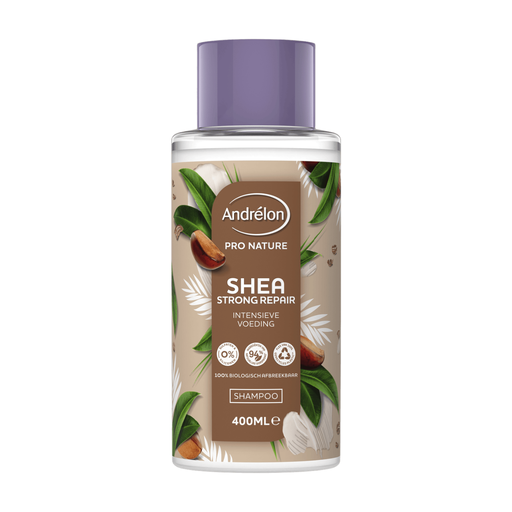
Why it suits this profile: The 400 ml bottle is practical for regular use. According to the product information, the formula is designed to nourish and care for the hair.
The product description states that it contains 0% sulphates and silicones and 94% ingredients of natural origin. Check the current packaging for the latest information.
Shea butter and coconut oil appear in the ingredients list; according to the product specifications, the formula is vegan and paraben-free.
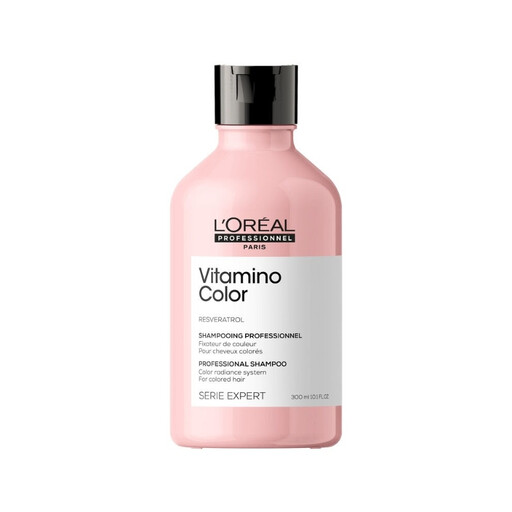
Why it suits this profile: This professional shampoo is designed for colour-treated hair and is ideal for users who value colour care and pump packaging.
The product information states that colour protection is one of its purposes and explicitly confirms that the formula is not sulphate-free, silicone-free or paraben-free. This means you know exactly what you are buying in advance.
300 ml volume, pH-neutral according to the product specifications and suitable for all hair colours.
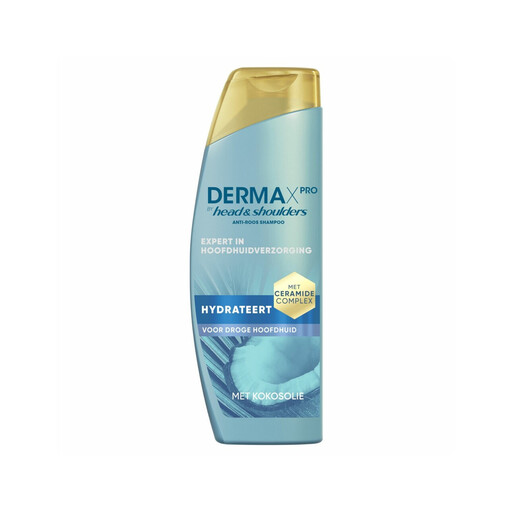
Why it suits this profile: According to the product information, this anti-dandruff shampoo has been developed for a dry scalp. The 250 ml size is suitable if you want to try it for a specific purpose.
The product page lists piroctone olamine and states that the formula is not sulphate-free or silicone-free. This makes it possible to check the ingredients in advance.
Coconut oil, glycerine and piroctone olamine appear in the ingredients list; according to the product specifications, the bottle has been dermatologically tested.
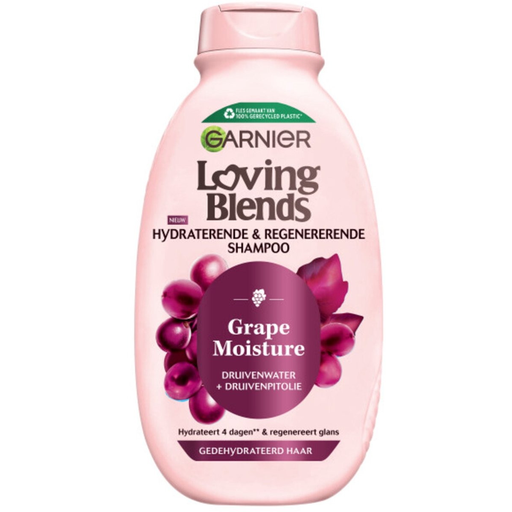
Why it suits this profile: An accessible moisturising shampoo for everyday use, without having to buy a large bottle straight away.
The product description clearly states its purpose: hydration, nourishment and everyday use. The 300 ml size reduces the risk of being left with a large, unused bottle.
Grape extract is central to the product description; the shampoo is designed to leave hair feeling soft and supple.
We have put together a complete, up-to-date list of products that fully meet these strict selection criteria and the applicable European safety regulations.
Look for a nourishing shampoo containing ingredients such as glycerine, shea butter, coconut oil, argan oil or avocado oil. Wash with lukewarm water and apply conditioner to the lengths after washing. Shampoo for oily hair is generally less suitable when dryness and frizz are your main concerns.
That depends on your scalp, how often you exercise, the styling products you use and your personal preference. An oily scalp may need washing more often than dry hair. Use a small amount, massage mainly into the scalp and rinse thoroughly. With anti-dandruff shampoo, always follow the instructions on the packaging.
Check the open-jar symbol on the packaging, often marked 12M. This generally means that the product should be used within twelve months of opening. Keep shampoo closed, do not allow water to run into the bottle and, if in doubt, check the manufacturer’s shelf-life information.
