
Workshop host with one pan per station
You want each group to make shakshuka in one pan and need a portable hob with a size and controls suited to the station.


For one pan at each workshop station, a portable induction hob is a practical choice if the pan has a suitable, flat, magnetic base. If your existing pan is not induction-compatible, compare it with a traditional electric hotplate. For several pans at once, a multi-zone hob could be suitable, provided there is enough worktop space and an appropriate power supply. Before use, check the pan size and follow the placement and safety instructions for the exact model.
You want each group to make shakshuka in one pan and need a portable hob with a size and controls suited to the station.
You want to keep using the pans you already have, so you check their base and size before choosing induction.
You want to heat more than one pan at a time and are weighing up the number of zones against the available worktop space and shared power output.
Suitable if: you use one pan at each station, with a flat, magnetic base that falls within the hob’s size range.
Bear in mind: you cannot heat a second pan at the same time on a single zone.
Suitable if: your existing pan is not induction-compatible and one pan per station is enough.
Bear in mind: the heating zone may still be hot after you switch it off. Let the hob cool before cleaning or storing it.
Suitable if: more than one pan genuinely needs heating at a time and your setup has enough space.
Bear in mind: for the four-zone Inventum hob reviewed, the manufacturer says the power is shared between active zones.
| What to consider | What should you check? | Who is this important for? |
|---|---|---|
| Pan compatibility and size | Check that the base is flat and magnetic, and measure its actual diameter. Compare it with the specification for the exact model. | I want to use my existing shakshuka pan rather than rely on the diameter of its top rim. Around 29% of consumers in this workshop context put pan compatibility first. |
| Heat control | Check the controls on the exact model and make sure the settings suit the different stages of cooking. | I want to adjust the heat while frying and gently simmering, so easy-to-understand controls matter to me. For around 29% of consumers, adjustable heat is their main buying concern. |
| Number of cooking zones | Count how many pans need heating at the same time and check how the model shares its power between the zones. | When several groups are cooking at once, I want enough places for pans without assuming that every zone has unlimited power. Around 21% of consumers prioritise having multiple cooking zones available at the same time. |
| Positioning and power supply | Measure the available space, including the ventilation clearance specified in the manual, and check the power supply at the venue. | I need to position the hobs safely at the workshop stations and want to know whether the available power supply is suitable. For around 21% of consumers, positioning and available power are their main concerns. |
For induction, you need a flat, magnetic base of a suitable size. The Dutch Consumers’ Association (Consumentenbond) describes these as essential features of suitable induction pans. According to Inventum, the KI120T is designed for pans with a diameter of 15–20 cm. This size applies to that model only.
For induction, the base and its size matter. Inventum specifies a pan size of 15–20 cm for the KI120T; do not assume a pan outside this range will be suitable.
Measure the base of the pan you plan to use at the workshop and compare it with the instructions for your chosen model.
For the four-zone VKI6010ZIL reviewed, Inventum says the power is shared between active zones.
Work out how many pans need heating at the same time, then check the power output and connection requirements for the exact model.
Worth comparing if you are looking for a single-zone induction hob with a specified pan size, or are considering a multi-zone model.
The portable TILLREDA is a useful reference for a workshop station with one suitable pan and limited storage space.
The KP 1091 is a traditional single electric hotplate to compare with induction models.
The IK-6178 is a single-zone induction hob worth comparing if you want adjustable controls and a timer.
This selection includes portable induction hobs for one pan, multi-zone models and a traditional single electric hotplate.
 No image available
The two zones suit a station where more than one pan needs heating at the same time.
The product name specifies two cooking zones and five temperature settings. Use suitable induction pans and supervise the hob while cooking.
 No image available
A single-zone hob to consider if you use one pan at each workshop station and want to adjust the heat independently.
The product name specifies 2000 W, a Ø 26 cm cooking zone, ten power levels, touchscreen controls and a timer. The product information gives a pan size range of 12–26 cm; check that your pan’s base falls within it.
 No image available
A single-zone induction hob to compare if one suitable pan per station is enough.
The product information gives a pan size range of 12–23 cm. Check that the pan you want to use has a flat, ferromagnetic base and measure its diameter.
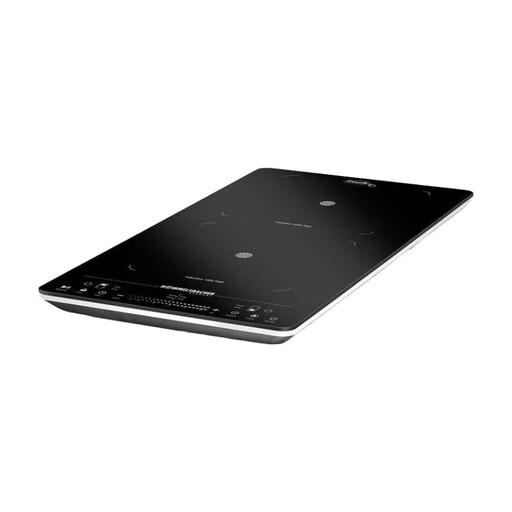 No image available
The double version suits a station where two pans need heating at the same time.
The product information specifies a pan size range of 120–260 mm. Compare this with the base of both pans and check the placement and connection instructions.
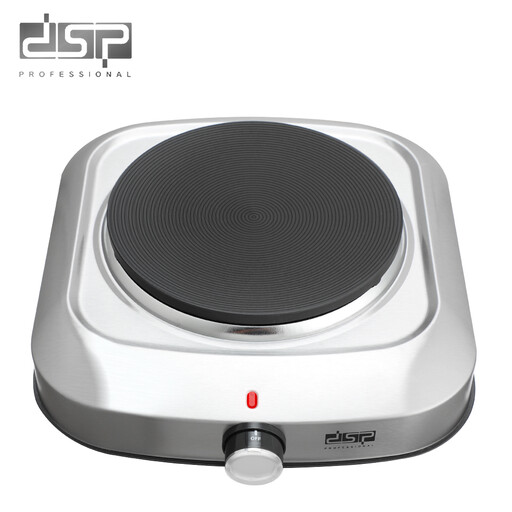 No image available
A traditional electric hotplate to compare if your pan is not induction-compatible and one pan per station is enough.
The product name specifies 1500 W and an adjustable temperature dial. According to the product information, a slight odour or smoke may occur the first time you use it; if so, run the hotplate for 3–5 minutes in a well-ventilated room.
Check that the base is flat and magnetic, then compare its size with the hob’s specifications. Inventum gives a pan size range of 15–20 cm for the KI120T; this does not automatically apply to other models.
Follow the placement instructions for the exact model. For the KI120T, Inventum specifies a flat, heat-resistant surface and at least 10 cm of clearance at the sides and rear. Do not assume this clearance applies to other hobs.
Do not assume this is safe without checking. The Dutch fire service (Brandweer Nederland) recommends plugging high-power appliances directly into a socket where possible, and fully unwinding any cable reel in use. Also check the hobs’ power requirements and the venue’s power supply.
No. CE marking is not an independent test result. Electrical equipment covered by EU low-voltage rules, including equipment for 220–240 V AC, must carry the marking. According to the European Commission, the manufacturer uses it to declare that the relevant requirements have been met. This does not in itself mean that a specific item on sale has been independently tested.
First, let the exact model cool down as instructed in its manual. For the TILLREDA reviewed, IKEA recommends removing food residue with a damp cloth and mild detergent, then drying the surface. Do not use abrasive or sharp objects.