
Pattern sharer
You take patterns between studio computers and want to check first that the connection and file format work at every workstation you need to use.


Choose based on the computers you want to open your patterns on, how often you move them and whether you also need to keep an archive. A USB stick may suit occasional transfers, an external SSD regular trips between locations, and a portable HDD a large archive. Always check the connections and formatting. None of these storage devices automatically replaces a separate backup or clear access arrangements.
You take patterns between studio computers and want to check first that the connection and file format work at every workstation you need to use.
You regularly move files and are looking for portable storage that works with the connections on the computers you use.
You store lots of patterns and want to keep your working archive, access management and separate backup clearly distinct.
Suitable if: you mainly carry individual pattern files between computers with a compatible USB port.
Bear in mind: check the storage space, connection and any security features you need. The USB standard alone does not tell you how quickly files will copy in your set-up.
Suitable if: you regularly move files between workstations and want compact, portable storage.
Bear in mind: stated maximum speeds are not guaranteed on every computer. Check the ports, cables and capacity.
Suitable if: you mainly need space for a larger pattern archive and won’t move the drive very often.
Bear in mind: formatting can vary between computers. An archive on a single drive is not a separate backup.
| What to consider | What should you check? | Who is this important for? |
|---|---|---|
| Connection and formatting | Make a note of the USB port and operating system at each workstation. Check that the drive and file format can be read from and written to on every computer you need to use. | I want to open patterns on every studio computer I need, not just the one I connect the drive to; around 33% of consumers put compatibility first. |
| Access to files | Decide whether the drive contains personal data or confidential designs, who needs access and how the studio will manage that access. | If files are stored on a shared or portable drive, I want to know in advance who can open them; around 25% of consumers make secure access their top priority. |
| Regular file transfers | Check the connections available at your workstations, and don’t assume stated product speeds are guaranteed in your set-up. | I move patterns often and want a portable solution that works with my workstations; around 25% of consumers prioritise frequent transfers. |
| Archive space and backup | Work out the size of your archive and how much it is likely to grow. Agree where the working copy will be kept and where a separate, up-to-date copy will be stored. | For a growing collection, I want enough archive space as well as a recoverable copy; around 17% of consumers prioritise archive storage. |
A plug that fits does not guarantee that the computer can read and write the files. Both the connection and the formatting need to work with the studio computers.
Make a note of the port and operating system at each workstation, and check the supplied cables and file format before you choose.
An incompatible connection or format may mean extra steps or the need for a different storage device.
Files on a single portable drive do not automatically count as a separate backup. If the drive is lost or damaged, you could lose your only copy. VeiligInternetten recommends keeping a recent backup.
Decide where the working copy will be kept and maintain a separate, up-to-date copy as well.
A separate backup needs its own storage or management.
Being able to access a file does not tell you whether you have permission to share the pattern. The Dutch Government distinguishes between a copy for personal use and distributing protected work.
Check the pattern’s terms and, if in doubt, ask the rights holder for permission before sharing copies with others.
The product ranges reviewed include portable XS1000 SSDs and DataTraveler Exodia USB sticks.
The Portable SSD T7 reviewed is an SSD option for files you move between workstations.
The Canvio Basics reviewed is a portable HDD range for storing a larger archive.
The 2 TB WD Elements Portable reviewed is a portable HDD option for archive storage.
These Joybuy products include portable SSDs and HDDs for transferring or storing pattern files.
 No image available
A portable SSD option for taking pattern files between workstations.
Storage capacity: 1 TB.
 No image available
A portable HDD option for anyone who wants to take pattern files with them or store them.
Storage capacity: 2 TB. Colour: red.
 No image available
A portable HDD option for a pattern archive that needs more storage space.
Storage capacity: 4 TB. Connection: USB Type-A / Micro-USB B.
According to the product description, the drive is formatted for Windows and needs reformatting for macOS.
 No image available
A portable HDD option for transferring and storing pattern files.
Storage capacity: 2 TB. Connection: Micro-USB B.
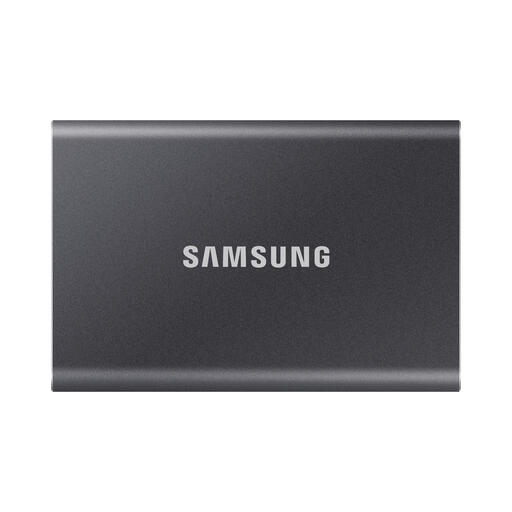 No image available
A portable SSD option for moving files between workstations.
Storage capacity: 2 TB. Connection: USB Type-C 3.2 Gen 2 (3.1 Gen 2).
That depends on the formatting and the computers you use the drive with. Apple lists ExFAT as a Windows-compatible format for volumes larger than 32 GB. Toshiba says the Canvio Basics reviewed is formatted as NTFS for Windows and needs reformatting for the macOS versions listed. Before reformatting, make a copy of any files you want to keep.
No. If the external drive contains the only copy of your patterns, you don’t have a separate backup. VeiligInternetten recommends keeping a recent backup and lists external storage or the cloud as possible places to store it.
The Dutch Data Protection Authority says organisations must protect personal data properly and tailor their measures to the situation. This does not mean every studio drive always has to be encrypted in the same way. Consider what data is on the drive, who needs access and how the studio will manage that access. Losing a USB device containing unencrypted personal data could constitute a data breach.
Don’t assume that you can share a purchased pattern with others. The Dutch Government explains that a copy for personal use is not the same as distributing or making a work publicly available. Check the terms for the specific pattern and, if necessary, ask the rights holder for permission.
The Dutch Government lists collection points for old devices and says the take-back scheme for old appliances applies to consumer devices, not businesses. Also remember to deal separately with the files on the drive before handing it in.