
Vandaag of morgen in huis

Kwaliteit gegarandeerd

Welkomstaanbiedingen ontgrendelen: GRATIS bezorging | Tot 80% korting | Gratis 30 dagen JoyPlus-proefperiode
Download de app
A set of coloured pens might seem like a straightforward purchase, but the differences between felt-tip pens, colouring pens, fineliners, brush pens and markers are significant. A broad tip is handy for colouring pages, while a 0.4 mm tip is better suited to notes or fine details. The type of ink, whether it’s washable, and the age recommendation all determine whether a set is suitable for home, school or creative projects.
Pay particular attention to three common pitfalls:
The tip determines how much control you have:
For children, also look for a pressure-resistant or spring-loaded tip. This can cope better with firm pressing than a very fine fineliner.
The ink determines the result and the suitable paper.
A product claim about, for example, colour intensity, drying time or washability should be read as information from the brand. Also check the concrete specifications rather than relying solely on promotional texts.
For children, a comfortable grip, a sturdy tip and a tidy storage box are important. Check the stated minimum age recommendation and any certifications such as CE or EN 71 when these are mentioned with the product. A certification does not replace supervision: caps and small parts can be dangerous for young children.
A triangular barrel can help hold the pen steadily. A cap ring is especially practical at home, on the go or at school, because loose caps are less likely to get lost.
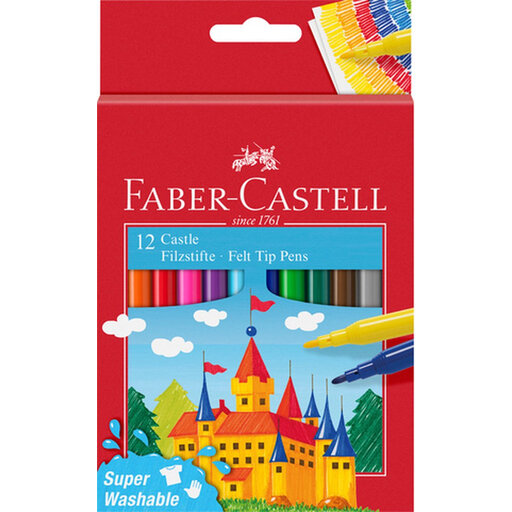
Why this fits the profile: This compact set is suitable for children from the stated minimum age of 4 years and for beginners who want to start with a limited number of basic colours.
You don’t pay for an overloaded colour selection. The product description mentions a sturdy tip, washable ink and use on paper, cardboard and wood.
12 different colours, a sturdy tip and, according to the product information, an EN 71 quality label.
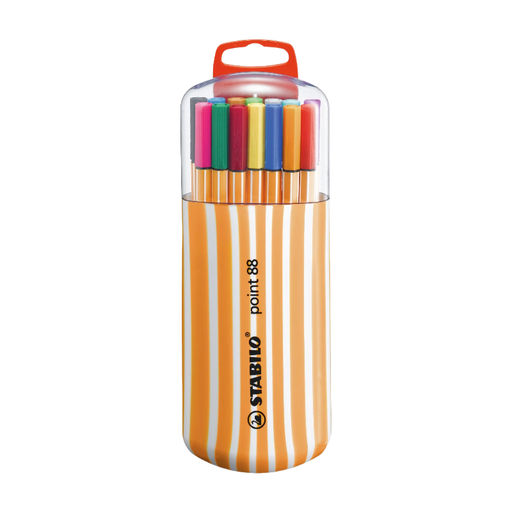
Why this fits the profile: The 0.4 mm tip is aimed at precise writing, sketching, colour-coding and hand lettering, with 20 colours in one case.
The fine tip prevents a writing or sketching pen from making unnecessarily broad lines. The water-based ink is described as odourless in the product description.
0.4 mm metal tip, 20 colours and a cap that can be placed on the back of the pen.

Why this fits the profile: This set is intended for sketching with a flexible brush tip and a separate fine tip, for example for illustrations and colour gradients.
The two tip types make the set more versatile than a marker with one fixed tip. Bear in mind that alcohol ink can bleed through thin paper.
24 colours, brush tip from 1 to 5 mm and fineliner tip of 0.6 mm; according to the product information, these are alcohol markers.
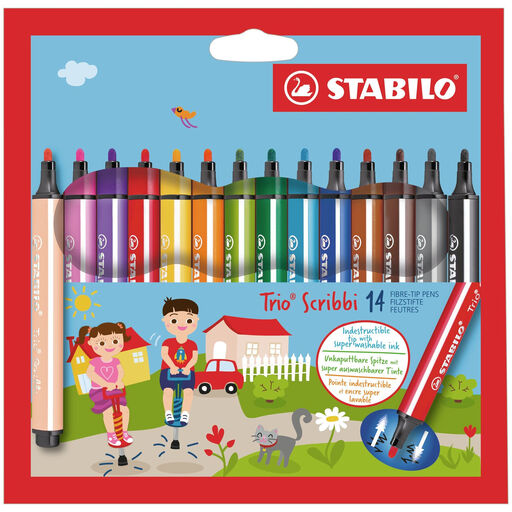
Why this fits the profile: The triangular barrel and thick spring-loaded tip are, according to the product description, aimed at young children from 3 years old.
The spring-loaded tip is designed to bounce back when pressed firmly. The triangular shape prevents rolling and offers a recognisable grip.
14 colours, writing width of 1.5 to 2 mm and, according to the product information, super-washable ink.
We have compiled a full, up-to-date list of products that fully meet these strict selection criteria and current European safety regulations.
For children, washable felt-tip pens with a sturdy or pressure-resistant tip are practical. Look at the minimum age recommendation, the shape of the barrel and the presence of CE or EN 71 information in the product details. Supervision remains necessary with young children because of caps and small parts.
A fineliner usually has a fine, fixed tip for even lines and text. A brush pen has a flexible tip that changes line width depending on pressure. Fineliners are suitable for writing and details; brush pens are better for hand lettering and expressive drawing lines.
Put the cap back on immediately and check that it closes properly. Store the set in a dry place out of direct sunlight. With a set of many colours, a case or box also helps to prevent missing caps and incorrectly stored pens.
