
Vandaag of morgen in huis

Kwaliteit gegarandeerd

Welkomstaanbiedingen ontgrendelen: GRATIS bezorging | Tot 80% korting | Gratis 30 dagen JoyPlus-proefperiode
Download de app
A set of bowls may seem like a simple purchase, until you find that the bowls are too small for soup, won’t stack or become discoloured after just a few uses. Product descriptions can also be confusing: terms such as “ceramic”, “porcelain” and “oven-safe” aren’t always explained in the same way.
So keep an eye out for these three common pitfalls:
A capacity that doesn’t suit the intended use
A 50 cl breakfast bowl is suitable for yoghurt, fruit or cereal, but less practical for a generous serving of soup or a main-course salad. For soup, ramen and pasta, a larger capacity is often more useful.
Assumptions about which appliances you can use
A bowl that’s dishwasher-safe isn’t automatically suitable for the microwave or oven. Stainless steel bowls, in particular, often can’t be used in the microwave. Check the stated uses for each product.
Not giving enough thought to storage
A beautiful bowl can take up a lot of cupboard space if it doesn’t stack. Stackable bowls or nesting mixing bowls are a practical choice for small kitchens, meal prep and when the dishwasher is full.
Ceramic bowls are suitable for everyday use and often look at home on a set table. Be sure to check the exact product details, though. Earthenware, stoneware and ceramic can differ in weight, heat resistance and how easily they break.
Porcelain bowls usually have a smooth surface and are often suitable for breakfast, soup or desserts. For example, the product description for the Secret de Gourmet Colorama Ribbed Bowl lists porcelain as the material, a capacity of 600 ml and suitability for the dishwasher, oven and microwave. Always check that this also applies to the version you’ve chosen.
Stainless steel bowls are especially practical for mixing, whisking, marinating and meal prep. They’re lightweight and less fragile than ceramic. According to the product description, PURECOOK sets are made from stainless steel that’s safe for food contact and are dishwasher-safe. However, they must not be used in the microwave.
Don’t just go by the name “soup bowl” or “pasta bowl”. Check the capacity and dimensions:
A wide, relatively shallow bowl works well for pasta and salad. A deeper bowl keeps soup and noodles together more easily. For a household with different meal times, a combination of breakfast bowls, soup bowls and pasta bowls may be more useful than a set of bowls that are all the same size.
Look for separate details about:
With ceramic and porcelain bowls, it’s best not to put a cold bowl straight into a hot oven. The product descriptions for several ramekins also warn against thermal shock. Use oven gloves when handling hot bowls, and never put metal bowls in the microwave.
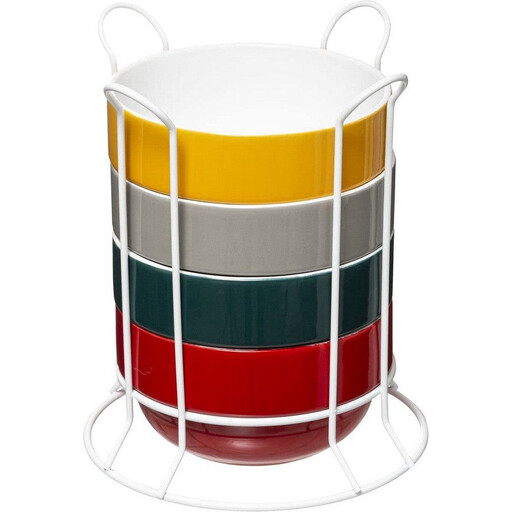
Why it suits these needs: A straightforward set of four porcelain bowls for breakfast, yoghurt, fruit or small desserts.
The 50 cl capacity is clearly stated, so you can see in advance that this set is mainly intended for smaller portions.
Four bowls; microwave-safe and dishwasher-safe according to the product description.
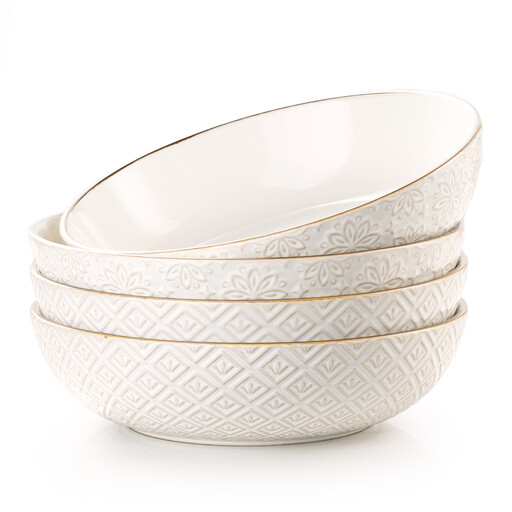
Why it suits these needs: The wide, deep shape is designed for pasta, salads, soup and larger main courses.
The dimensions and capacity are specified, and the bowls are stackable according to the product description.
Set of four; suitable for the oven, microwave and dishwasher according to the stated product specifications.
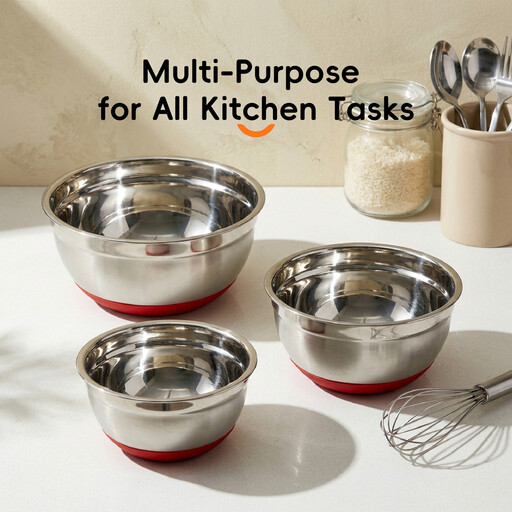
Why it suits these needs: Ideal for home bakers, cooks and anyone who meal preps and regularly mixes, whisks, marinates or prepares dough.
The three bowls nest inside one another, taking up less cupboard space. The silicone base helps stop them slipping while you mix.
Stainless steel, three sizes and dishwasher-safe according to the product description. Not suitable for the microwave.
Ramekins are also useful for small portions and baking. According to their product descriptions, the DAFUCERAMIC 8 oz and 12 oz sets come with lids and are intended for use in the oven, microwave and freezer, as well as the dishwasher. Check the temperature limit for the plastic lids, and don’t use them on a hob.
We’ve put together a complete, up-to-date list of products that meet these strict selection criteria and the applicable European safety regulations.
For two people, a set of four bowls is often a practical place to start. That way, you’ll have spares for breakfast, soup or visitors. If you cook or meal prep often, you could add a separate set of mixing bowls and a few bowls with lids.
A capacity of around 50 to 60 cl works well for soup. For pasta, ramen and large salads, bowls with a capacity of around 800 ml to 1 litre offer more room. Check the height and diameter as well as the capacity, as a wide shape can be more convenient for pasta and salad.
Not necessarily. Often, only the ceramic or porcelain bowl is oven-safe, while the plastic lid has a lower temperature limit. Always follow the product specifications, remove the lid before putting the bowl in a hot oven and avoid sudden changes in temperature.
