
Caterers preparing canapés
Thin sesame melba toast is a suitable option to consider for topped bites served on a platter. Compare its size with the toppings you plan to serve, and decide when to add them.


Choose sesame melba toast for topped bites served on a platter. If serving each guest individually matters more than the melba toast format, individually wrapped sesame crispbread is another option. Choose organic melba toast when the certification suits your purchasing aims. Whatever you choose, check the current packaging for allergen information.
Thin sesame melba toast is a suitable option to consider for topped bites served on a platter. Compare its size with the toppings you plan to serve, and decide when to add them.
When toast is served from its packaging on platters, guests need to be able to find out which allergens it contains. For each product you choose, check the current packaging for sesame, cereals containing gluten and soya, among other allergens.
If organic certification, sesame content or nutritional value matters to you, compare each option individually. The melba toasts and sesame crispbread reviewed here differ in product format, packaging and the nutritional information provided.
First decide how the toast will be topped and served. If it will be served unpackaged, make sure you have the allergen information to hand. Then compare any purchasing requirements, such as organic certification or nutritional value.
| What to consider | What to check before buying | Who should prioritise this? |
|---|---|---|
| Presentation and texture | Compare melba toast and crispbread by shape and packaging. Decide whether you’ll add toppings in advance or just before serving. | For topped bites, I want a format that works with my toppings and platter presentation. This is the main priority for around 42% of consumers. |
| Allergen information | Check the allergens present and any precautionary allergen statements for each product and batch. If serving the product unpackaged, make sure guests can access this information. | When guests help themselves to toast from a platter, I want to be able to tell them clearly which allergens it contains. This communication is the top priority for around 33% of consumers. |
| Certification and nutritional information | Check the organic certification and compare sesame, fibre and salt per 100 g. Also bear portion size in mind. | For my event, organic certification or a comparison of fibre and salt could influence my choice. Around 25% of consumers prioritise this kind of purchasing aim. |
The sesame melba toasts reviewed also contain wheat and soya. One of the organic options reviewed also states that it may contain milk. So, a notice that lists only sesame does not give guests the full picture for that product.
Prepare the information for each product and batch using the current packaging. According to the Netherlands Food and Consumer Product Safety Authority, information about allergens present must also be available when food is served unpackaged.
Organic certification alone says nothing about salt content or the presence of allergens. Jumbo lists Van der Meulen’s organic sesame melba toast as containing 2.1 g of salt per 100 g, while its standard sesame version lists 1.2 g per 100 g.
Choose a certified product if it suits your purchasing aims, but check the allergens and nutritional information for each option too.
The word ‘salt’ in an ingredients list does not confirm that iodised salt used in bread-making has been added, or how much iodine the product contains. The Netherlands Nutrition Centre states that bread does not have to be made with this type of salt.
Don’t list iodine as a product feature on a catering menu without product-specific evidence.
Melba toast for topped platters and individually wrapped crispbread for serving to guests one by one call for different presentations. Moist toppings can also affect the crispness of toast served uncovered.
Decide in advance whether you’ll be serving canapés, an open platter or individual packs for each guest. After opening, follow the storage instructions on the packaging and, if needed, add toppings shortly before serving.
Sesame melba toast in a standard 120 g version and an organic 100 g version.
Organic sesame melba toast for buyers who specify organic certification as a product requirement.
Sesame crispbread and sesame bagel crackers offer alternatives to melba toast.
You could also consider a sesame cracker for topped bites if its format works better than melba toast for your presentation. For individual servings, check how the product is packaged.
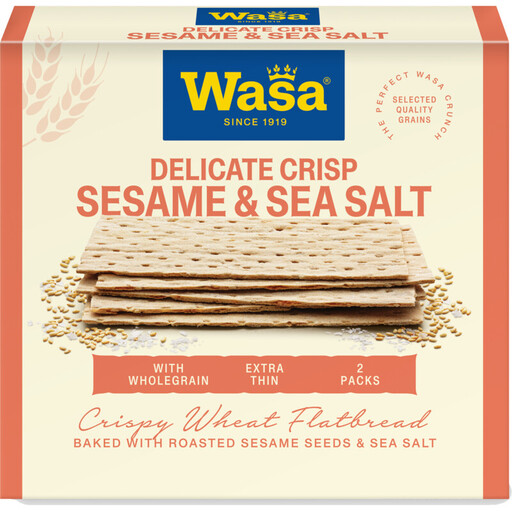 Image unavailable
Consider this sesame cracker for toppings if its format works with your catering presentation; it is not melba toast.
The pack contains 190 g. Before serving individual portions, check the pack size and use the current product packaging for allergen information.
Yes. According to the Netherlands Food and Consumer Product Safety Authority, information about allergens present must be available to guests when catering products are served unpackaged. Check the current packaging for the toast you choose: in the sesame products reviewed, cereals containing gluten and, in the melba toasts, soya are also relevant allergens.
Organic certification does not make sesame melba toast allergen-free. The organic options reviewed contain sesame, wheat and soya. Also check the other allergen statements on the packaging of the product you’re serving.
No. The word ‘salt’ alone does not tell you whether iodised salt used in bread-making has been added or how much iodine the product contains. The Netherlands Nutrition Centre states that bread does not have to be made with this type of salt. For information about a specific toast product, ask for product-specific details.
If you’re using moist toppings and want to keep the toast crisp, it’s best to add them shortly before serving. Also follow the storage instructions after opening; Albert Heijn recommends storing its organic melba toast in a sealed tin.