
Fresh yoghurt keeper
You want to keep small portions chilled and first check whether your current fridge reaches the recommended 4 °C. The Netherlands Nutrition Centre recommends this as the ideal fridge temperature.


If your current fridge has enough space and you can check that it is set to the recommended 4 °C, you probably won’t need an additional fridge. If you don’t have suitable chilled storage, choose based on the external dimensions and usable fridge capacity, then compare the stated energy consumption in kWh per year. Only consider a freezer compartment if you also need one for other foods.
You want to keep small portions chilled and first check whether your current fridge reaches the recommended 4 °C. The Netherlands Nutrition Centre recommends this as the ideal fridge temperature.
You’re looking for a fridge that fits the space available and offers enough usable room for your jars. Compare the external dimensions and capacity stated by manufacturers for their models.
You’re considering a second fridge and want to weigh up the extra space against its energy use. Milieu Centraal points out that two refrigeration appliances use more energy together than one larger appliance.
The Netherlands Nutrition Centre recommends a fridge temperature of 4 °C. To check the temperature, it advises placing a thermometer in the middle of the bottom shelf; Milieu Centraal recommends comparing the stated annual energy consumption when choosing between fridges.
| Consideration | What to look for when buying | Who should prioritise this? |
|---|---|---|
| Temperature you can check | Check whether the temperature is adjustable and measure it with a fridge thermometer. | I want to check whether my current fridge reaches the recommended 4 °C before buying another appliance. Around 33% of consumers prioritise being able to check the storage temperature. |
| Suitable size and placement | Measure the available space and compare the full external dimensions; allow for the door and follow the installation instructions. | If my kitchen has limited space, I want to know whether the fridge will fit and whether the door can open conveniently. Around 27% of consumers prioritise a suitable size and placement. |
| Energy use of an additional fridge | Compare the stated energy consumption in kWh per year for models that fit in terms of size and chilled storage. | I want extra chilled storage without losing sight of energy use. Around 20% of consumers put the energy use of a potential second fridge first. |
| Space for individual portions | Compare the fridge capacity and shelf layout with the number and height of your jars. | I want to fit several portions without the layout getting in the way. Around 20% of consumers prioritise usable fridge space and shelf layout. |
Your current fridge may already be suitable if it has enough space and is set to the right temperature. Milieu Centraal points out that two refrigeration appliances use more energy together than one larger appliance.
First check whether your jars fit and measure the temperature with a fridge thermometer.
External dimensions don’t tell you how much room there is for jars. And on models with a freezer compartment, the total capacity isn’t the same as the fridge capacity.
Compare the fridge capacity and shelf layout, and check that your jars will fit on the available shelves.
The energy rating alone doesn’t tell you how much a fridge will use in your situation. Milieu Centraal recommends comparing the stated energy consumption in kWh per year.
Compare the annual energy consumption of models that also suit your needs in terms of external dimensions and fridge space.
The TS190340N under-counter model is worth comparing if you have a narrow space to fit it in.
The Rd 1400 Pure is worth comparing if you have around 55 cm of width available.
The KK600 is an under-counter model worth comparing if you’re looking for more fridge space within a width of 60 cm.
The KKV655WIT is a 55 cm-wide under-counter model worth comparing if you’re looking for separate shelves.
The KTR15NWEB is an under-counter model to consider if a rapid-cooling function is part of your decision.
This selection includes compact under-counter fridges without a freezer compartment, as well as models with one. Compare each model’s fridge space, external dimensions and stated energy-use figures with your own needs.
 No image available
A good fit if you’re looking for a compact under-counter model with adjustable cooling and shelves.
Stated capacity: 88 l. Three adjustable glass shelves and mechanical temperature control.
 No image available
A good fit if you want a separate freezer compartment as well as space to chill yoghurt.
Fridge compartment: 95 l; freezer compartment: 14 l. Stated width: 55 cm. Stated annual energy consumption: 89 kWh; energy rating C.
 No image available
A good fit if you want to compare a single under-counter model with both fridge space and a freezer compartment.
Fridge compartment: 107 l; freezer compartment: 13 l. Dimensions: 84,50 × 54,90 × 55,70 cm. Energy rating C.
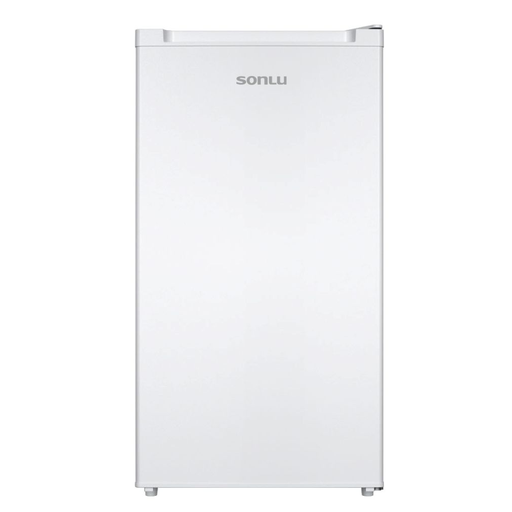 No image available
A good fit if you’re looking for a compact fridge without a freezer compartment and with adjustable shelves.
Stated capacity: 82 l. Mechanical temperature control, adjustable glass shelves and energy rating E. Stated annual energy consumption: 84 kWh.
 No image available
A good fit if you’re looking to compare a 54 cm-wide under-counter model with room for several portions.
Stated capacity: 129 l. Two glass shelves, a temperature-control dial and stated annual energy consumption of 92 kWh.
The Netherlands Nutrition Centre recommends 4 °C. Place a fridge thermometer in the middle of the bottom shelf, leave it there for half a day or overnight, and adjust the fridge if the reading is higher.
According to the Netherlands Nutrition Centre’s Food Storage Guide, opened full-fat yoghurt keeps for 5–7 days in the fridge. This advice applies to this product and isn’t a set storage period for homemade yoghurt or every fresh batch; for unopened yoghurt, follow the label too.
Check the appliance’s climate class and the temperature in the shed. According to the Consumers’ Association, the climate class indicates the minimum and maximum temperatures at which the appliance will continue to work properly.
Report the fault to the retailer. According to the Dutch government, statutory guarantees in the Netherlands have no fixed legal duration; any manufacturer’s guarantee is in addition to this.
No. If you sell food or drink to consumers, food safety rules apply. The Netherlands Food and Consumer Product Safety Authority says that you may need to register and have a food safety plan or follow a hygiene code if you sell food several times a year. These requirements apply to selling food; they aren’t a requirement for everyone who buys yoghurt for home use.