
Shared-fridge user
Wants to keep grapes chilled and separate before looking for space for an extra appliance.


If there’s a clean, agreed space in the shared fridge and the temperature is around 4 °C, you won’t necessarily need a second fridge for grapes. If there’s consistently not enough room, compare the usable fridge capacity, external dimensions, annual energy consumption and noise level. Once it’s installed, use a thermometer to check that the storage area really does stay around 4 °C, as advised by the Voedingscentrum.
Wants to keep grapes chilled and separate before looking for space for an extra appliance.
Consistently has too little shared space, or finds it hard to keep track of what’s where, and needs to assess a compact appliance by its capacity and external dimensions.
Wants to factor in annual energy consumption and noise when considering an extra fridge for a shared kitchen.
First, consider whether an agreed space in the existing fridge will do. If you then decide to get an extra appliance, think about temperature control, how much space you need, a practical layout and how it will be shared.
| What to consider | What to look for when buying | Who is this important for? |
|---|---|---|
| Reliable cooling | Set the fridge to around 4 °C and check the actual temperature with a fridge thermometer. A stated number of degrees below the ambient temperature isn’t the same as a fixed temperature. | I want to know whether the storage area really stays around 4 °C, not just which setting has been selected. Around 36% of consumers put temperature reliability first. |
| The right amount of fridge space | Measure the space available, including room to open the door. Compare the usable fridge capacity, not just the total capacity including a freezer compartment. | If the shared shelf is always full, I want to know whether an extra appliance will fit and offer enough fridge space. Around 29% of consumers put having the right amount of fridge space first. |
| A hygienic layout | Agree on a clean, separate space and keep raw foods apart. Store grapes dry and wash them under running water before eating. | I want a clean, clearly defined place for grapes among other people’s shopping. Around 21% of consumers prioritise a hygienic, well-organised layout. |
| Energy use and noise | Compare the stated annual energy consumption in kWh and the noise emission in dB. Agree on who will use the extra appliance and share the electricity costs. | In a shared kitchen, I want to consider energy use and noise for my housemates in advance. Around 14% of consumers prioritise these running costs and noise levels. |
For the Tristar KB-7604, the manufacturer states that it cools to 15 °C below the ambient temperature. That’s not the same as a fixed storage temperature of around 4 °C.
Check which cooling technology the model uses and measure the temperature in the conditions you plan to use it in. Don’t assume this model’s specifications apply to all small fridges.
If the appliance can’t reach the temperature you need, it won’t provide suitable fridge space for grapes.
In a fridge with a freezer compartment, the full stated capacity isn’t available for chilled food.
Compare the fridge compartment capacity in litres separately, and only choose a freezer compartment if you actually need one.
An energy rating on its own doesn’t tell you how much electricity an appliance uses per year. The energy label also shows the annual consumption in kWh.
Compare the stated annual energy consumption and the capacity you need. In a shared kitchen, agree on who will pay the electricity costs.
According to Salora, the Salora CFB4300WH is a freestanding drinks fridge with a net capacity of 43 litres, designed as a separate, compact cooling space.
According to Tomado, the Tomado TLT4702B is a freestanding tabletop fridge without a freezer compartment, with a salad drawer.
The Inventum KK471W is an example of a model without a freezer compartment, while the KV550 combines fridge space with a freezer compartment.
The Beko TSE1424N is a freestanding tabletop fridge to consider if you’re looking for a larger separate cooling space.
The Liebherr Rd 1201 Pure is a tabletop fridge to consider if its stated external dimensions and noise emission are right for your kitchen.
These products range from compact fridges for extra cooling space to portable coolers. If you’re storing grapes, always check whether the stated temperature is suitable and measure the actual temperature after installation.
 Image unavailable
An option if you’re looking for a separate cooling space with extra storage flexibility; check the actual temperature after installation.
The product information lists a total capacity of 90 litres, three glass shelves and a chiller box. The stated temperature range for the fridge compartment is 0–10 °C. The external dimensions are 449 × 485 × 842 mm.
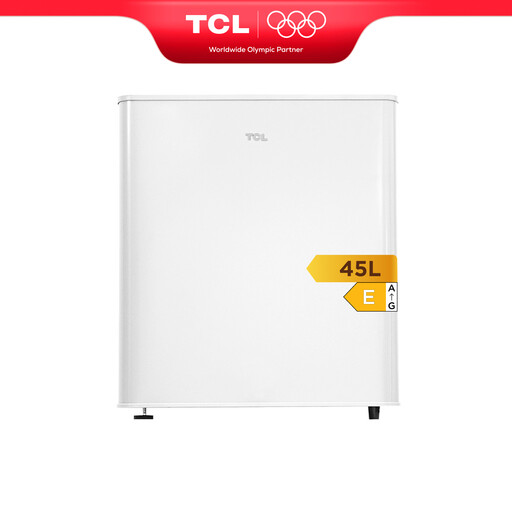 Image unavailable
This compact option could suit you if you’d like a small freezer compartment as well as fridge space; for grapes, only the stated fridge capacity matters.
Of the total 45 litres, 42 litres are fridge space and 3 litres are freezer space. The stated temperature range for the fridge compartment is 0–10 °C. The dimensions are 449 × 485 × 512 mm; the description mentions a glass shelf and a bottle rack.
 Image unavailable
An option if you’re looking for extra fridge space with a separate salad drawer. The product information recommends a 4 °C setting for the chill compartment; check the temperature in practice.
The product information lists a capacity of 92 litres, 85 kWh per year and external dimensions of 831 × 474 × 447 mm. The door is described as reversible, and adjustable glass shelves and a salad drawer are also mentioned.
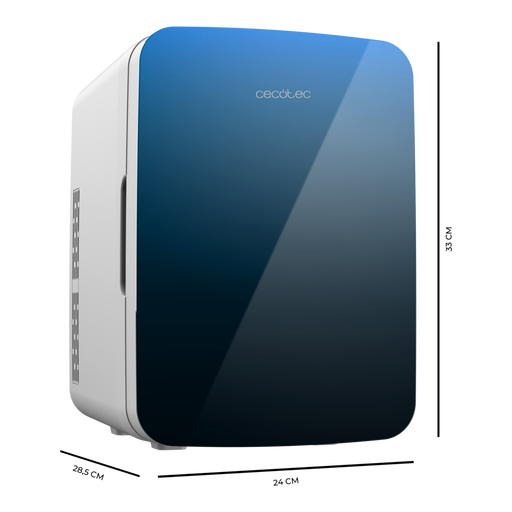 Image unavailable
This portable cooler and warmer isn’t suitable for storing grapes if you need the recommended temperature of around 4 °C: its stated minimum temperature is 7 °C.
The title lists a capacity of 10 litres and 12V/220V power. The stated temperature range is 7–65 °C.
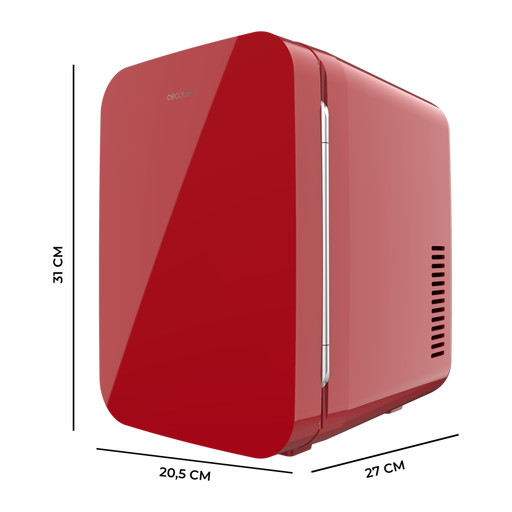 Image unavailable
With a stated minimum temperature of 5 °C, this portable mini cooler isn’t designed for anyone who needs the recommended temperature of around 4 °C for storing grapes in a fridge.
The title lists a capacity of 6 litres and 12V/220V power. The description mentions thermoelectric cooling; the stated temperature range is 5–65 °C.
Set the fridge to 4 °C and check the storage area with a fridge thermometer. The Voedingscentrum recommends placing the thermometer in the middle of the bottom shelf and checking the reading after half a day or overnight. Adjust the fridge if the temperature is too high. This advice isn’t a measured performance result for any specific model.
The Voedingscentrum recommends storing grapes dry and washing them under running water before eating. To keep them for longer, leave them on the stem and store them in their packaging, a paper bag or on a plate.
To compare energy use, look at the stated annual consumption in kWh; the cost will depend on your electricity tariff and how you use the appliance. According to the Rijksoverheid, consumers generally have a 14-day cooling-off period for distance purchases. You’re entitled to a product that works as it should, but there’s no fixed statutory guarantee period; if something goes wrong, you can contact the seller.
Household fridges covered by the applicable EU rules must have an energy label. The European Commission says this includes information such as annual energy consumption in kWh, capacity and noise emission. Check the label for the exact model; this requirement doesn’t necessarily apply to every small portable cooling appliance.