
People who keep soft cheese chilled
If you want to store portions that need to stay chilled at a temperature you can check, the Netherlands Nutrition Centre recommends setting your fridge to 4 °C and checking the temperature with a thermometer.


You don’t need a separate fridge if you can keep your cheese sealed and separate in the shared fridge, and use a thermometer to check that it’s at 4 °C. If there isn’t enough space for your food or you can’t reliably check the temperature, compare compact fridges by their usable space, external dimensions, noise level and stated energy consumption. The thermostat setting alone won’t tell you the temperature on the shelf.
If you want to store portions that need to stay chilled at a temperature you can check, the Netherlands Nutrition Centre recommends setting your fridge to 4 °C and checking the temperature with a thermometer.
If you want to keep your cheese portions sealed and easy to find, with as little chance as possible of them coming into contact with moisture from other food, the Netherlands Nutrition Centre recommends keeping raw meat, chicken or fish well sealed on the bottom shelf.
You’ll need to weigh the fridge’s external dimensions and noise level against the storage space you need and its stated annual energy consumption. Measure the available space before choosing an extra fridge.
A good fit if: you can keep sealed portions of cheese separate and check the temperature.
The trade-off: you’re relying on the way the fridge is organised, its hygiene and how everyone uses it.
A good fit if: you want a separate chilled space and have limited room.
The trade-off: the smaller interior may make it harder to organise portions separately. Remember to measure the space for the appliance, too.
A good fit if: several housemates want to store their own portions, or you’d like room for other chilled items as well.
The trade-off: check that the external dimensions will fit and compare annual energy consumption in kWh. A larger stated capacity alone won’t tell you how much room your containers will take up.
| What to consider | What should you check? | Which consumers is this most relevant to? |
|---|---|---|
| Chilling temperature | Check the temperature with a fridge thermometer and, if necessary, adjust the setting towards 4 °C. | If I’m storing cheese that needs to stay chilled, I want to know the actual temperature on the shelf. Around 36% of consumers put checking the fridge temperature first. |
| Separate storage | Check that sealed containers will fit; keep raw meat, chicken or fish well sealed on the bottom shelf. | In a shared fridge, I want to keep my portions separate, sealed and easy to identify. Around 29% of consumers prioritise separate, organised storage. |
| Size and noise | Measure the height, width, depth and door clearance; check the stated noise level for the exact model. | If space is limited or the kitchen is next to a living area, I want a fridge that fits without taking up unnecessary room. Around 21% of consumers prioritise fit and noise level. |
| Energy consumption | Compare the stated energy consumption in kWh per year with the capacity you need. | With a second fridge, I want to factor in its ongoing energy use, especially if I’m only storing a few portions. Around 14% of consumers prioritise the energy consumption of an additional appliance. |
The selected setting doesn’t show what a thermometer would read on a particular shelf. The Netherlands Nutrition Centre recommends setting your fridge to 4 °C.
Once you’ve adjusted the setting, take a reading in the middle of the bottom shelf and adjust it again if needed.
You may not need a second appliance if there’s enough room to keep your cheese sealed and separate in the shared fridge.
First, check the temperature and available space. If you do buy an extra fridge, compare its stated annual energy consumption and capacity.
The stated capacity doesn’t tell you whether your packed portions will fit comfortably between the shelves.
Measure your containers and compare them with the layout and external dimensions of the exact model.
Beko lists the LS9052WN as having a capacity of 88 l and a width of 48 cm. This combination could suit a space where room is limited.
Inventum says the KK550 has a capacity of 131 l, is 55 cm wide and has adjustable shelves.
Bosch lists the KTR15NWEB as having a capacity of 134 l, a noise level of 39 dB and a door-open alarm.
Liebherr lists the Rd 1200 Pure as 50 cm wide, with a capacity of 110 l and a noise level of 34 dB.
These product suggestions are for anyone looking for a compact fridge of their own to keep portions of cheese separate. Compare the layout and dimensions with your containers, then check the actual temperature once the fridge is in place.
 No image available
A compact chilled space with adjustable shelves and door compartments can help you organise packed portions separately.
Stated capacity: 88 l. The description lists three adjustable shelves, three door compartments, a noise level of 39 dB and energy consumption of 90 kWh per year.
 No image available
The adjustable shelves and door racks described offer different places to store sealed portions.
The description lists a capacity of 82 l, mechanical temperature control, glass shelves, a crisper drawer and door racks.
 No image available
The stated capacity could be useful if you want to store other chilled items as well as cheese portions. Check that the model will fit in your kitchen before you buy.
Stated capacity: 129 l. The dimensions are 54 × 54 × 88 cm; the description lists two glass shelves and energy consumption of 92 kWh per year.
 No image available
The adjustable shelves offer several layout options for your portions. Check whether the chiller box suits the items you want to keep chilled.
Stated capacity: 90 l. The description lists three glass shelves, a noise level of 40 dB and dimensions of 449 × 485 × 842 mm.
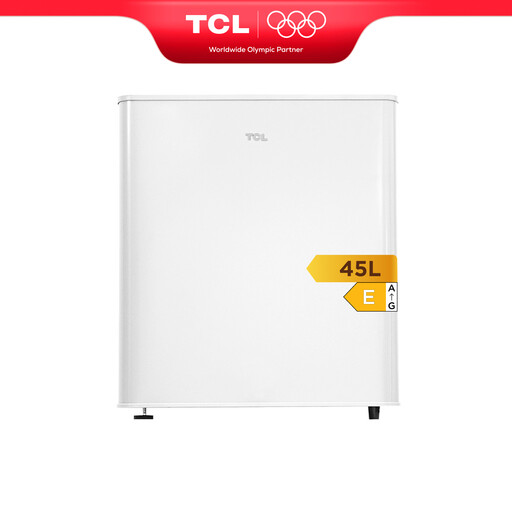 No image available
Its compact dimensions and glass shelf could suit you if space is limited and you only want to chill a few portions separately.
The stated external dimensions are 449 × 485 × 512 mm. The description lists mechanical temperature control, a glass shelf and a cooling range of 0–10 °C. Check the temperature where you’ll store your food.
Not if there’s enough room in the shared fridge, you can keep the cheese sealed and you can check the temperature. The Netherlands Nutrition Centre recommends setting your fridge to 4 °C. For sealed cheese, also follow the storage advice on the packaging.
Keep the cheese sealed, and store raw meat, chicken or fish well sealed on the bottom shelf. The Netherlands Nutrition Centre recommends keeping any drips away from other food.
Set the appliance up according to the instructions and check the temperature with a fridge thermometer. The Netherlands Nutrition Centre recommends placing the thermometer in the middle of the bottom shelf. If needed, adjust the setting towards 4 °C.
Compare the stated energy consumption in kWh per year, and take your electricity tariff and usage into account. Energielabel.nl says the energy label shows details including annual energy consumption, capacity and noise level. Your actual costs will depend on your circumstances.
For household fridges, the energy label shows details including the energy rating, annual energy consumption, capacity and noise level. The European Commission sets the labelling rules in Delegated Regulation (EU) 2019/2016. Compare the details for the exact model.