
Cooking for a few portions of broccoli
You want to store small portions and first check whether your current freezer is suitable. The Netherlands Nutrition Centre recommends freezing food in small portions.


You may not need a separate freezer for a few portions of blanched broccoli. First, see if your existing freezer can be set to −18 °C or colder and has enough room for your portions. If you regularly run out of space, compare accessibility, external dimensions, freezing capacity and stated annual energy consumption. Extra capacity is most useful when you need it for your overall stock of frozen food.
You want to store small portions and first check whether your current freezer is suitable. The Netherlands Nutrition Centre recommends freezing food in small portions.
You regularly run short of freezer space, but also need to check that the external dimensions, door clearance and layout will suit the space available.
You store other foods as well as broccoli and want to choose a capacity and freezing rate that suit your combined stock.
For small portions of blanched broccoli, first consider whether your existing freezer is already suitable. An extra appliance is most useful if you regularly run short of space.
Choose this if: your freezer compartment can be set to −18 °C or colder and has room for your portions.
The trade-off: you won’t need another appliance, but you’ll need to account for the food already in your freezer and avoid adding too much at once. The Netherlands Nutrition Centre recommends freezing food in small portions.
Choose this if: you regularly need extra space but have limited room for an appliance.
The trade-off: drawers or compartments can keep individual portions within easy reach, but capacity and freezing rate vary by model. Check the external dimensions and door clearance too.
Choose this if: you regularly store plenty of frozen food besides broccoli and have enough vertical space.
The trade-off: the Dutch Consumers’ Association says tall freezers typically offer more usable space than under-counter models. Compare the stated energy consumption of specific models, and don’t assume that bigger automatically means better for you.
Choose this if: you mainly store large amounts of food or bulky items and have room for the appliance.
The trade-off: small portions may be harder to find than in drawers. The Dutch Consumers’ Association says tall freezers with drawers are easier to access than chest freezers.
| What matters when buying | What to look for | Who is this important to? |
|---|---|---|
| Suitable space | Check whether the freezer compartment can be set to −18 °C or colder and how much free space there is alongside your existing stock. | If I’m only freezing a few cooled portions, I want to know first whether my current freezer is enough. Around 36% of consumers prioritise having enough suitable space without an extra appliance. |
| Layout and location | Measure the space and door clearance. Check that your wrapped portions will fit in the drawers or compartments and that you can find them easily. | If I regularly take out individual portions, I want them within easy reach, and the appliance needs to fit in the space available. Around 28% of consumers prioritise the space available and a practical layout. |
| New batches | Compare how much you add at a time with the stated freezing capacity in kg/24 hours. Capacity in litres measures something different. | If I’m also freezing other fresh food, I compare the amount I freeze at once with my existing stock. Around 18% of consumers prioritise the capacity for new batches. |
| Energy use and defrosting | Compare the stated energy consumption in kWh/year for specific models and check whether the exact model has NoFrost. | If I’m buying another appliance, I also consider its energy consumption and how much defrosting it will need. Around 18% of consumers put energy use and defrosting first when choosing a freezer. |
Litres indicate storage capacity; kg/24 hours indicates how much a model can freeze over that period, according to its specifications. These are two different things.
Compare both figures for the exact model and match the amount you freeze at a time to what you’ll actually be adding.
Your existing freezer may have enough suitable room for a few small portions. An extra appliance also takes up space and uses electricity.
Check the temperature and available space first. Then compare the stated annual energy consumption of specific models.
The manufacturers state that the Inventum VR550 and Bosch GTV15NWEB don’t have NoFrost, while Liebherr lists NoFrost for the FNe 1404 Pure.
If you want to avoid manual defrosting, check the defrosting technology for the full model name.
Not every model works well at low ambient temperatures. The Dutch Consumers’ Association warns that performance varies by model, particularly at temperatures below 10 °C.
Check the climate class and the manufacturer’s guidance for the location where you plan to put the appliance.
The Inventum VR550 is an under-counter freezer with three transparent drawers.
The Tomado TFT4702W is a compact under-counter freezer with three compartments.
The Bosch GTV15NWEB is an under-counter freezer with three drawers.
The Liebherr FNe 1404 Pure is an under-counter freezer with NoFrost.
This selection includes compact freezers, under-counter models and taller freezers for extra frozen-food storage. For each model, check that the temperature settings, dimensions and freezing capacity suit your needs.
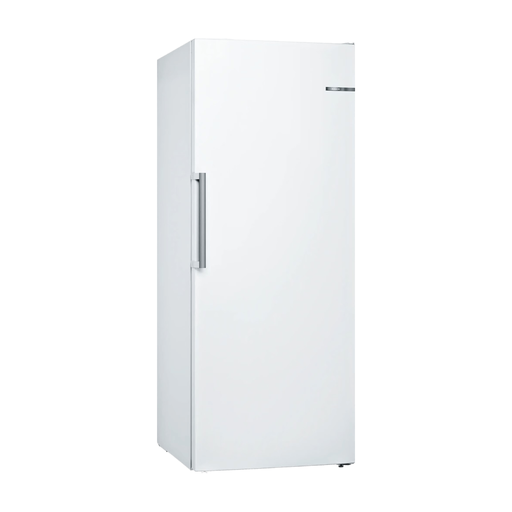 Image unavailable
Suited to a larger stock of frozen food alongside your broccoli. Before buying, check that this model can be set to −18 °C or colder.
Capacity: 328 litres. Energy rating: C. Colour: white.
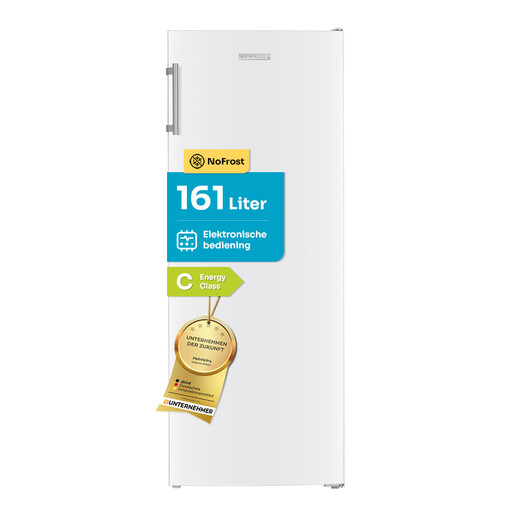 Image unavailable
An option for storing portions of broccoli alongside other frozen food. The stated temperature range includes −18 °C.
Capacity: 161 litres. No-Frost. Three freezer drawers. Temperature range: −14 °C to −22 °C.
 Image unavailable
A potential fit if you’re looking for extra freezer space in an under-counter design. Check the dimensions and whether its freezing capacity suits the batches you freeze.
Under-counter model. No-Frost. Energy rating: D.
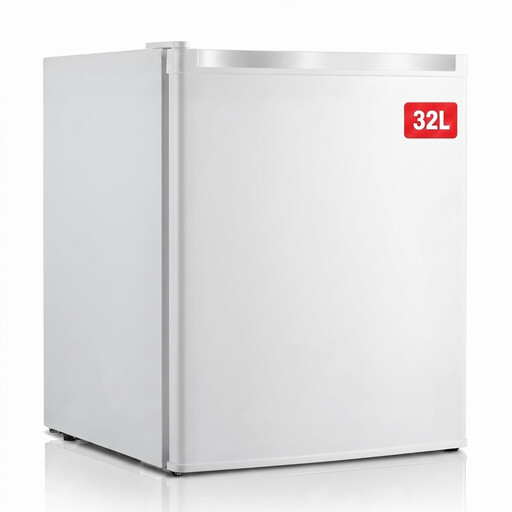 Image unavailable
A compact option when space is limited. Check that this model’s temperature settings are suitable for what you plan to store.
Capacity: 32 litres. Noise level according to the product title: 43 dB. Seven temperature settings. Reversible door.
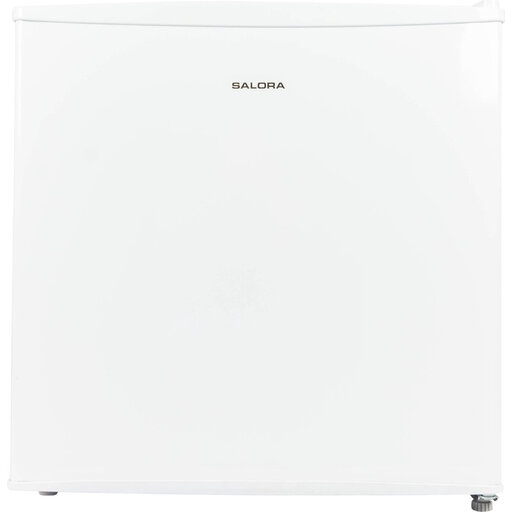 Image unavailable
A compact freestanding model for limited space. Compare its freezing capacity with the amount you want to add at a time.
Capacity: 31 litres. Freestanding under-counter model.
Not necessarily. First, check whether your existing freezer compartment can be set to −18 °C or colder and has enough room. The Netherlands Nutrition Centre recommends freezing food in small portions and not adding too much at once.
The Netherlands Nutrition Centre recommends blanching broccoli briefly, then draining and drying it thoroughly before freezing it in portions. The suggested blanching time is usually 1–3 minutes, depending on the vegetable, the size of the pieces and how soft you want them.
According to the Netherlands Nutrition Centre’s Storage Guide, raw broccoli that has been briefly blanched before freezing can be kept in the freezer for one year; after that, its quality may deteriorate. Fully cooked broccoli has different storage guidance.
It depends on the model and the ambient temperature. Check the climate class and the manufacturer’s guidance. The Dutch Consumers’ Association warns that not every appliance works well at temperatures below 10 °C.
Freezers are covered by EU energy labelling. According to the European Union, the label must also be clearly displayed online. If a product is faulty in the Netherlands, the seller must provide a solution. The Dutch Government says there is no fixed statutory warranty period; what you can expect from a product depends on the circumstances.