
Vandaag of morgen in huis

Kwaliteit gegarandeerd

Welkomstaanbiedingen ontgrendelen: GRATIS bezorging | Tot 80% korting | Gratis 30 dagen JoyPlus-proefperiode
Download de app
A night light with a sensor seems like a simple purchase. It turns on automatically when you need it and off when you don't. Ideal for a child's room, the hallway, or a late-night trip to the bathroom. However, there are a few common pitfalls that can turn your purchase into a source of irritation rather than convenience. Before you make a choice, it's wise to know what to look for.
Many people experience issues with sensors that are too slow or, conversely, too sensitive, causing the light to stay on unnecessarily or fail to turn on when you're stumbling in the dark. Another common mistake is choosing the wrong power source for the intended location. A plug-in light is useless in a hallway without an outlet, and a rechargeable model with a weak battery will constantly demand your attention. Finally, light that is too bright or cold can disrupt your sleep more than it helps.
To avoid these problems, it's helpful to check three core aspects. This will help you find a model that fits your situation without paying for features you don't need.
The functionality of your light depends entirely on the type of sensor. The two most common are:
motion sensor night light responds to movement within a specific range. This is ideal for places where you need brief illumination, such as the stairs, a hallway, or as a sensor closet light. The light automatically turns off after a set time.dusk-to-dawn sensor light measures ambient light. It switches on automatically as it gets dark and turns off when it gets light again. This is a great choice for providing constant, soft lighting in a child's room, for example.Some models combine both sensors. They only activate when it's dark and motion is detected. This is the most energy-efficient option.
The location where you plan to use the light determines the best power source.
rechargeable night light or a wireless sensor light on batteries offers maximum flexibility. You can place them anywhere, from the inside of a wardrobe to the darkest corner of the attic. Pay close attention to the battery capacity, expressed in mAh. A higher capacity means you'll need to recharge the light or replace the batteries less frequently.outdoor sensor light. These models are connected directly to the mains and require a more permanent installation, but they offer a powerful and reliable solution for outdoor use.The quality of light is crucial, especially at night. Two values are important here:
Based on these criteria, we have selected a few products that suit different user profiles.
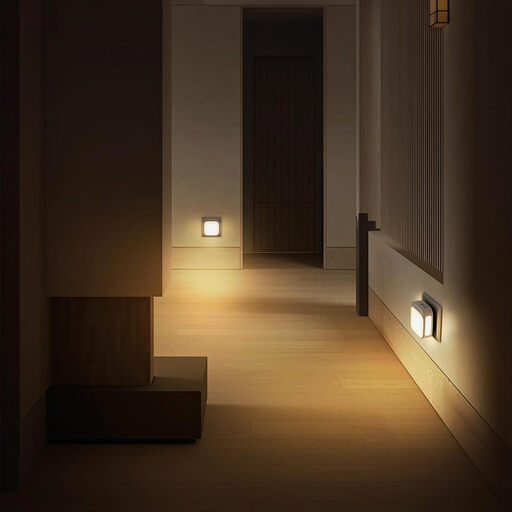
Why This Fits Their Persona: Ideal for a child's room or hallway. No fussing with batteries, and the soft, dimmable light won't disturb sleep. Just plug it in, and the dusk-to-dawn sensor does the rest.
This light has a reliable dusk-to-dawn sensor and dimmable warm white light (2800-3000K), so you won't be woken up by a sudden, bright beam.
Plug-and-play with stepless dimming and very low energy consumption of 0.3W. Comes as a convenient set of two.

Why This Fits Their Persona: Perfect for places without an outlet, like closets, stairwells, or a dark hallway. No drilling is required thanks to the adhesive strip. Just stick it on and you're done.
Because it's rechargeable and wireless, you're not tied to the location of your outlets. The 800mAh battery ensures a long runtime per charge.
Ultra-thin design, a choice of 3 colour temperatures (warm, natural, and cool white), and comes as a set of two for different spaces.
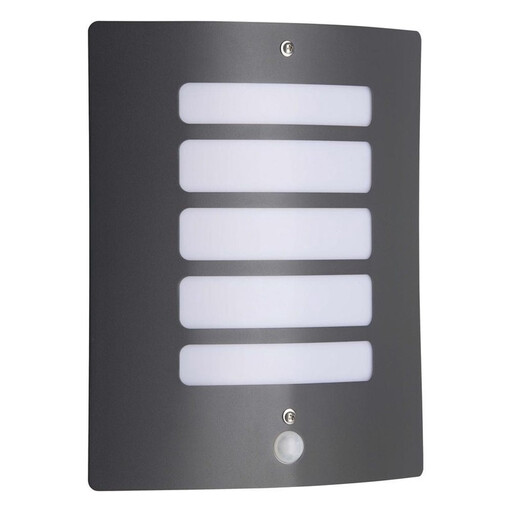
Why This Fits Their Persona: A robust solution for added security at the front door, shed, or along the garden path. It automatically illuminates the area when you arrive home in the dark or when someone approaches.
This is a hardwired outdoor installation with an IP44 rating (splash-proof), designed for reliability in various weather conditions.
The E27 socket gives you the freedom to choose a suitable bulb yourself (up to 60W), allowing you to perfectly tailor the brightness and colour temperature to the location.
We've compiled a complete, up-to-date list of products that meet these selection criteria and current safety standards.
Power consumption is typically very low, especially with modern LED models. Many plug-in night lights consume only 0.3W to 0.5W. This means the cost on your energy bill is negligible, even if the light is on for hours every night.
For optimal performance, place a motion sensor night light in a high-traffic area, such as a hallway, landing, or at the bottom of the stairs. Do not aim the sensor directly at a heat source (like a radiator) or a window where movement outside (e.g., from trees in the wind) could accidentally trigger it.
Yes, a dusk-to-dawn sensor responds to the amount of ambient light, not the time of day. If a room is naturally dark, such as a windowless hallway or a basement, the light may also turn on during the day. The sensitivity is determined by the sensor's LUX value; the lower this value, the darker it must be before the light switches on.
