
Vandaag of morgen in huis

Kwaliteit gegarandeerd

Welkomstaanbiedingen ontgrendelen: GRATIS bezorging | Tot 80% korting | Gratis 30 dagen JoyPlus-proefperiode
Download de app
A sensor night light can illuminate a dark hallway, bedroom or nursery without having to search for a switch in the middle of the night. However, models vary considerably. A light with only a light sensor works differently from a motion sensor night light, while a rechargeable model has different considerations than a plug-in light.
Focusing solely on price or the number of LEDs can result in an inconvenient product. Pay particular attention to these common pitfalls.
A light sensor night light usually switches on when the surrounding area becomes dark. This is practical for a hallway or a socket beside the bed, but the light may remain on throughout the night. A motion sensor only activates when movement is detected, usually within a defined range.
So first determine which of the following you need:
Also check the specified threshold, such as ≤20 LUX or ≤40 LUX, as well as the detection range. A range of 3 to 5 metres may be suitable for a hallway, but placement and the layout of the room affect performance.
A bright LED night light can be useful in a storage room or on a staircase, but it may provide too much light in a bedroom. For a nursery or nighttime trips to the bathroom, a softer light output is often more practical.
In addition to lumens, consider:
An RGB function is mainly appealing for creating ambience in a child’s room. It is not automatically the most practical setting for a nighttime walkway.
A rechargeable night light works without a power socket, but its battery has a limited runtime. For a 2-pack with a built-in 500mAh battery, up to 10 hours of use in sensor mode may be specified, for example. This is a stated product value; actual runtime depends on brightness, the number of activations and the battery level.
A plug-in model eliminates the need for recharging, while a battery-powered model can also be used in areas without a socket. For a rechargeable model, check:
Automatic activation is convenient in a bedroom or hallway. For a cupboard, staircase or long corridor, a hallway night light with a motion sensor may be more suitable than a light that stays on continuously. A constant-light mode is useful when you want to decide yourself when the light remains on.
A sensor can also be overly sensitive if the light is positioned opposite a busy passageway. Place the product so that the sensor does not point directly at a window, mirror or moving curtains.
Plug-in night lights are straightforward: simply insert them directly into a suitable socket. Models rated at 0.3W or 0.5W consume little power according to their product specifications. Actual consumption depends on how long the light is on and which setting is selected.
For daily use in a dark corridor, an automatic light sensor combined with low wattage is a practical choice. If you want to move the light temporarily, USB charging offers greater flexibility.
Check that the model is intended for indoor use and keep it away from water and excessive moisture. A model with a magnet or hanging hook can be installed without drilling, but it must be secured firmly enough to prevent it from falling.
Use a compatible charger with USB-powered lights. Clean the surface with a soft, dry cloth and do not disassemble the light. For a nursery, also place the product out of reach of young children and do not allow children to operate it without supervision.
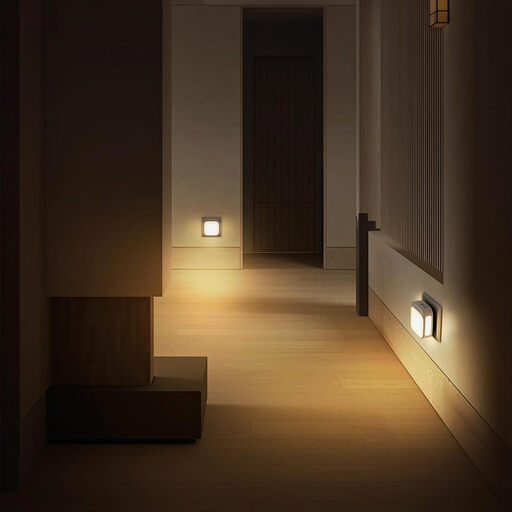
Why This Fits Their Persona: Ideal for households that want to provide two fixed locations, such as a bedroom and hallway, with soft light without having to recharge batteries.
According to the product specification, the automatic light sensor switches on at ≤20 LUX and off in daylight. No manual operation is therefore required.
2-pack, warm white 2800–3000K, dimmable from 10% to 100%, with a stated power consumption of 0.3W.
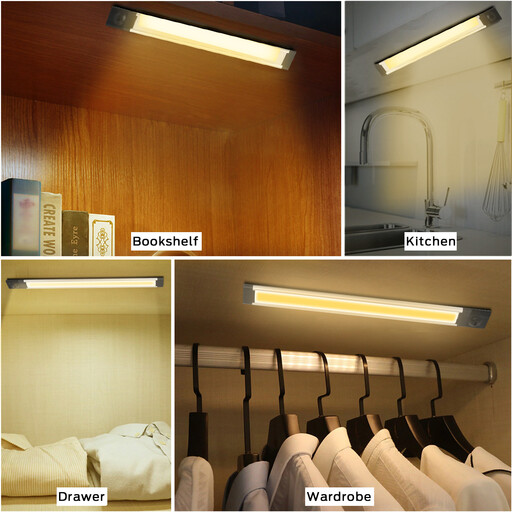
Why This Fits Their Persona: A suitable choice for a long hallway, staircase, wardrobe, garage or storage room where a compact night light needs to provide more illumination.
The brightness, controls and mounting options are clearly specified: 400 lm, gesture control with dimming and attachment via magnet or hook.
36 SMD LEDs, adjustable colour temperature from 2800–6500K and a slim 26 × 4 × 1 cm profile.
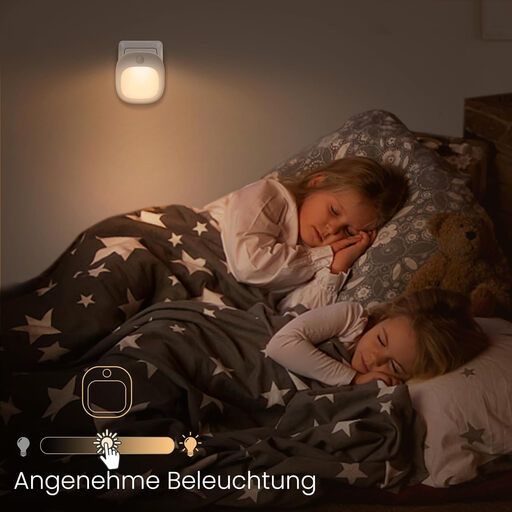
Why This Fits Their Persona: Convenient for parents, older adults or households that want to move the lighting between locations such as the bedroom, nursery and bathroom.
The light features a dedicated sensor mode and a standard mode. The specified detection range is 3–5 metres at an ambient light level of ≤20 LUX.
USB charging, up to 10 hours of use in sensor mode, three colour temperatures and five brightness levels.
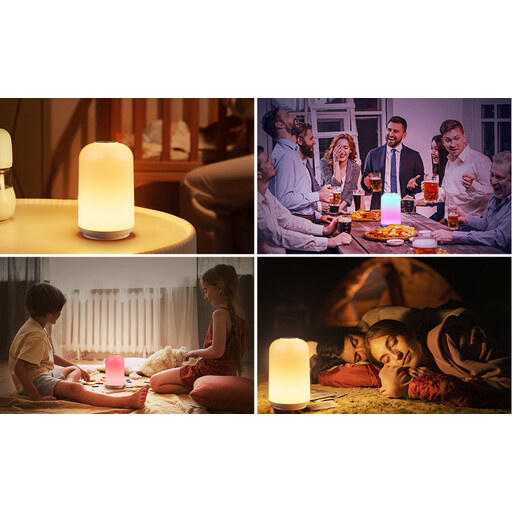
Why This Fits Their Persona: Suitable for anyone looking for a nursery or bedroom night light with a fixed warm setting and additional colour modes.
The product description distinguishes between warm white, RGB and dimming. This allows you to tailor the colour and function to the occasion.
40 lm, warm white from 2600–2800K, seven RGB colours, stepless dimming and USB charging.
We have curated an up-to-date selection of products featuring the specifications listed above for use in Dutch households.
A light sensor monitors the brightness of the surrounding area and may switch on when it becomes dark. A motion sensor responds to movement, usually only when it is dark enough. For a hallway or staircase, a combination is often practical; for a socket beside the bed, a light sensor may be sufficient.
Consumption depends on the wattage and the number of hours the light is switched on. According to the product specification, a 0.3W or 0.5W light uses little energy. With a sensor light that only switches on when movement is detected, the total operating time may also remain limited. Always check the wattage and current electricity rate to calculate the cost for your situation.
Place the light low enough to illuminate the floor or walking route, but out of reach of young children. Do not point a motion sensor directly at a window or mirror. In a nursery, warm white light at a low brightness is usually more practical than a bright, cool-white setting. Use the product indoors only and follow the safety instructions on the product page.
