
Vandaag of morgen in huis

Kwaliteit gegarandeerd

Welkomstaanbiedingen ontgrendelen: GRATIS bezorging | Tot 80% korting | Gratis 30 dagen JoyPlus-proefperiode
Download de app
Finding your way at night without turning on the main light is a common problem. Whether you're getting a glass of water, going to the toilet, or feeding the baby, a bright light disrupts your sleep. A sensor night light seems like the perfect solution, but in practice, it's often more complicated. Many models have hidden flaws that only become apparent after purchase.
Before you make a choice, it's wise to know the most common pitfalls:
This guide will help you navigate these issues and choose a model that suits your situation.
To avoid a bad purchase, it's crucial to check three technical specifications. These determine how practical the night light will be in daily use.
A sensor night light can have two types of sensors. A dusk-to-dawn sensor (or light sensor) activates the lamp only when it's dark enough. A night light with a motion sensor (often a PIR sensor) responds to movement.
The combination of both is typically the most practical: the light only turns on when it's dark and motion is detected. Pay attention to the detection range (usually 3-5 metres) and the angle. For a narrow hallway, a smaller range is sufficient, while a larger room requires more coverage.
The ambiance and functionality of the light are determined by two factors:
dimmable night light offers the flexibility to adjust the brightness. Soft light is ideal for a nursery night light, whereas you might want a bit more visibility on the stairs or in the hallway lighting.The choice of power source depends on where you want to use the light.
Below are some popular choices, matched with specific user profiles.
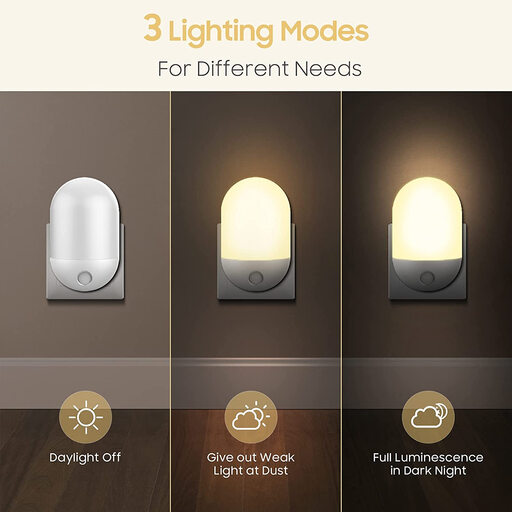
Why This Fits Their Persona: Ideal for those seeking a simple, effective solution. This model does one thing well: it provides soft, warm light when it gets dark. No complicated settings, just plug it in and you're done.
This model uses a simple dusk-to-dawn sensor and warm white light (2800-3200K), avoiding the pitfalls of an overly sensitive motion sensor and harsh, cold light.
Very low energy consumption (0.5W) and no hassle with batteries. A reliable 'set it and forget it' solution.

Why This Fits Their Persona: Perfect for parents looking for a safe and flexible solution for the nursery. Because it's a rechargeable night light, it can be placed anywhere without being dependent on a wall socket.
The combination of 3 colour temperatures and 5 dimming levels prevents the 'too bright' pitfall. The rechargeable battery bypasses the problem of an inconveniently placed socket.
Wireless and portable thanks to the 500mAh battery. The set of two is practical for lighting both the nursery and the hallway.
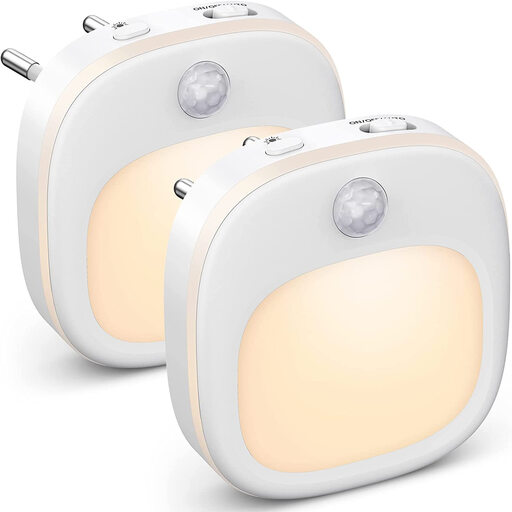
Why This Fits Their Persona: For those who want complete control over their home's night lighting. This set is suitable for the hallway, stairs, bedroom, and toilet, with the right setting for every situation.
With 3 adjustable colour temperatures and 5 dimming levels, you have full control over brightness and ambiance, completely bypassing the 'blinding light' pitfall. The reliable sensor prevents frustration.
This model combines a motion sensor with a dusk-to-dawn sensor for maximum efficiency. The versatile settings make it an all-in-one solution.
We've compiled a complete, up-to-date list of products that fully meet these strict selection criteria and safety regulations.
A modern LED night light is very energy-efficient. Most models consume only 0.5W to 1W. Because the sensor ensures the light is only on when needed, the annual electricity costs are negligible, often less than a dollar or euro.
For optimal performance, place a motion sensor night light in a strategic location. In a hallway or on the stairs, a low position (about 30-50 cm from the floor) is effective, as the sensor will detect your legs as soon as you come around the corner. In the bedroom or toilet, you can place the light at hip height in a socket. Ensure the sensor is not blocked by furniture.
For areas where people sleep, such as the bedroom or nursery, warm white light (below 3300K) is the recommended choice. This type of light has a less disruptive effect on your biological clock. Cool white light (above 5000K) can make you more alert and is therefore less suitable for night-time use, but it can be functional in a toilet or utility room.
