
Vandaag of morgen in huis

Kwaliteit gegarandeerd

Welkomstaanbiedingen ontgrendelen: GRATIS bezorging | Tot 80% korting | Gratis 30 dagen JoyPlus-proefperiode
Download de app
A light that turns on automatically when you approach. Perfect for a dark hallway, wardrobe, or driveway. Buying a sensor light seems simple, but in practice, it's not always that straightforward. Many people discover after a few weeks that their new light doesn't perform as they had hoped.
As a Product Recommendation Officer at Joybuy, I see which products are returned daily and why. To help you prevent buyer's remorse, I've outlined the three most common pitfalls.
wireless battery-powered light is convenient, but not if you have to buy new batteries every month.By paying attention to a few technical details, you can easily avoid these problems and choose a light that will last for years to come.
Before you make a choice, it's good to know which specifications truly make a difference. You can ignore the marketing jargon; it all comes down to the following three points.
Not all sensors work the same way. The two most common types are:
motion sensor light. It reacts to the heat from moving objects, like a person or an animal. Ideal for places where you need light briefly, such as a hallway, toilet, garage, or sensor closet light.night light with sensor in a child's room or as orientation lighting in the hall.Some lights combine both: the light only turns on when there's motion and it's dark enough. This is the most energy-efficient option.
The power source determines where and how you can use the light.
rechargeable light is often a solid compromise for LED sensor lighting in closets or drawers.outdoor sensor light. During the day, the solar panel charges the internal battery. No electricity costs and environmentally friendly. Just make sure the panel can catch enough direct sunlight.For an outdoor light, the IP rating is crucial. This value indicates how well the light is protected against dust and water. For use in the garden or on a facade, a minimum rating of IP44 is recommended. This means the light is splash-proof and can withstand a rain shower. For more exposed locations, a higher rating like IP65 is even better.
Based on these criteria, we have selected a few products that suit different living situations.

Why This Fits Their Persona: Ideal for those who can't or don't want to drill holes. You can easily stick these ultra-thin lights in a wardrobe, under a kitchen cabinet, or in a storage room. Because they are USB rechargeable, they are easy to move and perfect for a rental property.
The built-in 1100mAh battery is USB rechargeable, which solves the problem of constantly dead batteries. The PIR sensor only responds to motion in the dark, preventing unnecessary activation.
Drill-free installation with adhesive strips. Choice of three colour temperatures (warm, neutral, and cool white). Comes as a set of two.

Why This Fits Their Persona: An 'install and forget' solution for the garden, driveway, or shed. This light runs entirely on solar power, so there are no electricity costs and no impact on your energy bill. A sustainable and practical choice for the long term.
With an IP44 rating, this light is specifically designed for outdoor use and is resistant to rain. Because it's solar-powered, there's no hassle with batteries or wiring.
Runs 100% on solar power. Simple, wire-free installation. Features both a motion sensor and a dusk-to-dawn sensor.
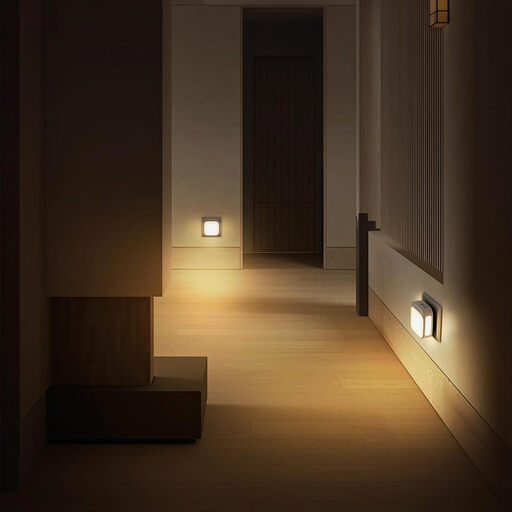
Why This Fits Their Persona: This night light provides a soft, warm white light that guides the way at night without waking anyone up. Ideal for a child's room or the hallway to the bathroom. You just plug it into the socket and can forget about it.
This model uses a dusk-to-dawn sensor, not a motion sensor. So the light doesn't turn on or off unexpectedly, but glows softly as soon as it gets dark. Since it plugs into the wall, dead batteries are not an issue.
Plug-and-play installation. Stepless dimming to set the perfect brightness. Very low energy consumption (0.3W).
We have compiled a complete, up-to-date list of products that meet these strict selection criteria and safety standards.
This depends heavily on the battery capacity (expressed in mAh) and how often the light is activated. A light with a capacity of around 1000mAh that turns on about 5-8 times a day can typically last for several weeks to months. Models with a larger battery will last longer.
For optimal performance, install an outdoor sensor light at a height of about 2 to 2.5 metres (6.5 to 8 feet). Avoid aiming the sensor at a busy road to prevent unwanted activation. For a solar-powered light, it is also important that the solar panel receives as much direct sunlight as possible during the day, ideally facing south.
Yes, LED sensor lighting is very energy-efficient. Because the light only turns on when needed, no electricity is wasted. LED technology itself consumes very little power, and combining it with a sensor maximises these savings. Especially when compared to a light that stays on all night, the difference is significant.
