
Vandaag of morgen in huis

Kwaliteit gegarandeerd

Welkomstaanbiedingen ontgrendelen: GRATIS bezorging | Tot 80% korting | Gratis 30 dagen JoyPlus-proefperiode
Download de app
A sensor light can be handy in a dark hallway, wardrobe, bedroom, kitchen, garden or by the front door. The light switches on automatically when it detects movement or darkness. However, not every LED sensor light is suitable for every situation. A light that is too bright in the bedroom, a short battery life, or an outdoor light with insufficient protection can quickly lead to a poor purchase.
With this buying guide, you can compare sensor lights on verifiable features such as brightness, sensor type, power supply, colour temperature and IP rating.
A light with many lumens gives off plenty of illumination, but that isn't automatically pleasant or practical. For a cupboard, nursery or hallway, a soft brightness may be sufficient. A driveway or dark garden, on the other hand, calls for more light and a wider range.
So pay attention to the combination of lumens, light colour and where you plan to use it. A night light with a sensor of around 20 lumens is mainly intended as orientation lighting. An outdoor light with 300 lumens or more is better suited to an entrance or patio.
A light with a motion sensor reacts to movement. A light sensor switches on when the ambient light falls below a certain level. Some models combine both functions.
For a wardrobe, a PIR motion sensor is practical. For a plug-in light in the hallway, a light sensor might make more sense, as it automatically comes on when it gets dark. Also check the detection range. A range of 3 to 5 metres suits many indoor spaces, whereas a large garden light can benefit from a wider angle and greater distance.
The IP code indicates how well a product is protected against solid particles and water. IP44 means splash-proof in practice; don't place such a light under a direct stream of water and don't submerge it. For a sheltered veranda, IP44 may be suitable. For an unsheltered wall or a spot with heavy rain, a higher rating could be wiser.
Also check how the light is mounted. A magnetic wireless sensor light is easy to move, but it needs to be securely attached. For outdoor use, a stable screw-fixing is often more appropriate.
Colour temperature is expressed in Kelvin. 2700 to 3200 K gives warm white light and suits bedrooms, living rooms and patios. 4000 to 5000 K looks more neutral and is useful in a kitchen, utility room or hallway. Cooler light around 6500 K can be functional, but isn't pleasant for everyone in a restful space.
A sensor light can run on mains power, batteries, solar energy or a built-in rechargeable battery. A rechargeable sensor light with a USB connection is flexible, but needs to be charged regularly. A plug-in model doesn't need charging, but limits where you can place it.
For a solar outdoor light with a motion sensor, direct sunlight is important. According to the product descriptions from the relevant brands, the integrated panels collect energy during the day for use at night. The actual burn time depends on factors such as sunlight hours, season, temperature and how often the sensor is triggered.
Alongside the range, also look at the switch-on duration and whether you can operate the light manually. For a cupboard, a short afterglow time is often enough. By a front door, a longer switch-on duration can be more pleasant.
Pay attention to these installation points:
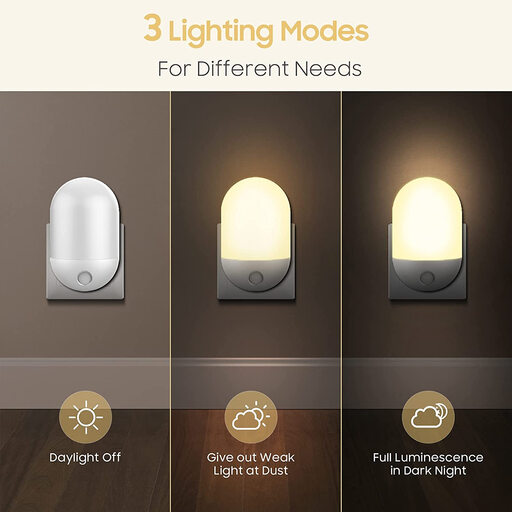
Why this fits the profile: This compact model runs on mains power and is intended for a bedroom, nursery or hallway. There's no battery that needs charging.
The specifications state 20 lumens and warm white light at 2800-3200 K. This makes it clear that it's an orientation light, not a main light source.
0.5 W power, warm white light and automatic light sensor for indoor use.
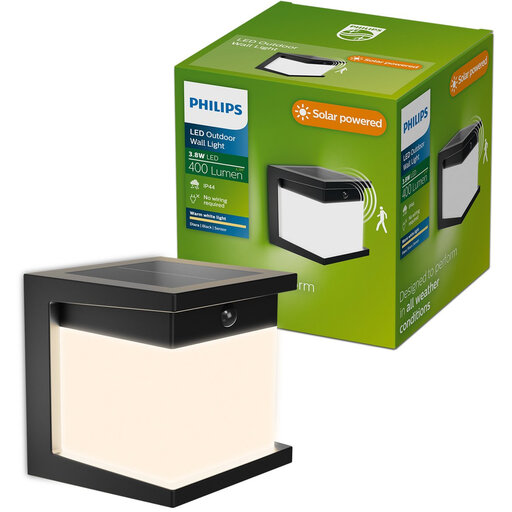
Why this fits the profile: This solar outdoor light with a motion sensor is designed for a garden, balcony or entrance where no mains cable is available.
The product information states 400 lumens, 2700 K, IP44 and a built-in light and motion sensor. The boundaries for outdoor use are therefore verifiable.
Solar power, two light modes, 400 lumens and IP44 splash-proof protection.

Why this fits the profile: The two long lights are intended for kitchen cupboards, wardrobes, shelves and other spots where targeted automatic lighting is needed.
According to the product specifications, the PIR sensor has a range of 3-5 metres. Three colour temperatures are also available, so you're not stuck with one light colour.
Two lights of 40 cm, 61 LEDs per light, three colour temperatures and a rechargeable battery of 1100 mAh.
We've put together a full, up-to-date list of products that fully meet these strict selection criteria and comply with current European safety regulations.
Position a sensor light so that the sensor can properly detect the direction of movement. Don't aim a PIR sensor directly at a heat source, radiator or busy street if that could cause unnecessary activations. For cupboard lighting, mounting on the underside of a shelf often works well, as long as the sensor isn't covered.
Outdoors, only use a model whose product information states the appropriate protection class. With IP44, keep the light away from direct running water. For wireless models, check the battery and fixing regularly. Clean a solar panel or sensor window with a soft, dry cloth and follow the manufacturer's safety instructions.
That depends on the wattage, burn time and number of activations. A model of 0.3 or 0.5 watts uses very little energy with limited use. A rechargeable or solar sensor light doesn't use direct mains power while on, but it does require charging energy or sufficient sunlight.
The lifespan varies depending on the LED module, battery, sensor and usage conditions. An integrated LED is generally not designed to be replaced yourself. With a rechargeable sensor light, the battery may lose capacity over time. So check whether the manufacturer states a lifespan, warranty and charging method.
A sensor light often works well in a hallway, staircase, pantry, wardrobe or under kitchen cabinets. Choose warm white light for bedrooms and hallways. For worktops and utility rooms, more neutral light can be more practical. Don't place the light behind a door, decoration or other obstacles that could restrict the sensor range.
