
Vandaag of morgen in huis

Kwaliteit gegarandeerd

Welkomstaanbiedingen ontgrendelen: GRATIS bezorging | Tot 80% korting | Gratis 30 dagen JoyPlus-proefperiode
Download de app
A sensor light can be handy by the front door, in the hallway, on a balcony or in a dark cupboard. The light switches on automatically when it detects movement or a change in light level. However, not every sensor light is suitable for every location. The wrong protection rating, a limited battery or unclear installation can all mean your purchase turns out to be a disappointment.
A light with lots of lumens may look appealing, but bright light isn't always practical. For a bedroom or nursery, 20 to 40 lumens can be sufficient, whereas a driveway or garden path needs more light. Also pay attention to the colour temperature:
Also check whether the number of lumens refers to the whole light or per light point. Product information doesn't always use the same wording for this.
An outdoor sensor light with IP44 is protected against solid objects larger than 1 millimetre and splashing water. This makes an IP44 outdoor light suitable for sheltered walls, balconies and entrances, but not for submersion or direct water jets. For an unsheltered garden or a spot exposed to driving rain, a higher IP rating may be more sensible.
What's more, a solar sensor light only works practically when the panel receives enough daylight. Placing it under a canopy, next to a tall fence or on a north-facing wall can limit charging performance.
A motion sensor reacts to movement. A day-night sensor or dusk sensor reacts to ambient light. Some lights combine both functions, others don't. So check whether the light only comes on with movement, can also stay on during the day, or switches between modes automatically.
With a rechargeable sensor light, also pay attention to the charging method, battery capacity and range. A light with USB charging is flexible, but needs to be periodically detached or charged via a cable.
For cupboard lighting with a motion sensor, a range of a few metres is usually sufficient. For a light on a driveway or in a back garden, a larger detection area is more practical. Check whether the range is measured straight ahead or supported by a wide viewing angle.
Don't place a wall light with a motion sensor directly next to a heat source, ventilation opening or busy street. Movement outside the desired area can trigger the light unnecessarily. For an indoor light, the height is at least as important: hanging it too high can reduce detection.
There are three common options:
Also check the included fixings. Magnetic mounting is flexible, but the surface must be flat, clean and able to support the weight. Adhesive strips are handy for lightweight indoor lighting, but may not stick as well in damp, dusty or fluctuating temperatures.
An integrated LED sensor light doesn't need a separate bulb. A model with an E27 fitting, on the other hand, gives you the freedom to choose your own suitable LED bulb. Look at the wattage, light output and expected lifespan. For a mains-powered light, the energy label or product information often states the consumption per 1,000 hours.
For a night light with a sensor, a soft brightness is usually more pleasant than a bright work light. A plug-in model avoids charging batteries, while a battery model is easier to place in spots without a wall socket.
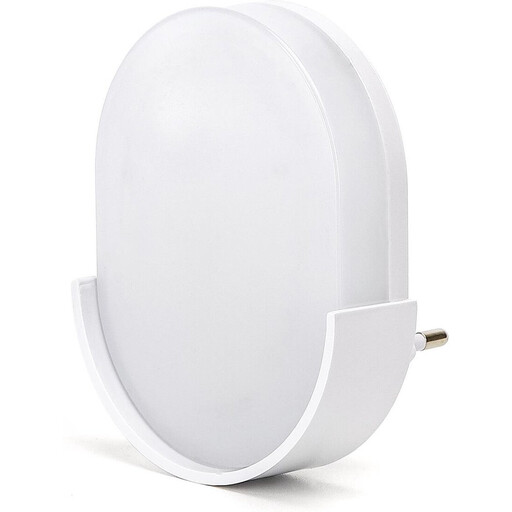
Why this fits the profile: The plug-in design is easy to place in a hallway, bedroom or child's room. No battery or USB cable is needed.
The product specifications state 40 lumens, 1 W, 230 V and a day-night sensor. This makes it clear that it's a compact indoor light, not outdoor lighting.
Plug-and-play, 40 lumens, 120° light beam and suitable for indoor use according to the product information.

Why this fits the profile: This solar sensor light is designed for an entrance, wall or garden spot without a fixed power supply.
The product information specifically mentions IP44, 1,000 lumens, 3,000 K and two light modes. Placement with sufficient direct sunlight remains essential.
Integrated LED, motion and dusk sensor, solar power and IP44 protection.

Why this fits the profile: The set is suitable for multiple kitchen cupboards, a wardrobe, shelf or dark passageway where extra light is regularly needed.
The specifications mention a PIR range of 3–5 metres, USB charging and a built-in battery of 1,100 mAh. The light is not intended for damp outdoor spaces.
Two lights, 41 LEDs, three colour temperatures and a slim size of 300 × 38 × 10 mm.
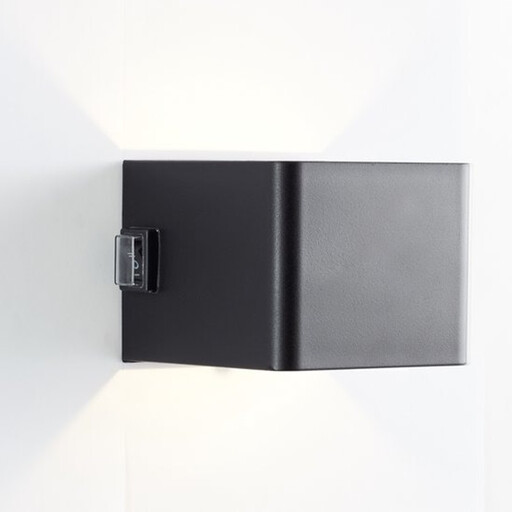
Why this fits the profile: The rechargeable sensor light can be used without fixed wiring in a hallway, garage, balcony or sheltered garden spot.
The product details mention USB charging, an integrated motion sensor and IP44. This makes placement flexible, but direct water jets should be avoided.
300 lumens, 3,000 K, magnetic mounting, integrated LED and rechargeable batteries.
We've put together a full, up-to-date list of products that fully meet these strict selection criteria and comply with current European safety regulations.
First check the IP rating, surface and included fixings. A fixed 230 V wall light must be connected by a qualified electrician according to the product information. A solar sensor light or rechargeable model can usually be mounted without wiring. Point the solar panel towards a spot with enough direct daylight.
The lifespan depends on the light source, switching frequency, battery and environment. With a rechargeable light, the available burn time decreases as the battery ages. Integrated LED lights have a long stated lifespan according to some product descriptions, but actual performance depends on use and conditions. Keep sensors and solar panels clean and follow the maintenance instructions.
An LED sensor light typically uses very little electricity, especially when it only switches on with movement. A mains-powered light does consume standby power for the sensor. A solar-powered garden light uses no mains electricity, but its operation depends on enough sunlight and the charging capacity of the built-in battery.
