
Vandaag of morgen in huis

Kwaliteit gegarandeerd

Welkomstaanbiedingen ontgrendelen: GRATIS bezorging | Tot 80% korting | Gratis 30 dagen JoyPlus-proefperiode
Download de app
A cream for sensitive skin should feel comfortable and fit into your daily routine. However, it can be difficult to distinguish marketing claims from useful product information. A cream may be described as “mild” or “soothing”, for example, while the ingredients list contains fragrance, essential oils or drying alcohol.
This guide helps you compare products effectively. You’ll find key considerations for a face cream for sensitive skin, a body lotion for sensitive skin, and skincare for dryness, tightness or visible redness.
A fragrance-free face cream contains no added fragrance, but that does not automatically mean everyone will tolerate the formula well. Preservatives, plant extracts or other ingredients may also cause a reaction in some users. Always check the full INCI list and test a new product on a small area of skin first.
Claims such as “72-hour hydration”, “reduces redness” or “restores the skin barrier” depend on the testing method and target group used. For example, NIVEA states that its Repair & Care Sensitive Body Lotion was subject to an instrumental test with 45 volunteers for the claim of up to 72 hours of hydration. This is product information provided by the brand, not a guarantee for every user.
You should also consider claims in context when looking at other products. According to NIVEA’s own research, the Soothing Day Cream was tested for hydration and skin comfort, among other factors. The stated results are therefore test outcomes, not a medical effect.
A lightweight gel may feel pleasant on oily or combination skin, but a richer barrier cream may be more practical for dry skin in winter. Conversely, a richer cream may feel sticky during the day. Choose based on when you intend to use it, your skin type and the area of the body the cream is designed for.
Look for humectant ingredients such as glycerine, panthenol and hyaluronic acid. Glycerine helps the skin retain moisture, while panthenol is often used in formulas designed to provide a comfortable skin feel. Ceramides and lipid-rich ingredients may suit users specifically looking for a cream for a compromised skin barrier.
A formula containing ceramides and panthenol is not automatically suitable for everyone. Also consider the overall formulation, texture and any fragrances.
If your skin reacts quickly to skincare products, a fragrance-free formula may be a good option. However, check that “alcohol-free” is actually stated on the packaging. Some products contain alcohol denat., while other formulas may contain fragrance allergens or essential oils.
For example, NIVEA MEN Sensitive Day Cream states 0% alcohol, but the ingredients list does contain fragrance and fragrance allergens such as linalool and geraniol. NIVEA MEN Sensitive Daily Protective Moisturizing Cream with SPF 30 also states that it contains fragrance. This does not necessarily make these products unsuitable, but it is relevant information for sensitive skin.
A day cream with SPF can be useful if you want to combine hydration with everyday sun protection. SPF 15 or SPF 30 indicates the level of UVB protection under the test conditions, but it does not replace careful application. Apply enough product and follow the instructions on the packaging.
For the body, larger packaging is often more practical. A 400 ml lotion, for example, is suitable for daily use on several areas of the body, while a 30 or 50 ml pot is more suited to targeted facial care.
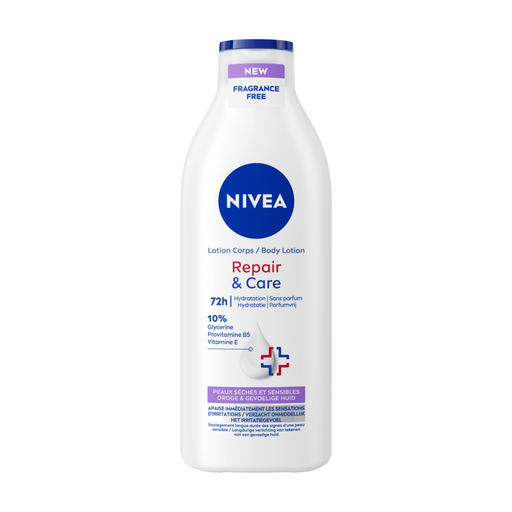
Why it suits this profile: The 400 ml bottle is practical for daily use on the arms, legs and torso. According to the product description, the lotion is fragrance-free and intended for dry and sensitive skin.
The product information describes a fragrance-free formula with a fast-absorbing, non-greasy texture. The claim of up to 72 hours of hydration is based on an instrumental test with 45 volunteers.
10% glycerine complex with panthenol and vitamin E; 400 ml; dermatologically tested according to the product description.
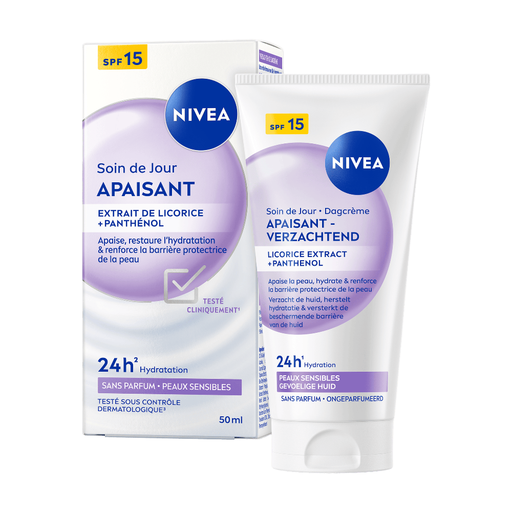
Why it suits this profile: Suitable for anyone who wants to use a hydrating fragrance-free cream for sensitive skin with SPF 15 during the day.
The product description distinguishes between hydration, skincare and SPF 15. Additional sun protection is needed for longer periods of sun exposure.
Fragrance-free and pH-neutral according to the product information; contains glycerine, panthenol and liquorice extract.
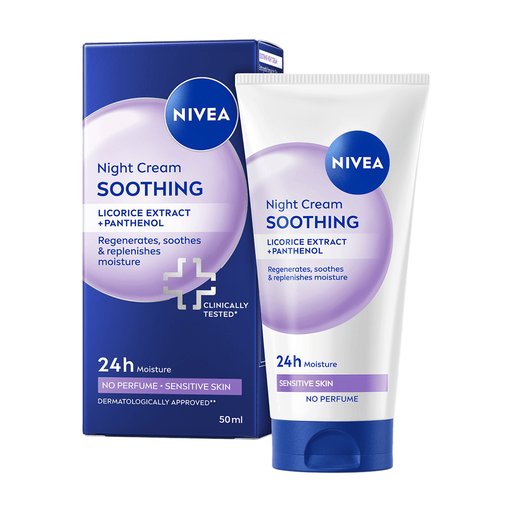
Why it suits this profile: A night cream for sensitive skin with a richer texture suits anyone looking for extra comfort in the evening without fragrance.
According to the product description, the formula is fragrance-free and pH-neutral. However, check the ingredients list if you have previously reacted to certain ingredients.
50 ml; contains glycerine, shea butter, panthenol and liquorice extract; intended for use at night.
We’ve put together a complete, up-to-date list of products that fully meet these strict selection criteria and the applicable European safety regulations.
Look for a formula containing glycerine, panthenol, shea butter or ceramides, and avoid ingredients you know you react to. A cream for dry and irritated skin may be richer than a gel cream. For the body, a lotion or body cream in a larger bottle is practical.
Not necessarily, but fragrance-free can be a sensible choice if you are sensitive to fragrances. Check the ingredients list, as fragrance-free products may still contain other ingredients that do not suit everyone. A patch test can help you introduce a new face cream for sensitive skin gradually.
Follow the expiry information on the packaging. Check the expiry date and the period-after-opening symbol, such as 6M. Close the packaging after use and store the cream in a cool, dry place. Has the fragrance, colour or texture changed? It is best not to use the product any more.
