
Vandaag of morgen in huis

Kwaliteit gegarandeerd

Welkomstaanbiedingen ontgrendelen: GRATIS bezorging | Tot 80% korting | Gratis 30 dagen JoyPlus-proefperiode
Download de app
An older dog does not automatically need the same senior dog food as another dog of the same age. A small dog may be considered a senior at a different point than a large dog. Weight, activity levels, appetite and existing health conditions also play a part.
Many dog owners pay too much for attractive packaging or choose a diet that is not a good fit. So pay particular attention to the information on the label rather than relying on bold marketing claims.
The “senior” label is useful as a starting point, but it does not tell you everything. Dog food for dogs aged 7 and over may be suitable for some small or medium-sized dogs, while large dogs may be given adapted food earlier. Always check the recommended age and dog size.
Ingredients such as glucosamine, omega-3 fatty acids and antioxidants are often highlighted prominently. According to brands’ own information, these ingredients may contribute to certain nutritional goals, but that does not mean the food treats an illness. If your dog has kidney problems, heart problems, persistent excess weight or recurring stomach complaints, consult a vet first.
Grain-free senior dog food is not necessarily needed for every dog. A grain-free formula may be suitable if your dog reacts badly to certain ingredients or if you deliberately want a recipe containing alternative carbohydrate sources. Always look at the full ingredient list, not just the words “grain-free”.
Choose a formula suited to your dog’s life stage and body size:
An adult or “mature” formula may be suitable for a dog approaching its senior years, but it is not always the same as senior dog food.
The label includes protein, fat, crude ash and crude fibre, among other information. These values provide a measurable overview of the food:
For example, the product information for Beneful Happy Adult 7+ states 24% protein, 8% fat and 3% crude fibre. The product description also mentions a lower fat content than the original Beneful variant. This does not guarantee that it is suitable for every older dog; body condition and portion size remain important.
For a dog with a sensitive stomach, well-tolerated ingredients and a gradual changeover may be important. The Eukanuba formula with lamb and rice is described in the product information as an option for small and medium-sized senior dogs; rice is described as an easily digestible carbohydrate source.
Ingredients such as prebiotics, beet pulp, glucosamine, chondroitin, and omega-3 and omega-6 fatty acids are found in various formulas. According to the brands’ product information, these are included with digestion, joints, skin or coat in mind. Treat this as product information, not as a medical effect.
If your dog has a diagnosed kidney or heart condition, standard senior dog food is not automatically sufficient. A kidney diet for dogs or heart diet for dogs should only be used in consultation with a vet. Also check the exact indication: a product intended to support kidney function is not automatically interchangeable with one intended to support the heart.
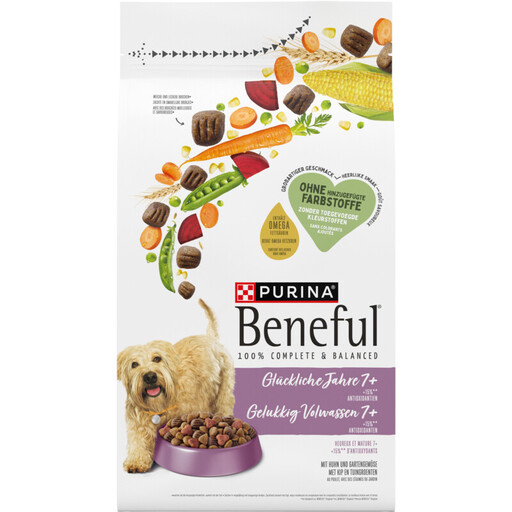
Why it suits this profile: A manageable 1.4 kg pack for anyone who wants to try senior dog food without buying a large bag straight away.
The product information gives an age recommendation from 7 years and provides specific analytical values. This means you can base your choice on more than just the front of the packaging.
According to the product description: 24% protein, 8% fat, 3% crude fibre and no added colourings, flavourings or preservatives.
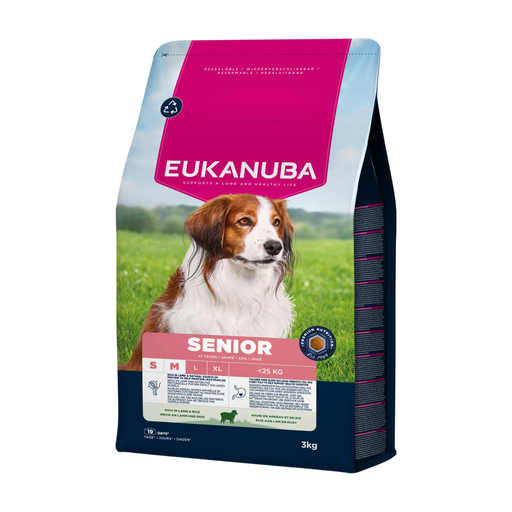
Why it suits this profile: Designed for small and medium-sized dogs from 7 years, with a recipe based on lamb and rice.
The age and size guidance is specific. This helps prevent you from choosing a general senior formula when your dog needs smaller kibble and feeding guidance suited to its size.
According to the product description, the formula contains prebiotics and beet pulp; glucosamine, chondroitin, and omega 3 and 6 are also mentioned.
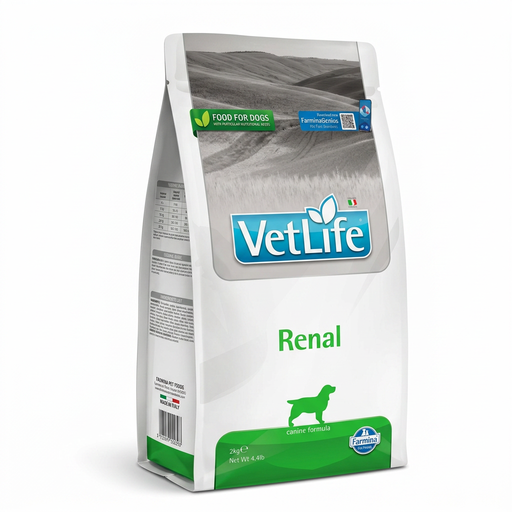
Why it suits this profile: For dog owners looking for a kidney diet for dogs on a vet’s advice, rather than general senior food.
The product description explicitly mentions kidney failure as a context for use. Only use this type of food once the medical situation and dosage have been agreed with your vet.
A complete formula according to the product description, containing ingredients including rice, potato, fish oil and dried whole egg.
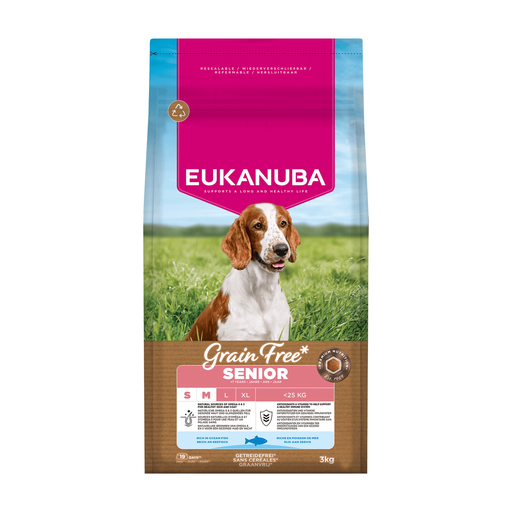
Why it suits this profile: An option for small and medium-sized senior dogs from 7 years when you are considering a chicken-free, grain-free formula.
The product information mentions alternative carbohydrate sources such as peas and gluten-free sweet potato. However, check that this composition is suitable for your dog.
According to the product description, the recipe contains fish as an animal protein source, plus prebiotics, omega 3 and 6, glucosamine and chondroitin.
We have put together a complete, up-to-date list of products that fully meet these strict selection criteria and the applicable European safety regulations.
Do not switch completely to a new dog food in a single day. Gradually mix the old and new food over several days. Monitor your dog’s stools, appetite, weight and energy levels. If your dog develops diarrhoea, vomiting, obvious lethargy or persistent itching, it is advisable to contact a vet.
Use the feeding table on the packaging as a starting point. A dog that is less active may need less food than an active dog of the same weight. Weigh out each portion rather than relying solely on guesswork. Also check the best-before date and store the food in a cool, dry place, as stated in Beneful’s product information.
No. The age threshold is a manufacturer’s guideline. Breed, size, weight, activity levels and health all help determine which food is suitable. Always check the full feeding guidance.
Senior dog food can be useful when the formula suits your dog’s age, size and energy requirements. A standard complete food may also be suitable in some cases. Discuss any changes with your vet if your dog has health problems.
Not simply because of old age. A kidney diet for dogs or heart diet for dogs is intended for specific situations and should be used on a vet’s advice. Old age in itself is not a diagnosis.
