
Vandaag of morgen in huis

Kwaliteit gegarandeerd

Welkomstaanbiedingen ontgrendelen: GRATIS bezorging | Tot 80% korting | Gratis 30 dagen JoyPlus-proefperiode
Download de app
A dog does not become a senior on one fixed day. Small dogs may only start showing signs of ageing later in life than larger breeds, while some large dogs may benefit from adapted nutrition sooner. That is why the word “senior” on the packaging alone is not enough reason to buy a product.
As a Joybuy Product Recommendation Officer, I filter marketing language down to verifiable information: age guidance, breed size, analytical constituents, ingredients and intended use. This helps you avoid paying for features that are not right for your dog.
Senior dog food for a small dog is not automatically suitable for a large dog. Kibble size, calorie requirements and the recommended age may vary. So check whether the food is intended for small, medium-sized or large dogs.
Also pay attention to the difference between “mature” and “senior”. Brands do not always use these terms in the same way. For example, a product for medium-sized dogs aged 7 to 10 is not necessarily suitable for a 12-year-old dog.
Words such as “premium”, “natural vitality” or “supports healthy joints” sound appealing, but mean little without product specifications. According to the manufacturer’s own information, some EUKANUBA recipes contain glucosamine, chondroitin, fibre or omega 3 and omega 6 fatty acids, for example. This is verifiable product information; it is not a guarantee of a particular result for every dog.
So look at the composition and analytical constituents. Beneful Happy Adult 7+ Chicken & Vegetables, for example, lists 24% protein and 8% fat. Figures like these offer more useful guidance than a general advertising promise.
Grain-free dog food is not automatically necessary for every older dog. A grain-free recipe may be suitable if you are deliberately looking for an alternative composition or if your vet discusses a specific dietary choice with you. Compare the full ingredients list and check which carbohydrate sources are used instead, such as potato, peas or sweet potato.
First, check the age guidance on the packaging. The range includes, among others, the following recommendations:
This classification is a useful guide, but it does not replace assessing your dog’s weight, activity levels and condition.
Compare protein, fat, crude fibre and crude ash. A lower fat percentage may be relevant for a dog that gets less exercise, but the right amount depends on portion size and activity levels. Follow the feeding guidelines on the packaging and adjust the quantity if your dog’s weight changes.
A high-fibre composition can be beneficial for digestion. EUKANUBA product descriptions mention prebiotics and beet pulp, among other ingredients. According to the brand’s own information, these ingredients form part of a fibre mix. Then assess whether your dog tolerates the food well.
Chicken dog food is a common choice, but not every dog responds to the same protein source. A lamb and rice recipe can be an alternative for owners looking for a different flavour and composition. However, check whether chicken is still included in the recipe; in some lamb recipes, chicken is used as an additional protein source.
When choosing dog food for small dogs, also check the size and shape of the kibble. For large dogs, specially adapted kibble may be more practical. EUKANUBA product descriptions mention a hexagonal kibble shape and a DentaDefense system; according to the manufacturer, these are intended to support dental care. This remains product information and is not a replacement for tooth brushing or veterinary check-ups.
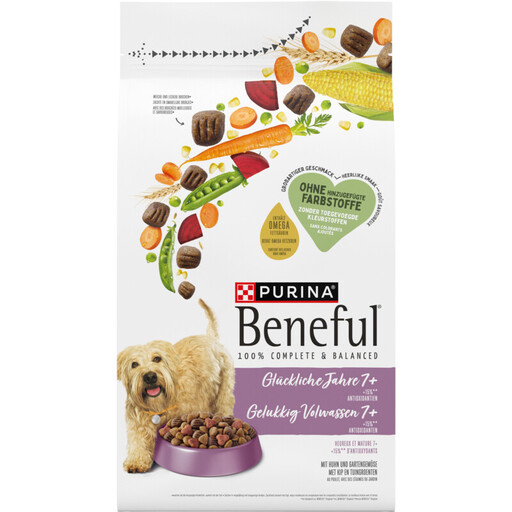
Why it suits this profile: The 1.4 kg pack is convenient if you want to switch gradually without immediately buying a large supply. The product description is aimed at older dogs from 7 years of age.
The age guidance and analytical values are clearly stated. According to the product information, the food contains 8% fat, with no added colourings, flavourings or preservatives listed.
Small pack, chicken and vegetable flavour, 24% protein and an explicitly stated target age of 7 years and over.
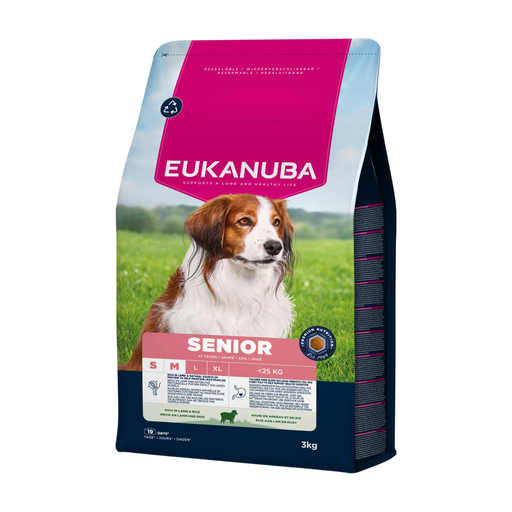
Why it suits this profile: This variety is tailored to small and medium-sized senior dogs from 7 years of age. Lamb and rice offer a different flavour and ingredient combination from standard chicken-based dog food.
The product description specifies both the breed size and the age range. However, check the full composition: according to the product information, the formula contains chicken as well as lamb.
3 kg, lamb and rice, a fibre mix with prebiotics, and a formula for small and medium-sized dogs.
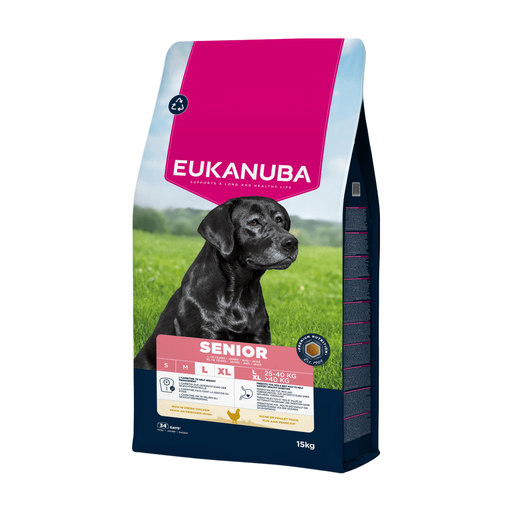
Why it suits this profile: The 15 kg pack is practical for households with a large dog that needs more food every day. The product description specifies large senior dogs from 9 years of age.
The formula is identified not only as senior food, but is also linked to large breeds and a specific age range. This helps you avoid choosing an unsuitable portion size or kibble.
15 kg, fresh chicken according to the product description, a fibre mix and listed ingredients such as L-carnitine, glucosamine and chondroitin.
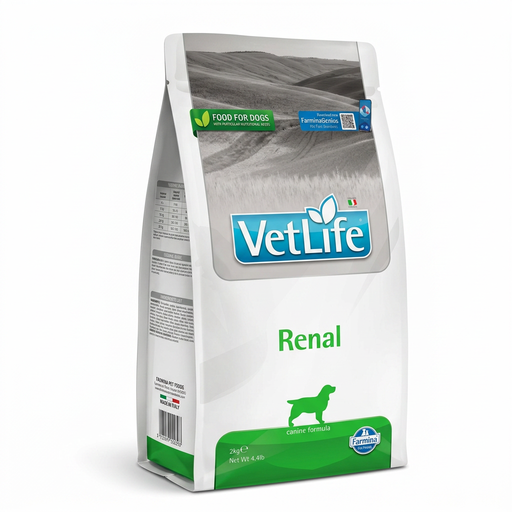
Why it suits this profile: This is a specialised formula for dogs for whom a renal diet is being considered. Only use this type of food after consulting your vet.
The product description clearly states that this is a complete nutritional formula for kidney problems. This means it is not a general senior kibble for every older dog.
2 kg, with ingredients including rice, potato, fish oil and dried egg in the stated composition; veterinary guidance remains important.
We have put together a complete, up-to-date list of products that fully meet these strict selection criteria and the applicable European safety regulations.
Make the switch gradually over about a week. Start by mixing a small amount of the new food into your dog’s usual food, then increase it step by step. Keep an eye on your dog’s stools, appetite, weight and drinking habits. Do not stop a prescribed diet without consulting your vet.
Store dry food in a cool, dry place, seal the packaging securely and check the best-before information on the bag. With a large pack, it is sensible to work out how quickly your dog will use it. This helps prevent the food from being left open for months.
This varies by breed size and brand. Products may be intended for dogs from 7, 9, 10 or 11 years of age. Look at both the age guidance and your dog’s expected adult size. Weight, activity levels and condition are just as important.
No. A healthy older dog may tolerate a regular complete food well, while a dog that is overweight or has a food sensitivity or kidney problems may need a different composition. If your dog has symptoms or a diagnosed health condition, consult your vet first.
A renal diet is intended for a specific dietary situation, not simply because a dog is older. Have kidney problems assessed by a vet first. Your vet can advise whether Farmina Vet Life Canine Kidney Formula or another diet is suitable and how it should be given.
