
Vandaag of morgen in huis

Kwaliteit gegarandeerd

Welkomstaanbiedingen ontgrendelen: GRATIS bezorging | Tot 80% korting | Gratis 30 dagen JoyPlus-proefperiode
Download de app
A semi-automatic espresso machine gives you more control than a fully automatic model. You measure out the ground coffee yourself, fit the portafilter and decide how to froth your milk. This makes making espresso at home particularly appealing to coffee lovers who want to tailor the brewing process to their own taste.
The market is full of terms such as “20 bar”, “professional extraction” and “stainless-steel design”. These specifications do not tell the whole story. Below, you’ll find out which features can be checked, which common pitfalls are often overlooked and which type of machine best suits the way you use it.
A 20-bar espresso machine sounds appealing, but the pump pressure stated on the packaging is not the same as the pressure at which water flows through the coffee. The final result also depends on the grind size, dose, tamping and filter. A 15-bar machine can therefore also be suitable for everyday use at home.
Use pump pressure as one point of comparison, not as proof of quality on its own. An espresso machine with a pressure gauge can provide extra insight while brewing, as you can read the pressure during the extraction process.
An espresso machine with a steam wand or integrated milk frother is useful for cappuccinos and latte macchiatos. However, the steam wand quickly becomes dirty because of milk residue. If you do not wipe and flush the wand immediately after use, cleaning becomes unnecessarily difficult.
So do not just check whether a machine can froth milk. Also consider how easy it is to clean the steam function and removable parts.
A stainless-steel espresso machine can feel sturdy and fit neatly into a modern kitchen. Also look at the dimensions, water tank, portafilter and the space available beneath your kitchen cupboards. A metal exterior does not automatically prevent wear to the pump components or make maintenance straightforward.
A removable water tank and removable drip tray are practical features you will appreciate every day.
For home use, you will often come across machines with 15 or 20 bar pump pressure. According to the product specifications, the machine from the ochama range has a 20-bar pump and a pressure gauge. The De’Longhi models in this selection specify 15-bar pump pressure. Also compare the following:
A pressure gauge is particularly useful for users who enjoy experimenting with grind size and dosage. For beginners, an easy-to-use control panel may be more important.
A traditional steam wand gives you control over the texture of the milk. This is ideal for a home barista who wants to learn how to froth milk. An integrated milk frother or a system such as the one on the De’Longhi Dedica Duo may be appealing if you want to prepare cappuccinos more quickly.
Pay attention to the wording in the product description. “Milk frother” may refer to a manual steam wand rather than a fully automatic milk tank. This difference affects ease of use and cleaning.
A 0.9-litre tank is compact, but it needs refilling more often. According to the product specifications, the De’Longhi Dedica EC685 and Dedica Duo have a 1.1-litre tank. The Classic EM450 specifies 1.7 litres. A larger tank is practical if several people in your household drink coffee each day.
Also check:
Use clean, cold water and follow the manufacturer’s maintenance instructions. Switch off the appliance, unplug it from the mains and allow hot parts to cool completely before cleaning.
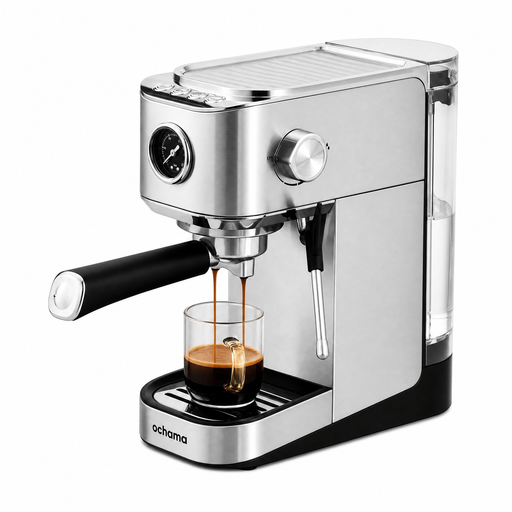
Why it suits this profile: This compact semi-automatic espresso machine combines a 0.9-litre removable water tank with a steam function and pressure gauge. It offers an accessible way to prepare espresso and milk-based coffees at home.
The pressure gauge makes the extraction easier to monitor than on a model without one. According to the product description, the removable parts are designed to be easy to clean.
20-bar pump, cup warmer, metal casing, steam wand and removable 0.9-litre tank.
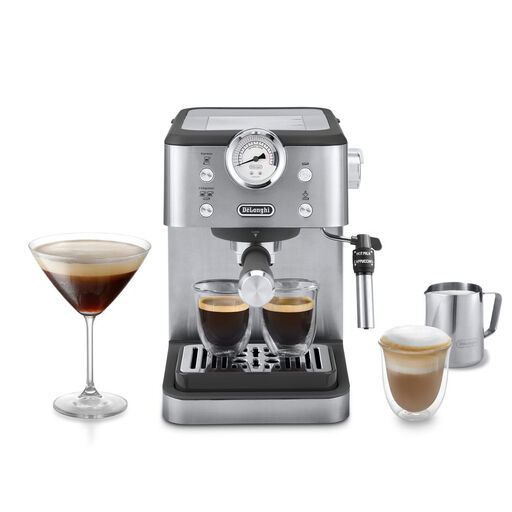
Why it suits this profile: A larger 1.7-litre water tank, stainless-steel casing, pressure gauge and adjustable cappuccino system are well suited to households where several cups are prepared regularly.
As well as its metal appearance, the product information lists specific features such as Thermoblock technology, a pressure gauge and a removable drip tray.
15-bar pump, 1.7-litre tank, two cups at the same time and adjustable steam function.
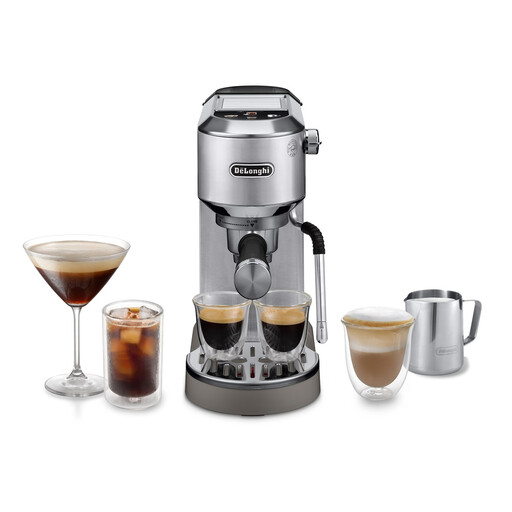
Why it suits this profile: This machine is designed for users who want to combine manual control with an integrated milk function. According to the product specifications, espresso and steam can be used at the same time.
The product description identifies the type of milk function as a steam wand. This means you know in advance that it is not a fully automatic milk system.
15-bar pump, stainless-steel construction, 1.1-litre tank, and espresso and steam at the same time according to the product specifications.
We have put together a complete, up-to-date list of products that fully meet these strict selection criteria and the applicable European safety regulations.
Yes, provided you are willing to learn a few basic steps: measuring out the coffee, tamping it, fitting the portafilter and cleaning the machine. A model with clear buttons, a removable tank and a pressure gauge can make the learning process more straightforward. If you want to keep manual tasks to a minimum, a fully automatic machine may be a better choice.
Its lifespan depends on usage, water quality, cleaning and descaling. Empty the drip tray regularly, clean the filter after use and clean the steam wand immediately after frothing milk. Always follow the maintenance intervals in the manual. A metal casing may feel durable, but on its own it does not indicate how long all the internal components will last.
As well as the purchase price, you will pay for coffee beans or ground coffee, water, descaler and, if necessary, cleaning products. A coffee grinder is an additional purchase if you want to grind fresh beans. A machine with a larger tank may be more practical for frequent use, while a compact model takes up less space. So do not compare only the machine price. Consider your expected usage and maintenance costs too.
