
Vandaag of morgen in huis

Kwaliteit gegarandeerd

Welkomstaanbiedingen ontgrendelen: GRATIS bezorging | Tot 80% korting | Gratis 30 dagen JoyPlus-proefperiode
Download de app
A semi-automatic espresso machine gives you more control than a fully automatic model, without requiring you to set up a full coffee bar. You grind or measure out the coffee yourself, tamp it and have more influence over the brewing process. This makes this type of espresso machine appealing to home baristas, coffee lovers and households that want to prepare espresso, cappuccino and latte.
There are, however, a few potential pitfalls. A high bar rating may sound impressive, but it does not tell you everything about everyday use. A milk frother may also be less practical than expected, and the cleaning involved can easily be underestimated. Use the following points to compare models based on verifiable features rather than marketing language.
An espresso machine with 15 bar is often presented as a guarantee of rich espresso. In reality, pump pressure is just one product specification. Also consider the controls, filter, water-reservoir capacity and the way the machine reduces pressure.
A 20-bar model is not automatically more suitable for every user. What matters more is whether the machine is easy to operate and whether you can properly adjust the coffee quantity, grind size and extraction time.
An espresso machine with milk frother or espresso machine with steam wand needs space beside and above the machine. So, check the dimensions of your worktop. A steam function can be suitable for cappuccino and latte, but you will need to hold the milk jug yourself and regulate the steam flow.
Also consider how easy the steam wand is to clean. Milk residue can build up quickly if you do not wipe the wand immediately after use and flush it briefly.
An espresso machine with water reservoir is practical if you do not want to use a fixed water connection. A 0.9-litre reservoir may be sufficient for occasional use, while a 1.2-litre capacity is better suited to several cups a day. A visible reservoir makes it easy to check the water level.
Also check whether the reservoir is removable. This makes filling, emptying and periodic cleaning less of a chore.
Look at the stated pump pressure, but assess it alongside the controls. According to the product description, the ochama machine with 15 bar has a 15-bar pump, a control panel and a steam function. The pressure rating is a technical specification of the appliance; the final flavour also depends on the coffee beans, grind size, dosage and tamping.
With a semi-automatic machine, a portafilter and secure locking mechanism are important. Check whether the machine is suitable for the way you buy your coffee: ground coffee, capsules or a separate coffee grinder.
If you want to make cappuccino and latte regularly, choose a machine with an easy-to-reach steam wand. A steam wand gives you control over the amount of air and the temperature, but it takes some practice. Hold the milk jug at an angle and move it gently to achieve an even texture.
Only use the steam function as instructed in the manual. The brew group, steam wand and outlet can become hot during use. Do not touch these parts directly, and allow the machine to cool down before carrying out maintenance.
An espresso machine with cup warmer can be useful if you want to preheat your cups. This does not replace correct extraction, but it fits well into a regular espresso routine.
A removable drip tray is a practical feature. It makes it easier to remove spilled coffee and rinse water. The 15-bar ochama machine is listed as having a removable drip tray. For every model, check which parts can be removed and whether the manual provides descaling instructions.
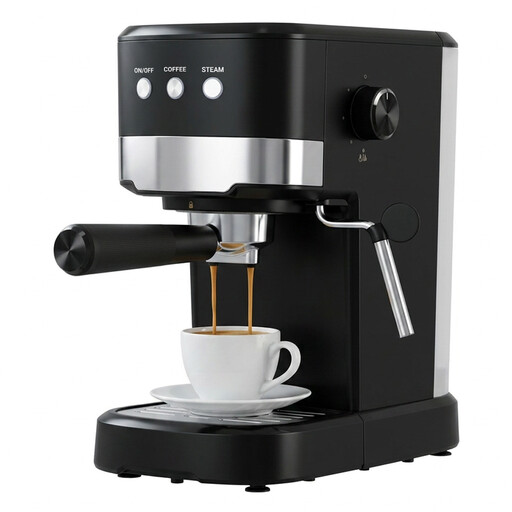
Why it suits this profile: This model combines a 1.2-litre water reservoir with a steam function and cup warmer. It is therefore suitable for users who want to try different coffee drinks at home without a large appliance.
The product specifications list more than just 15 bar. They also include a visible reservoir, removable drip tray and three safety functions: temperature protection, automatic pressure release and switch-off protection.
15-bar pump, 1.2-litre water reservoir, steam function, cup warmer and removable drip tray.
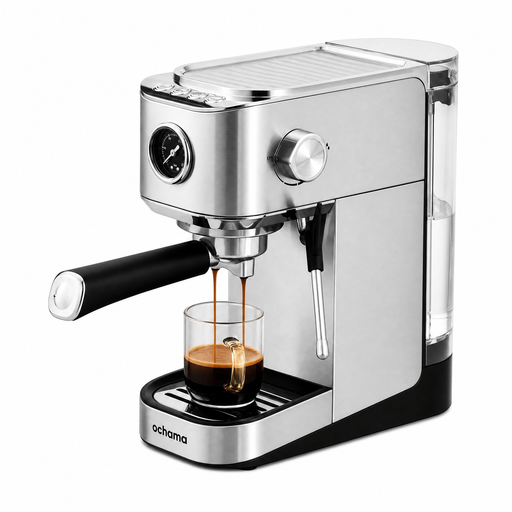
Why it suits this profile: Those who value material quality and additional visibility get a metal housing and pressure gauge. The machine supports a more hands-on approach to making espresso at home.
The pressure gauge helps you monitor the brewing process more closely, while the removable parts support everyday maintenance. The water reservoir has a capacity of 0.9 litres.
20-bar pump according to the product listing, metal housing, pressure gauge, cup warmer and steam function.
Why it suits this profile: This model is well suited to households that prepare several coffee drinks a day and want a larger reservoir. The separate steam function is useful for cappuccino and latte.
The water level is visible and the drip tray is removable. This means you can see more quickly when it needs refilling or emptying, and clean the tray more easily.
1.2-litre reservoir, 15-bar specification, steam function, cup warmer and three listed safety features.
If you want to clean the machine easily, set aside a few minutes each day for a quick rinse and wipe-down. Descaling is needed less frequently, but how often you do it depends on the hardness of the water in your area and how much you use the machine. Only use suitable products and follow the manufacturer’s instructions.
We have put together a complete, up-to-date list of products that fully meet these strict selection criteria and the applicable European safety regulations.
A model with a stated 15-bar pump offers a standard technical specification for this type of appliance. However, the flavour is also determined by the coffee, grind size, dosage, tamping and extraction time. So, do not compare models based solely on the bar rating.
Its lifespan depends on usage, materials, water quality and maintenance. Clean the brew group and steam wand according to the manual, prevent limescale build-up and allow the machine to cool down before removing any parts. Before buying, also check the warranty and returns policy.
That depends on your choice of coffee and how much you use the machine. You will generally buy ground coffee or coffee beans and use electricity for heating and steaming. Capsules may have a different cost structure per cup. A semi-automatic machine mainly gives you more choice over your coffee and dosage, but it also takes time to fill, tamp and clean.
