
Vandaag of morgen in huis

Kwaliteit gegarandeerd

Welkomstaanbiedingen ontgrendelen: GRATIS bezorging | Tot 80% korting | Gratis 30 dagen JoyPlus-proefperiode
Download de app
As a Joybuy Product Recommendation Officer, I see people struggle daily with choosing a new piston espresso machine. The market is flooded with models that promise the world. But how do you know if you're buying a quality appliance or falling into a marketing trap? This guide will help you make the right choices, based on the specifications that truly matter.
Before we look at what makes a machine great, it's crucial to recognise the most common pitfalls. Many buyers fall for them, resulting in disappointment and unnecessary costs.
espresso machine with a built-in grinder seems like the ideal, space-saving solution. However, in budget models, the integrated grinder is often low-quality with limited grind settings. This restricts your control over the flavour, and if the grinder breaks, the entire machine is often rendered useless.To sidestep the pitfalls, focus on the technical core. These three points determine 90% of your coffee's quality and your machine's longevity.
A constant and correct water temperature (between 90-96°C or 195-205°F) is crucial for a good extraction.
De'Longhi espresso machine or Philips espresso machine often use this system.This is a personal choice.
The build quality and the portafilter (the filter holder) directly impact ease of use and the final result.
Based on the criteria above, we have selected a few models that suit different types of home baristas.

Why This Fits Their Persona: Ideal for those who want to learn the basics of espresso making without a large initial investment. This compact and affordable model is easy to use and has a small footprint that fits on any countertop.
This machine features a stainless steel housing, which is more durable than the plastic alternatives in this price range. It's a model without a built-in grinder, giving you the freedom to invest in a separate, high-quality grinder later on.
Its fast heat-up time and the ability to use both ground coffee and ESE pods offer great flexibility for a beginner.
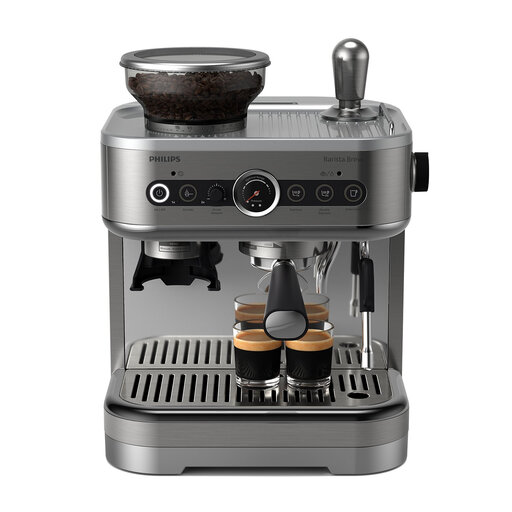
Why This Fits Their Persona: A complete home barista coffee machine that has it all: bean grinding, coffee brewing, and milk frothing. Perfect for those who seek convenience without sacrificing control and quality.
This espresso machine with a grinder features a conical metal burr grinder with 15 settings. The 58mm portafilter and PID temperature control are features that avoid the pitfall of inconsistent budget machines.
The built-in manometer (pressure gauge) and the included calibrated tamper help you understand and perfect the brewing process step by step.
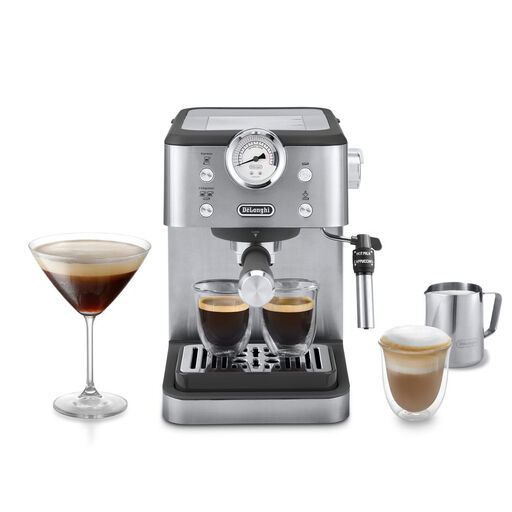
Why This Fits Their Persona: This De'Longhi espresso machine combines classic Italian design with the reliability of a premium brand. A stylish and capable machine that's a showpiece for your countertop.
With a robust stainless steel housing and a Thermoblock system for fast, stable temperature, this model avoids the pitfall of inconsistent budget machines. The pressure gauge also gives you direct feedback on your extraction.
The adjustable cappuccino system makes it easy to create both flat, steamed milk and creamy foam, making this an excellent espresso machine with a milk frother.
We have compiled a complete, up-to-date list of products that fully meet these strict selection criteria and safety regulations.
Although many machines advertise 15 to 20 bars, this is the pressure the pump can generate. For the actual espresso extraction, a stable pressure of around 9 bars at the brew group is ideal. A machine with good pressure build-up and regulation is more important than one with the highest bar specification.
That depends on your priorities. For convenience and a tidy countertop, an integrated model is an excellent choice, provided you opt for a model with a quality grinder (metal burrs, multiple settings). If you want maximum control over the grind size and the flexibility to upgrade your equipment in the future, a semi-automatic espresso machine with a separate grinder is often a better investment.
The lifespan heavily depends on the build quality and maintenance. A cheap plastic model might only last a few years. A machine with a stainless steel housing and high-quality internal components can easily last 5 to 10 years or more with correct and regular maintenance (especially descaling). Always read the manual for the manufacturer's specific maintenance instructions.
