
Vandaag of morgen in huis

Kwaliteit gegarandeerd

Welkomstaanbiedingen ontgrendelen: GRATIS bezorging | Tot 80% korting | Gratis 30 dagen JoyPlus-proefperiode
Download de app
A self-tan can give your skin a summery glow without you having to spend time in the sun. In practice, though, the results can sometimes disappoint. A shade that’s too dark, patches around the knees or a sticky-feeling formula are common reasons for leaving a bottle unused.
As a Joybuy Product Recommendation Officer, I focus on information you can check: where the product is intended to be used, its colour intensity, texture, ingredients and directions. Marketing claims don’t automatically guarantee the results you’ll get.
Not every product with “bronze” in its name contains a self-tanning ingredient. For example, NIVEA SUN Protect & Bronze products state that they do not contain self-tan. According to the product information, they contain SPF and pro-melanin extract and are designed to be used while you’re out in the sun.
A self-tan product, such as a lotion, mousse or tanning lotion containing dihydroxyacetone (DHA), works differently. It gradually colours the outer layer of your skin. This also means that a self-tan doesn’t provide sun protection, unless the packaging separately states an SPF.
A product designed for medium skin tones can look more noticeable on fair skin. Check whether the variant is suitable for fair to medium skin tones and whether you can build up the colour gradually. A subtle self-tanning lotion is often more practical for beginners than a highly concentrated mousse or drops.
An even-looking tan depends on more than the formula. Dry patches, rough skin and applying too much product to your elbows, knees, ankles and hands can cause uneven colour. Even a self-tan that the brand describes as less likely to streak needs to be applied to well-prepared skin and spread evenly.
First, choose a product for the right area. A self-tan for the body is generally designed for larger areas of skin, such as your legs, arms and torso. For your face, a lighter texture or tinted fluid may be more convenient. Avoid contact with your eyes and always follow the warnings on the packaging.
Want to combine a face self-tan with everyday protection? According to the product information, NIVEA SUN UV Face Ultra Light Daily Fluid has a light tint and SPF 50+. It’s a tinted sun fluid, not a traditional self-tan. Its colour comes from pigments in the product and can be washed off.
Check the drying time. Wait until the product has been sufficiently absorbed before getting dressed. This helps reduce the risk of staining fabrics.
A moisturising self-tan may feel more comfortable on dry skin. Check the ingredients list for glycerine, oils or other conditioning ingredients, for example. NIVEA Sun Touch Body Lotion lists glycerine, ginkgo extract and grapeseed oil. According to the brand’s product information, the lotion provides up to 72 hours of hydration; this claim is based on an instrumental evaluation involving 36 women over two weeks.
Always check the full ingredients list too, especially if you have sensitive skin. Perfume and certain fragrance ingredients may not suit everyone. Test a new product on a small area of skin first and stop using it if irritation occurs.
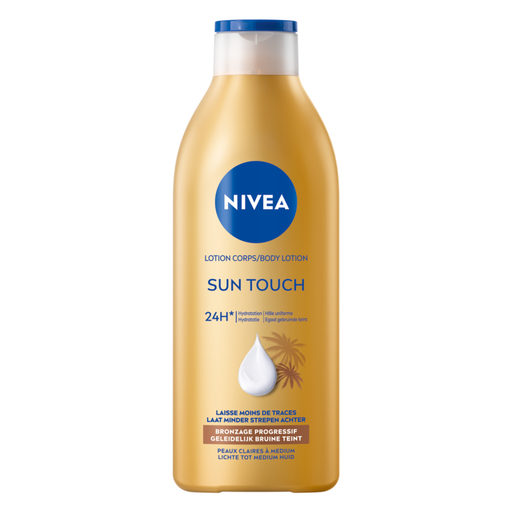
Why it suits this user: This lotion is designed for the body, comes in a 400 ml size and, according to the product information, is formulated for fair to medium skin tones. Its lotion format makes it suitable for regular use.
The product description mentions a natural-looking colour and fewer streaks. Still, build up the shade gradually and take extra care when applying around your hands, knees and ankles.
400 ml, glycerine, ginkgo extract and grapeseed oil. According to the brand, the formula is dermatologically tested.
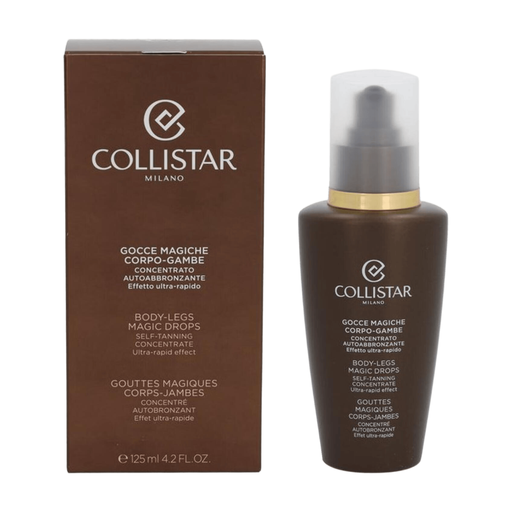
Why it suits this user: These concentrated drops are designed for the body and legs. They’re a good fit if you want to control the amount you use and prefer a light texture.
Measuring out the drops helps you avoid applying too much product straight away. Follow the directions and spread the formula evenly.
125 ml, pump dispenser and, according to the product description, a fast-absorbing texture. The ingredients list includes vitamin E.
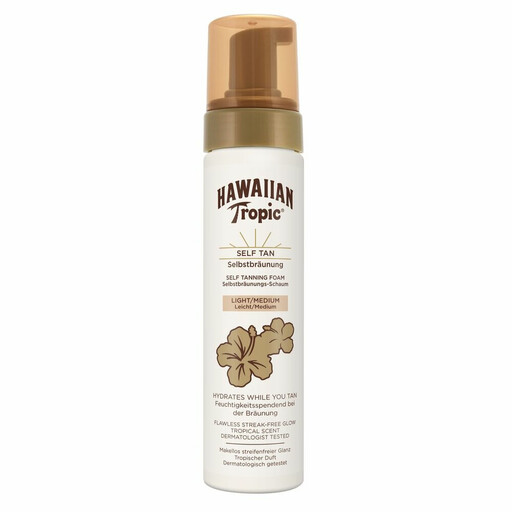
Why it suits this user: This mousse is designed for the body and comes in a light/medium shade. Its foamy texture and instructions to use a tanning mitt make it a good choice for those who tan regularly.
The directions emphasise applying to clean, dry skin, using circular motions and allowing plenty of time to dry. This helps reduce the risk of uneven patches.
200 ml, aloe vera and vitamin E according to the product information. The variant is described as vegan and dermatologically tested.
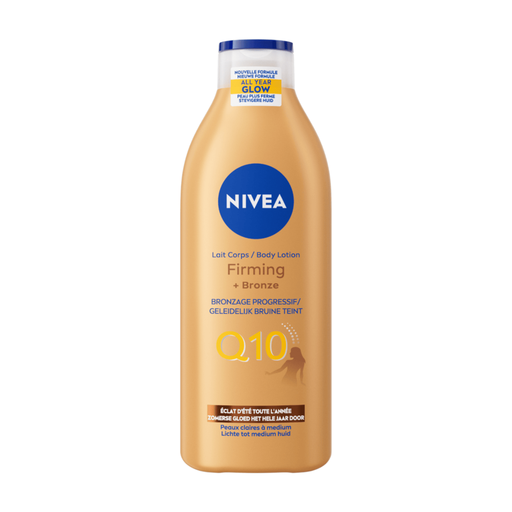
Why it suits this user: This body self-tan is designed to build up gradually with daily use and, according to the product description, is aimed at fair to medium skin tones.
The directions recommend applying it daily to clean, dry skin and building up the colour gradually. Wash your hands afterwards.
400 ml, DHA listed in the ingredients and Q10 according to the product description. The lotion is designed to give a gradual, natural-looking colour.
We’ve put together a complete, up-to-date list of products that meet these strict selection criteria and the applicable European safety regulations.
Self-tan is not a substitute for SPF. Use a separate sun protection product during the day when you’re outdoors, even if your skin already has a tanned look.
It varies depending on the formula, your skin type and your washing routine. Self-tan usually fades gradually as the outer layer of skin renews and is washed away. Follow the storage period and directions on the packaging, and check the open-jar symbol for the product’s shelf life after opening.
Only if the product is designed for that purpose. A body self-tan isn’t automatically suitable for your face. Ideally, choose a product that explicitly says it can be used on the face, and avoid your eyes, eyebrows and lips.
Choose a light or light/medium variant, prepare your skin and apply thin layers. Take extra care with dry areas and wash your hands immediately after use. It’s usually easier to build up a light shade gradually than to correct a highly pigmented formula.
