
Vandaag of morgen in huis

Kwaliteit gegarandeerd
Download de app
Categorieën

An advanced robot vacuum and mop with a self-cleaning docking station is a significant investment. It promises a self-maintaining home, but the reality can be disappointing if the device doesn't meet your specific needs. A model that gets stuck on your carpet, misses pet hair, or skips corners is a costly mistake.
This guide will help you make an informed decision. We'll cover the key specifications to consider and highlight several models with distinct features.
To make the right choice, it's essential to understand the technical specifications. Focus on the following four areas to find a model that fits your home and lifestyle.
The term docking station can encompass various functions. The most advanced stations offer a completely hands-free experience.
A self-cleaning robot vacuum with all these features minimises maintenance.
Suction power is measured in Pascals (Pa). A higher value means more power, which is especially important for homes with carpets or pets.
Many smart models automatically adjust their suction power when they detect carpet.
Not all mopping functions are created equal.
Modern robots use LDS (Laser Distance Sensor) navigation to create a precise map of your home. Through a smart robot vacuum app, you can:
Good obstacle detection with cameras or sensors prevents the robot from getting stuck on cables, shoes, or toys.
Based on the criteria above, we have selected three models that excel in different areas.
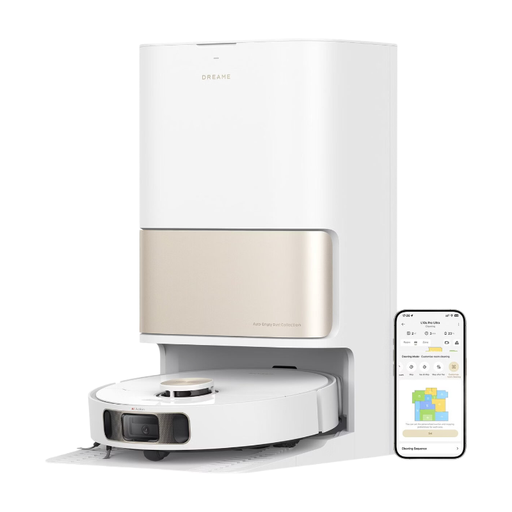
Why this product: This model focuses on an advanced mopping experience with MopExtend technology, where the mop pads extend to clean tightly along baseboards and in corners. The docking station automates the entire mopping process.
Pros:
Best for: Households with predominantly hard floors seeking a thorough and highly automated mopping function.
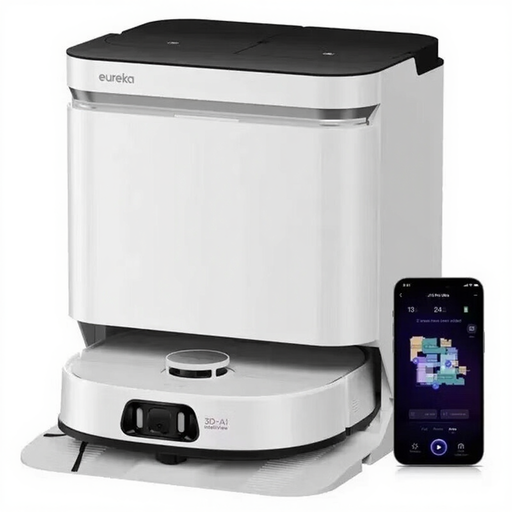
Why this product: The EUREKA J15 Pro Ultra is a powerhouse with exceptionally high suction and unique technologies, such as washing mops with 75°C hot water and an anti-tangle mechanism that actively cuts hair.
Pros:
Best for: Large households, pet owners, and users looking for the most powerful and technologically advanced solution for both carpets and hard floors.
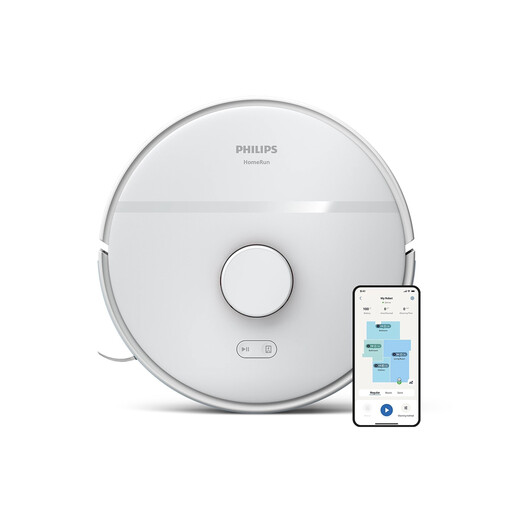
Why this product: This Philips model offers a reliable combination of powerful vacuuming and mopping with a focus on smart, efficient navigation. It's a solid choice for mixed floor surfaces. Note: This model does not have a self-cleaning docking station, but it does automatically return to charge.
Pros:
Best for: Users who want a powerful and smart robot vacuum and mop from a well-known brand and place less importance on a fully automated docking station.
These three models provide a good overview of the current market. However, if you're looking for a model with slightly different specifications or want to compare more options, explore our full range.
View all robot vacuums with mopping function
1. How often do you need to empty a robot vacuum with an auto-empty station? This depends on the size of the dust bag in the station and the amount of dirt in your home. On average, the dust bag in the docking station only needs to be replaced every 30 to 75 days. The app will usually notify you when it's time.
2. Does a robot vacuum and mop work well on carpet? Yes, most advanced models are designed for both hard floors and carpet. They feature carpet detection. When the robot approaches a carpet, it will automatically lift its mopping pads and increase suction power to prevent the carpet from getting wet and to clean it more deeply.
3. Is higher suction power (Pa) always better? Not necessarily. While high suction is essential for (high-pile) carpets and pet hair, it can lead to shorter battery life and more noise on hard floors. A model with around 5000-7000 Pa of suction and an automatic adjustment feature offers the best balance of performance and efficiency for most situations.