
Vandaag of morgen in huis

Kwaliteit gegarandeerd

Welkomstaanbiedingen ontgrendelen: GRATIS bezorging | Tot 80% korting | Gratis 30 dagen JoyPlus-proefperiode
Download de app
A robot vacuum that not only vacuums but also mops and then cleans itself. It sounds like the ultimate solution for a busy household. Yet, the search often leads to frustration. Many models promise complete automation, but in practice, you still find yourself performing daily maintenance. Before you invest, it's important to recognise the common pitfalls.
The market is flooded with clever marketing terms. Watch out for these three points where things often go wrong:
To avoid buyer's remorse, it's crucial to look beyond the advertising. Focus on the technical specifications that determine how autonomous and effective an all-in-one robot vacuum and mop truly is.
A robot vacuum with an auto-empty dock is standard, but the differences are significant. A basic model only empties the dust container. An advanced station offers a fully automated cycle:
mopping robot with hot water cleaning offers a hygienic advantage here, as it helps to better remove bacteria and stubborn dirt.The navigation technology determines how efficiently and carefully the robot does its job. Most models use LiDAR (laser navigation) to create an accurate map of your home and clean systematically. This is a solid foundation.
However, for a truly smart robot vacuum with an app that can bypass obstacles, robot vacuum with AI obstacle recognition is indispensable. A system with cameras and AI can identify everyday objects like shoes, toys, and cables and manoeuvre around them. This is especially important for a robot vacuum for pet hair, as it helps to recognise and avoid pet accidents.
The first generation of mopping robots simply dragged a wet cloth behind them. Modern, effective models use active mopping techniques:
Based on these criteria, we have analysed models that offer a high degree of automation and cleaning performance.
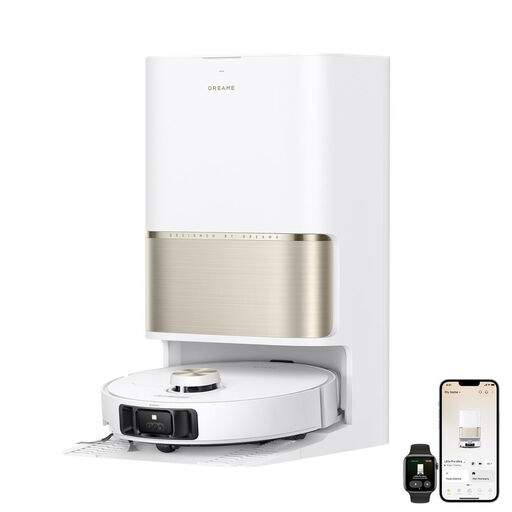
Why This Fits Their Persona: Ideal for busy homeowners and families with pets who want a truly hands-free cleaning solution. This model combines powerful suction with a fully automated station that handles nearly all maintenance.
The PowerDock 4.0 station washes the mops with hot water and dries them, avoiding the "self-cleaning myth." Its AI navigation and Dual Flex Arm technology directly address the pitfalls of poor obstacle recognition and insufficient edge cleaning.
Fully automated maintenance: The station empties, washes, dries, and refills. Superior edge cleaning: The extendable mop and brush reach corners and baseboards that other robots miss.
We have curated an up-to-date selection of robot vacuums that meet strict criteria for performance and ease of use.
Although an advanced station takes a lot of work off your hands, it is not completely maintenance-free. You will need to periodically (usually once every 1-2 months) replace the dust bag in the station and refresh the clean and dirty water in the tanks. It is also advisable to clean the station itself from time to time.
Yes, most modern models with a mopping function have an automatic mop lift. As soon as the robot's sensors detect a carpet, the mop pads are lifted. This allows the robot to continue vacuuming without getting the carpet wet.
For households with pets, it is highly recommended. A robot vacuum with AI obstacle recognition can not only avoid toys or food bowls but also recognise and avoid pet accidents. This prevents a scenario where the robot spreads a mess throughout the house, which makes the investment worthwhile for many pet owners.
