For a school-holiday lunch, choose crispbread that clearly lists wholegrain ingredients if wholegrains and fibre are your priorities. A lighter sesame variety may be a better fit if your child prefers a delicate crunch. Seeds don’t automatically make a product wholegrain, so compare the ingredients, fibre and salt per 100 g. If your child has allergies, check the allergens and any ‘may contain’ statements too.
Who should consider this choice?
Parents comparing wholegrains and fibre
You’re looking for crispbread as a crunchy lunch base and want to check the ingredients and nutrition information to see how much wholegrain and fibre a variety contains. The word ‘seeds’ alone doesn’t tell you that.
Families who need to check allergens
If sesame, wheat, rye or possible cross-contamination is a concern, the up-to-date ingredients and allergen information matters more than the product name or picture on the front of the pack.
Parents putting together a practical holiday lunch
You want a texture your child enjoys and a base that works with your chosen toppings. Storage and portability also matter if you’re using crispbread for several lunches.
What should you look for?
First, decide what matters most for this lunch: wholegrains and fibre, allergens, your child’s preferences or the balance of the whole meal. Then compare nutritional values on the same basis, preferably per 100 g.
| What to consider |
What to check when buying |
Who might prioritise this? |
| Wholegrains and fibre |
Check whether wholegrains are listed in the ingredients and compare fibre per 100 g. |
If crispbread is going to be the base of my lunch, I want to know what’s behind the ‘with seeds’ claim. An estimated 33% of consumers say wholegrains and fibre are their top priority. |
| Allergens |
Read the ingredients, highlighted allergens and any relevant ‘may contain’ statements on the current packaging. |
If sesame, gluten or cross-contamination matters for my child, I need to be able to check the specific variety. Around 27% of consumers put this check first. |
| Texture and use |
Check the texture description and consider whether the product works with your toppings and the way you’ll take the lunch with you. |
A crunchy base is only useful to me if my child will eat it and I can make it into a lunch. An estimated 20% of consumers put this practical preference first. |
| Salt and ingredients |
Compare salt per 100 g and factor in your chosen toppings too. |
For a lunch with savoury toppings, I want to look beyond the seeds and check what else is in the product. Around 20% of consumers give the overall ingredients top priority. |
Common mistakes
-
Assuming ‘with seeds’ means wholegrain
Seeds and wholegrains are different things. Jumbo lists 15.5 g of fibre per 100 g for Leksands Knäckebröd Zaden en Zeezout; Albert Heijn lists 4.6 g per 100 g for AH Knäckebröd sesam. So these two products aren’t interchangeable if fibre is your main point of comparison.
Check the ingredients and compare the fibre values per 100 g, rather than judging by how many seeds you can see.
-
Checking only the type of seed if you have an allergy
Sesame varieties may also contain wheat, while other crispbread varieties may contain rye. Information about possible allergens can also vary between products.
Read the full allergen information on the current packaging for the variety you’ve chosen, even if you’ve bought the product before.
-
Assuming all crispbread is made with baker’s salt
You can’t tell from the product category whether a particular crispbread is made with baker’s salt. The Netherlands Nutrition Centre’s guidance on iodine relates to bread that is actually baked with baker’s salt.
If this matters to your choice, check the product information or ask the manufacturer.
-
Forgetting the rest of the lunch
A crispbread variety with a notable nutritional feature doesn’t determine the balance of the whole lunch on its own. Toppings and any fruit or vegetables you serve count too.
Choose a suitable base first, then consider what else will suit your child’s preferences and dietary needs.
Comparing brands and own-label products
Compare specific varieties: the grains, seeds and nutritional values can differ even within the same brand.
Wasa (Wasabröd)
Wasa offers a sesame variety as well as a separate Protein Wheat variety. Don’t treat them as the same crispbread.
- Albert Heijn lists 49% wholemeal wheat flour, 9.3% sesame and 11 g of fibre per 100 g for Wasa Sesam.
- Wasa Sesam contains wheat and sesame; check the other allergen information on the packaging too.
Ryvita
Ryvita’s official product information describes Multigrain as a crispbread made with several grains and seeds.
- Ryvita lists 18% toasted seeds and grains and 17.2 g of fibre per 100 g for Multigrain.
- When buying, check which variety and allergen information appear on the Dutch packaging; the product information mentioned here is not specific to the Netherlands.
Albert Heijn
AH Knäckebröd sesam is a light, crisp variety that can be used as a base for toppings.
- Albert Heijn lists 10% sesame, 4.6 g of fibre and 0.68 g of salt per 100 g for this variety.
- The ingredients include wheat flour, so don’t assume this sesame variety is wholegrain crispbread. The product also contains wheat and sesame.
Jumbo
Jumbo offers its own crispbread varieties as well as product information for brands such as Leksands.
- For Leksands Knäckebröd Zaden en Zeezout, Jumbo lists wholemeal rye flour and three types of seeds.
- For this Leksands variety, check for rye and other allergen information; Jumbo lists the salt content as 1.2 g per 100 g.
Lidl
Lidl lists crispbread varieties with sunflower seeds and pumpkin seeds for in-store purchase.
- These two seeded varieties offer a clear choice of flavour and texture.
- Compare the ingredients, allergens and nutritional values on the packaging of the variety you buy.
ALDI / Goud Gebakken
ALDI describes Robuust crispbread as containing wholegrains and seeds, and also offers a separate sesame variety.
- ALDI explicitly describes the Robuust variety as containing wholegrains and seeds.
- Don’t assume the separate sesame variety has the same wholegrain content; check the ingredients and nutrition information on each pack.
Crispbread and lunch snacks on Joybuy
This selection includes both plain crispbread varieties for your own toppings and a filled Wasa lunch snack. When choosing, consider whether you want to put the lunch together yourself or prefer a ready-made option.
 Image unavailable
Bolletje Whole Grain Crispbread 265 g
A plain wholegrain crispbread option if you want to choose the toppings for your school-holiday lunch yourself.
If you have an allergy, check the current ingredients and allergen information.
View on Joybuy
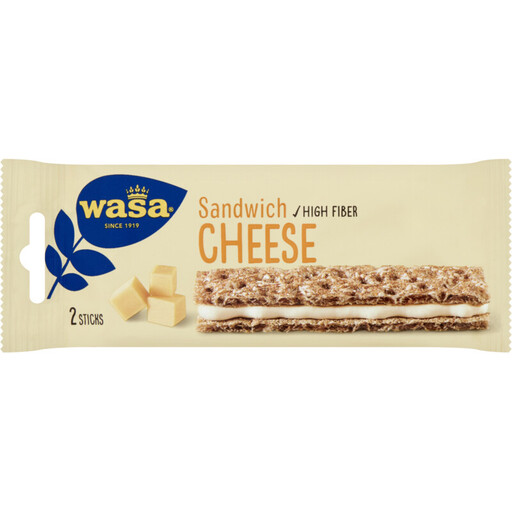 Image unavailable
Wasa Cheese Sandwich 3 × 31 g
A cheese-filled option for anyone looking for a ready-made lunch snack, rather than plain crispbread slices to top yourself.
Factor in the filling when putting together your lunch, and check the allergens on the packaging.
View on Joybuy
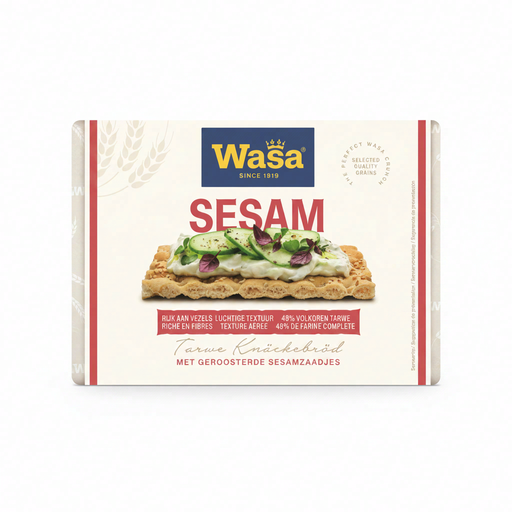 Image unavailable
Wasa Breakfast Biscuits Sesame 250 g
A sesame variety to consider if your child likes this texture and you want to add your own toppings.
Compare the ingredients, fibre and salt on the current packaging before you choose.
View on Joybuy
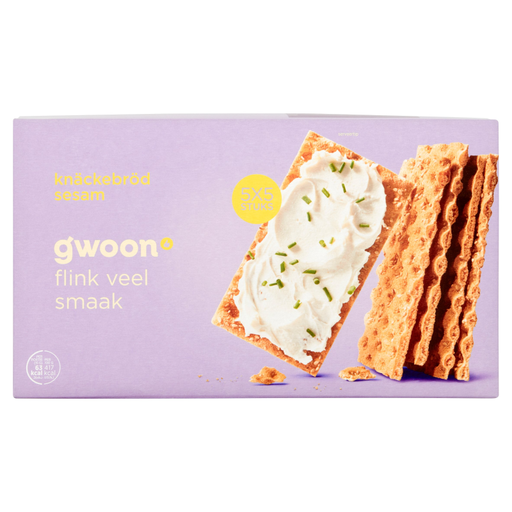 Image unavailable
g'woon Crispbread Sesame 5 pieces
A sesame variety if you’re looking for a plain, crunchy base for your chosen toppings.
Only compare nutritional values with other products once the packaging makes clear what quantity they refer to.
View on Joybuy
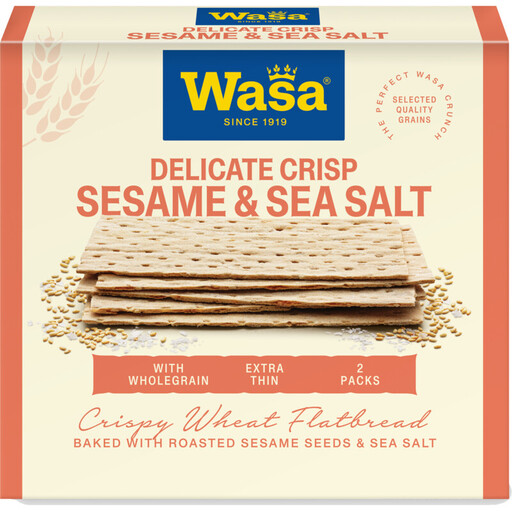 Image unavailable
Wasa Thin Crisp Sesame 190 g
A thin sesame variety for a lunch where you want to add your own toppings to the crispbread.
When choosing, check the salt content alongside that of any savoury toppings, and read the current allergen information.
View on Joybuy
Frequently asked questions
Is seeded crispbread automatically wholegrain?
No. Seeds don’t tell you how much of the grain is wholegrain. The Netherlands Nutrition Centre lists wholegrain crispbread as an option for a school lunch; check the ingredients of the variety you buy and compare fibre per 100 g if needed.
Should I check for gluten in sesame crispbread too?
Yes, if gluten is relevant to your choice. Albert Heijn and Wasa product information lists wheat in the sesame varieties they have reviewed. Always check the current ingredients and allergen information for the specific product.
Does all crispbread contain iodine from baker’s salt?
No, you can’t tell from the name crispbread. The Netherlands Nutrition Centre discusses iodine in relation to bread baked with baker’s salt. Check the information for the product you’ve chosen, or ask the manufacturer which salt it uses if this matters to your purchase.
How should I store crispbread for several holiday lunches?
Follow the storage instructions on the packaging and seal it well after opening. For AH Knäckebröd sesam, Albert Heijn recommends storing it in a sealed tin after opening.
What should I consider when a young child eats crispbread?
Make sure a young child eats calmly while seated and supervised, and choose a piece size that’s suitable for them. VeiligheidNL advises parents to stay with young children while they eat and highlights the importance of suitable-sized pieces for toddlers and pre-schoolers.


