
Barbecue hosts looking for texture and shape
For sandwiches, you’ll want a loaf you can fill. A baguette that’s easy to share may be a better fit alongside dips or grilled dishes. Loaves with visible kernels and seeds are one option.


If you’re looking for a seeded white bread for a barbecue, choose a whole or half loaf for sandwiches, or a baguette shape if you mainly want to share it. Look beyond the ‘multiseed’ name: check the type of bread, fibre and salt per 100 g, and the allergens. If fibre is your main priority, the Dutch Nutrition Centre points instead to wholemeal or brown bread. If you need gluten-free bread, choose a product explicitly labelled gluten-free.
For sandwiches, you’ll want a loaf you can fill. A baguette that’s easy to share may be a better fit alongside dips or grilled dishes. Loaves with visible kernels and seeds are one option.
You’ll want to know whether a loaf is white or wholemeal, and compare fibre and salt on a like-for-like basis: per 100 g. Seeds on white bread don’t automatically make it wholemeal.
If gluten needs to be avoided, the bread must be explicitly labelled gluten-free. Also check for any other allergens relevant to your guest: for example, according to Jumbo’s product information, Odenwald Bakery’s gluten-free roll contains sesame and soya.
First decide whether the bread is mainly for sandwiches or sharing. Then compare the type of bread and its label. If someone has a dietary restriction, the product’s specific allergen information takes priority over the shape or texture you’d prefer.
| What to consider | What to check when buying | Who is this most important for? |
|---|---|---|
| Texture and ease of sharing | Choose a whole or half loaf for sandwiches, or a baguette shape to share at the table. Check which kernels and seeds are listed. | If I’m making sandwiches or serving bread with dips, the shape needs to work for the occasion. Around 31% of shoppers prioritise this combination of shape and texture. |
| Type of bread, fibre and salt | Check whether the bread is white or wholemeal, and compare fibre and salt per 100 g. Albert Heijn lists 4.2 g of fibre and 0.65 g of salt per 100 g for AH Les Pains Triomphe; Jumbo lists 2.9 g and 1.02 g per 100 g for Boeren Licht Meerzaden. | When nutritional information matters more to me than having white bread, I want to compare the type of bread and its nutritional values side by side. This is a priority for around 31% of shoppers. |
| Gluten and other allergens | Read the latest ingredients and allergen information. If choosing gluten-free bread, check separately for any other relevant allergens, such as sesame or soya. | If a guest needs to avoid certain ingredients, I need a product whose label and allergen information I can check. This is a priority for around 15% of shoppers. |
| Quantity and preparation | Choose a whole or half loaf to suit your group. For frozen bread, check the storage, defrosting and baking instructions on the packaging. | I want to have enough bread ready without opening more fresh bread than I need, and the preparation needs to fit my plans too. Around 23% of shoppers prioritise this. |
The name tells you what may have been added to the bread; it doesn’t mean the base is wholemeal. Fibre and salt levels also vary between white multiseed loaves.
Check the type of bread first, then compare the nutritional information per 100 g. The Dutch Nutrition Centre recommends replacing white bread with wholemeal or brown bread as often as possible.
Standard seeded bread may contain wheat, sesame or soya. A gluten-free label doesn’t mean the bread is free from other allergens too.
For packaged bread, read the current label. For unpackaged bread, ask about the allergen information relevant to your guests before you buy.
According to the Dutch Nutrition Centre, there’s no requirement to bake bread with baker’s salt. So you can’t tell whether it’s been used just by looking at the type of bread.
If iodine is something you need to consider, check whether baker’s salt or iodised salt is listed in the ingredients, or ask the baker.
A whole loaf may be more than you need for a small group. Leftover bread can dry out or go off.
Where suitable, choose a half loaf and freeze any unused portions straight away. For frozen products, follow the instructions on the packaging, including advice about refreezing after defrosting.
AH Les Pains Triomphe half is a white multiseed loaf in a half size, for when you don’t need a whole loaf.
Boeren Licht Meerzaden is a whole white wheat loaf with seeds and kernels. It’s worth considering if you’re making several sandwiches.
Lidl describes its Steenoven baguette meergranen as a white multigrain baguette with kernels and seeds.
Korenlanders Rustiek Vloerbrood Wit Meerzaden 1/2 is a half-size white multiseed loaf.
According to Jumbo’s product information, the oval white rice-flour roll with seeds is explicitly labelled gluten-free.
These round loaves and baguettes are options for sharing seeded bread at a barbecue. Before buying, check the packaging to see whether your chosen multigrain loaf also meets your preference for white bread. To compare fibre and salt, look at the values per 100 g.
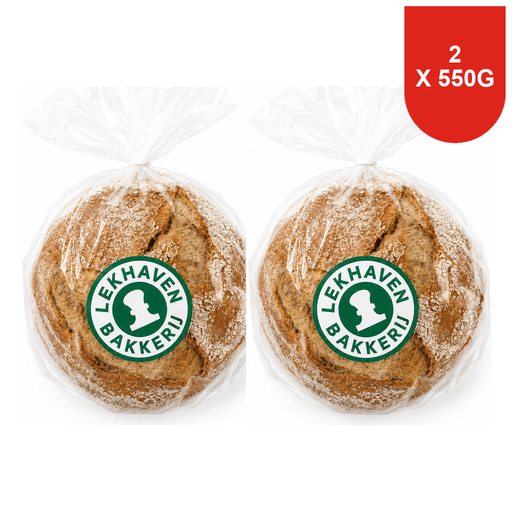 Image unavailable
The round shape is a handy option for sharing slices at the table. The pack contains two 550 g loaves. Check the type of bread and relevant allergens on the packaging, and allow time for defrosting and baking.
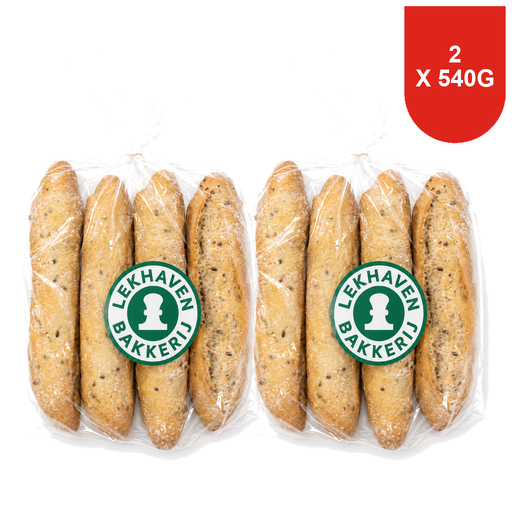 Image unavailable
The baguette shape is ideal for sharing bread alongside a meal. The product name lists four 135 g baguettes, twice over. Check the packaging for the type of bread, allergens, and defrosting and baking instructions.
 Image unavailable
Four 135 g baguettes can be served individually or shared. Check that the type of bread and allergens are suitable for your guests, and follow the baking time on the packaging.
 Image unavailable
This 550 g round loaf is an option if you want to serve slices. Check the packaging to see whether the type of bread suits your preference for white bread, read the allergen information and follow the baking instructions.
No. ‘Multiseed’ doesn’t in itself mean that wholemeal flour has been used. Check the type of bread and compare fibre per 100 g if that distinction matters to your choice. The Dutch Nutrition Centre recommends replacing white bread with wholemeal or brown bread as often as possible.
No. According to the Dutch Nutrition Centre, there’s no requirement to bake bread with baker’s salt. If you want to know whether a particular loaf contains iodised baker’s salt, check the ingredients or ask if you’re buying unpackaged bread.
Check the latest allergen information for the specific bread before serving it. White multiseed loaves may contain wheat, sesame or soya, among other things. A gluten-free seeded roll may also contain sesame and soya. If you’re buying unpackaged bread and the information isn’t clear, ask the seller.
Choose a loaf size to suit the number of guests, and freeze any unused portions straight away if needed. The Dutch Nutrition Centre recommends freezing bread in portions and only taking out what you need. For frozen bread, also check the product-specific defrosting and storage instructions.