If fibre is your priority for your Vlaggetjesdag drinks and nibbles, choose the wholemeal Melba toast with sesame we looked at. Albert Heijn’s product listing gives it 9.7 g of fibre per 100 g and states that it contains 4% sesame. If you’re looking for a more pronounced sesame flavour, Jumbo’s listing for the sesame Melba toast we looked at states that it contains 7% sesame and 5 g of fibre per 100 g. For both options, check the current packaging for allergen information, and don’t assume the product contains iodised baker’s salt.
Who are these options suitable for?
Hosts who want to keep an eye on fibre
You’re looking for thin toast for nibbles and, among the Melba options we looked at, want a wholemeal base with more fibre. Albert Heijn and Jumbo’s product listings give the wholemeal option a higher fibre value than the regular sesame option.
Sesame flavour fans
You want the flavour of the toast to come through beneath the topping. According to Jumbo, the regular Melba option we looked at has a higher sesame content than the wholemeal option listed by Albert Heijn.
Shoppers who check ingredients carefully
When putting together your spread, you take your guests’ allergies into account, or you want to know whether a product is made with iodised baker’s salt. Check the packaging of the product you’re actually serving.
What should you consider when choosing?
Wholemeal Melba toast with sesame
Choose this option if: you want thin Melba toast and value fibre more than the highest sesame content.
The trade-off: according to Albert Heijn, the option we looked at contains 4% sesame. Wholemeal doesn’t mean the toast is free from gluten or other allergens.
Sesame Melba toast
Choose this option if: sesame flavour is your top priority and you want the same thin toast format.
The trade-off: according to Jumbo, the option we looked at contains 7% sesame, but has a lower listed fibre value than the wholemeal option we looked at.
Seeded cracker
Choose this option if: a cracker would work better than Melba toast for your nibbles.
The trade-off: the shape and base for toppings may be different. A higher seed content doesn’t automatically make a cracker interchangeable with toast.
| What to consider | What to check when buying | Who it matters to |
|---|
| Fibre and wholemeal base |
Compare the grain type and fibre per 100 g on the label. |
I want thin toast for my get-together, but within that choice I’m mainly looking for a wholemeal base and a higher fibre value; this is the top priority for around 40% of consumers. |
| Sesame flavour |
Check the ingredients and the sesame percentage, if listed. |
I want to be able to taste the sesame in the toast beneath a mild topping. This is the top priority for around 30% of consumers. |
| Allergens and labelling |
Before serving, read the ingredients and allergen information on the packaging. |
If guests need to avoid certain ingredients, I want to know what’s in the pack I’ve chosen; this comes first for around 20% of consumers. |
| Pack size |
Check the pack size and how many pieces of toast you’ll need for your nibbles. |
For a small get-together, I want to choose a pack that suits the number of nibbles I’m serving. Around 10% of consumers give this top priority. |
Common mistakes
-
Assuming ‘seeded’ means allergen-friendly
The Melba options we looked at list sesame, cereals containing gluten and soya. So the name of the toast doesn’t tell you whether a guest can eat it.
Before buying and serving, check the ingredients and allergen information on the current packaging. The Netherlands Food and Consumer Product Safety Authority explains the allergen labelling requirements for pre-packed foods.
-
Assuming all toast contains iodised baker’s salt
According to the Netherlands Nutrition Centre, bakers aren’t required to use baker’s salt. So the description ‘seeded toast’ won’t tell you which salt the product contains.
If the type of salt matters to you, check the ingredients list on the specific pack.
-
Treating a cracker as the same kind of base for toppings
A seeded cracker won’t necessarily have the same shape or snap as thin Melba toast. That may matter for the nibbles you want to serve.
First decide whether you need the thin toast format. Then compare the ingredients and nutritional information of suitable products.
-
Relying on an old product listing
Albert Heijn points out that ingredients, nutritional values and allergen information can change.
Use product pages to help you compare options, then check the packaging of the product you buy before serving the toast.
Brands to consider
Van der Meulen
The Melba toast range we looked at includes a wholemeal sesame option and a regular sesame option.
- For the wholemeal option we looked at, Albert Heijn lists 4% sesame and 9.7 g of fibre per 100 g. For the sesame option we looked at, Jumbo lists 7% sesame and 5 g of fibre per 100 g.
- The options we looked at list sesame, cereals containing gluten and soya, among other ingredients. Check the ingredients on each pack rather than relying on the brand name.
Albert Heijn
Albert Heijn includes AH Biologisch Melba toast met sesamzaadjes (organic Melba toast with sesame seeds) in its range of toast for sharing.
- It’s a Melba toast option with sesame seeds to consider when choosing.
- Compare fibre, ingredients and allergens using the current packaging; the product name alone doesn’t give you this information.
Bolletje
Bolletje offers a seeded cracker as an alternative when Melba toast isn’t essential.
- Bolletje describes its 45% Zadencrackers Zonnebloempitten as wholemeal crackers containing 45% seeds.
- This is a cracker, not Melba toast. Check whether its shape works with the toppings you want to serve.
A cracker alternative on Joybuy
This product has been selected for a Vlaggetjesdag get-together where a sesame cracker works better than thin Melba toast. Consider whether its shape suits the nibbles you want to make.
 No image available
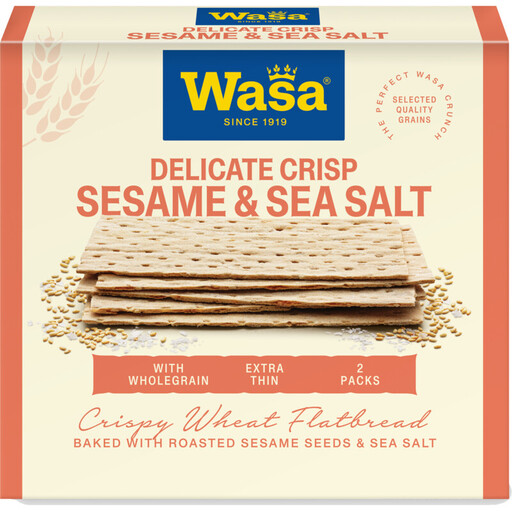
Wasa Thin Crisp Sesame, 190 g
An option if you’d like to serve a thin sesame cracker at your get-together instead of Melba toast. The pack contains 190 g; if you’re serving guests with allergies, check the ingredients on the current packaging.
View on Joybuy
Frequently asked questions
Which of the Melba toast options we looked at should I choose if fibre is my priority?
Of the two options we looked at, choose the wholemeal Melba toast with sesame. Albert Heijn lists 9.7 g of fibre per 100 g, compared with 5 g per 100 g for the regular sesame option listed by Jumbo. Check the values on the pack you buy.
Can I serve the sesame toast we looked at to someone with a sesame or gluten allergy?
The Melba options we looked at list sesame and cereals containing gluten, so they aren’t suitable for anyone who needs to avoid these ingredients. Before serving, also check the current packaging for all relevant allergens, including soya.
Does seeded toast automatically contain iodine from baker’s salt?
No, don’t assume that from the name ‘seeded toast’. According to the Netherlands Nutrition Centre, bakers aren’t required to use iodised baker’s salt. If the type of salt matters to you, check the ingredients information for the specific product.
How should I store the toast after opening?
Follow the instructions on the packaging and reseal the pack tightly after opening. Joybuy also recommends this for its listing of crisp Melba toast; for another product, always follow its own label.


