Who is this relevant to?

Parents who need to check for allergens

If your child has an allergy or coeliac disease, or there are rules about food in the classroom, the current label matters more than the words ‘with seeds’. Discuss any individual arrangements with the school before term starts, as Stichting Voedselallergie advises.

Anyone packing small topped snacks

If you’re looking for thin toast to use as a base for toppings, compare the shape and portion size of melba toast. Also check that the size you choose will fit easily in a lunchbox.

Shoppers comparing labels

If you want sesame for its flavour and texture, check the sesame content, type of flour and nutritional information on each packet. Visible seeds don’t automatically mean a product is wholemeal.

What should you look for when buying?

Start by checking allergens and the school’s rules. Then compare what matters most for your lunch: practical packaging, nutritional information or how well the toast goes with your toppings.

What to consider What to check when buying Most relevant to
Allergens and school rules Read the ingredients, allergen information and any ‘may contain’ statement on the packet. Ask what rules apply at the school or in the class. If I’m packing lunch for a child with an allergy, the product needs to suit their diet and the school’s rules. Around 42% of consumers put allergens and school rules first.
Size and availability Compare the net weight with the portion you’re planning; check whether you can buy the product in the way you want. For small lunch snacks, I want to know how much I can pack and whether I can get the toast in time. Around 25% of consumers put practical use first.
Nutritional information Compare the type of flour, fibre and salt per 100 g, and consider what the portion you’re planning will add to the lunch. If toast is going into lunch regularly, I want to compare the nutritional information rather than judge it by the seeds. This is the first consideration for around 17% of consumers.
Texture and toppings Check the shape of the toast and the stated sesame content. Consider whether you want to pack the toppings separately. For topped snacks, I’m looking for a shape that works with the topping and is easy to eat after being carried around. Crispness and toppings come first for around 16% of consumers.

Common mistakes

  • Assuming ‘with seeds’ means gluten-free

    The sesame melba toasts reviewed also contain wheat and sometimes barley; sesame is an allergen too.

    Check the exact packet you’re buying. Don’t use these products as a substitute for something that needs to be gluten-free.

  • Assuming sesame or an organic label means it contains iodine

    According to the Voedingscentrum, using baker’s salt in bread is not compulsory. So the presence of seeds or an organic label doesn’t tell you whether iodised baker’s salt has been used.

    If baker’s salt matters to your choice, check the ingredients of the bread product.

  • Judging by the packaging alone

    The labels on the melba toasts reviewed list different amounts of salt per 100 g: Albert Heijn lists 1.1 g, Delverde 1.2 g and Van der Meulen 2.1 g.

    Compare the nutritional information on the same basis, and bear in mind how much you’ll actually pack.

  • Assuming a product page confirms that a product is in stock

    Jumbo lists its sesame party toast, which was reviewed, as no longer available online; Lidl presents its party toast as an in-store product.

    Check current availability before planning the school lunch, and read the label on the variant you choose when you buy it.

Brands to consider

Albert Heijn Biologisch

The 100 g organic melba toast with sesame seeds is a thin toast for small topped snacks.

  • Albert Heijn lists 7% sesame, 5.2 g of fibre and 1.1 g of salt per 100 g.
  • According to the product information, this variant contains sesame, soya, barley and wheat.

Van der Meulen / Melba

The 100 g organic Melba Toast Sesame is another type of melba toast, with 7% sesame according to Jumbo’s product information.

  • The ingredients clearly state the sesame content.
  • The allergen information lists sesame, soya and wheat; the product may contain milk. Jumbo lists 2.1 g of salt per 100 g.

Delverde

Delverde melba toast with sesame seeds is an option to compare with organic melba toasts if you’re looking for a non-organic alternative.

  • PLUS’s product information lists 7% sesame, 4.4 g of fibre and 1.2 g of salt per 100 g.
  • The ingredients list wheat, barley, soya and sesame.

Jos Poell

Jos Poell sesame toast is an example of a label showing 11% sesame, but Albert Heijn lists this variant as discontinued.

  • The stated sesame content makes it possible to compare with other labels.
  • The ingredients list wheat; check current availability and allergen information if you come across this variant elsewhere.

Lidl

Lidl offers party toast in plain and sesame varieties and says it is sold in store.

  • The product page gives a pack size of 100–150 g for the varieties.
  • Check the label on the sesame variety you actually buy for its ingredients, allergens and nutritional information.

Related products at Joybuy

If you’re also considering a related crunchy bread product for a school lunch, this Wasa product is a sesame cracker, not melba toast. Compare the product type and current label before choosing it as an alternative.
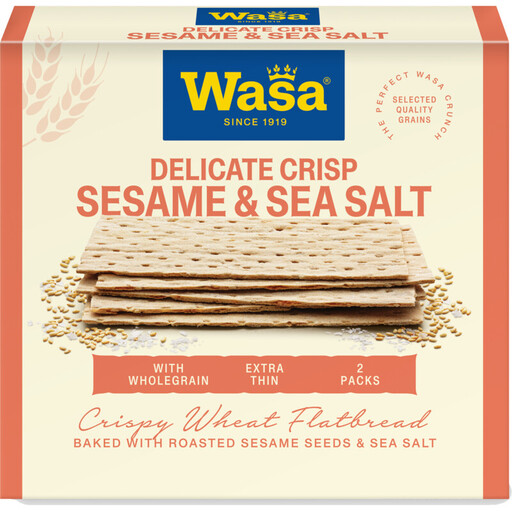
Wasa Thin Crisp Sesame, 190 g pack

Wasa Thin Crisp Sesame, 190 g

A possible choice if a sesame cracker, rather than toast, suits the lunch you’re planning.

Pack size: 190 g. Check the allergens and nutritional information on the current packet before packing.

View at Joybuy

Frequently asked questions

Is sesame melba toast suitable for a gluten-free school lunch?

Not the Albert Heijn, Van der Meulen and Delverde melba toasts reviewed: their ingredients list wheat or barley. If gluten-free is essential, choose only a product labelled as suitable and check the current packet.

What rules about allergens apply at school?

Ask your child’s school or class what rules apply to packed lunches. Stichting Voedselallergie advises parents of children with food allergies to speak to the teacher and learning support coordinator before term starts.

Where can I find information about sesame and gluten-containing cereals?

Read the ingredients and allergen information on the packaging. The Netherlands Food and Consumer Product Safety Authority states that 14 allergens must be identified on the label; for these products, pay particular attention to sesame and the cereals listed.

Does seeded toast contain iodised baker’s salt?

No, you can’t tell from the presence of seeds. According to the Voedingscentrum, using baker’s salt in bread is not compulsory; check the ingredients of the product you choose if this matters to your decision.

How should I pack topped toast for school?

Keep the toast dry and follow the storage instructions on the packet. Packing moist toppings separately, or adding them just before eating, can help keep the toast crisp.
