For everyday bread-based lunches at nursery, wholemeal or brown bread is the obvious choice: the Netherlands Nutrition Centre recommends it for childcare because of its fibre content. Toast or a seeded cracker can add a satisfying crunch, but seeds alone don’t make a product wholemeal. Check the ingredients and allergens on each pack, and consider whether the texture is suitable for the children who will be eating it.
Who is this choice for?
Those buying food for everyday bread-based lunches
If you’re putting together a regular lunch menu, wholemeal or brown bread is a good starting point. This is the type of bread the Netherlands Nutrition Centre recommends for childcare; visible seeds are no substitute for checking the grain content.
Settings with an allergen policy
If you need to take individual dietary plans into account, compare the label on the pack you’ve chosen with your setting’s policy. Check not only for wheat and other gluten-containing cereals, but also for sesame and any warnings about possible cross-contamination.
Groups considering a crunchy change
Crackers and toast need to be assessed separately for their texture and size. The Netherlands Nutrition Centre advises staying close to young children while they eat. Choose a shape that suits their individual chewing ability.
What should you look for?
For an everyday bread-based lunch, the Netherlands Nutrition Centre recommends wholemeal or brown bread. When assessing a crunchy product, also consider its ingredients, your allergen policy and how easily the children can eat it.
Wholemeal or brown bread
Choose this when: you’re planning everyday bread-based lunches in line with the Netherlands Nutrition Centre’s recommendation for childcare.
Consider: it won’t give you the crunchy texture you might be looking for in seeded toast.
Seeded crackers or crispbread
Choose this when: you’re looking for a crunchy change and can check the label to see which grain ingredients have been used.
Consider: even when made with wholemeal ingredients, a cracker isn’t automatically the same as wholemeal or brown bread as the basis for lunch.
Sesame toast or Melba toast
Choose this when: a small, dry piece of toast suits a particular mealtime and the children at the table.
Consider: check the ingredients and brittle texture separately; sesame toast is not automatically a substitute for wholemeal bread.
| What to consider |
What to check when buying |
Who it matters to |
| Everyday bread choice |
Check which types of grain and flour are listed in the ingredients. Don’t assume a product is wholemeal just because it contains seeds. |
For everyday lunch, I want to know whether a piece of toast would replace wholemeal or brown bread. Around 42% of consumers prioritise their everyday bread choice. |
| Allergen policy |
Compare the current label, including ingredients and warnings about possible cross-contamination, with the individual dietary plan and your setting’s policy. |
If a child needs to avoid certain ingredients, I don’t want to choose based on the product name alone. Around 33% of consumers prioritise a suitable allergen choice. |
| Texture and serving |
Consider whether the crunch and piece size suit the child’s individual chewing ability and the level of supervision during lunch. |
When caring for a group of young children, I only want to serve a crunchy product if they can eat it safely. This is the main consideration for around 25% of consumers. |
Common mistakes
-
Assuming seeds mean a product is wholemeal
A piece of toast may contain sesame or linseed, but also include plain flour in the ingredients. For everyday lunches in childcare, the Netherlands Nutrition Centre recommends wholemeal or brown bread.
Read the ingredients list and check exactly which types of flour have been used, rather than judging by the visible seeds.
-
Only checking for gluten
For the sesame products mentioned here, sesame is also relevant, as are other allergens or warnings about possible cross-contamination, depending on the product.
Compare the full allergen information on the current pack with the individual dietary plan. Check each new variant again, even if its name is very similar to the previous one.
-
Choosing brittle toast without considering eating ability
The shape of a cracker or piece of toast can affect how easily a young child can eat it. The Netherlands Nutrition Centre recommends supervising children while they eat and adapting their food if you’re unsure whether they can chew it properly.
Choose a piece size that suits the child, make sure children eat calmly while seated, and opt for a softer lunch if you’re unsure.
-
Relying on out-of-date product information
An earlier product description may not match the pack you’re buying now. This is especially important when ingredients or allergens affect your choice.
Check the current pack before use, and repeat the check whenever the product or packaging changes.
Brands and product ranges to consider
The examples below are different types of crunchy products. Compare the specific variant and its label, not just the brand.
Van der Meulen Melba
Melba Toast Sesame is a thin piece of toast for anyone considering a small, crunchy option.
- Albert Heijn lists 7% sesame for this variant.
- The listed ingredients include wheat, sesame, malted barley flour and soya lecithin. Check the label and texture before serving it to children.
Bolletje
Bolletje offers products including sesame crispbread and Bagel Crackers Sesame; these are separate product variants.
- Bolletje describes its sesame crispbread as crisp and lists sesame in the ingredients for Bagel Crackers Sesame.
- Don’t use information about one variant as the allergen or ingredients list for another.
Albert Heijn
AH Scrocchi sesame linseed is a cracker to consider if you’re comparing crunchy products that list wholemeal ingredients.
- Albert Heijn’s product information lists wholemeal wheat flour, wholemeal rye flour, linseed and sesame seeds.
- The presence of wholemeal flour doesn’t automatically make this cracker equivalent to wholemeal or brown bread as the basis for everyday lunches.
Jumbo
Jumbo Party Toast with Sesame is an example of sesame toast, not an established everyday bread option for childcare.
- The product name makes it clear that this is a sesame toast variant.
- Before buying, check the current availability, ingredients and allergens on the pack you’ve chosen.
Crunchy sesame products at Joybuy
These two Wasa sesame products are options if you’re looking for a crunchy change. When considering them for nursery lunch, compare them with the everyday bread choice, each child’s dietary plan and their ability to eat them.
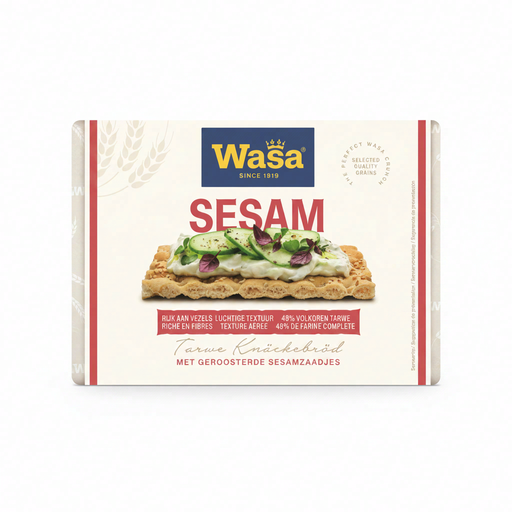 No image available
Wasa Breakfast Biscuits Sesame, 250 g
Worth considering if you’re looking for a crunchy sesame product to add variety to lunch, rather than as an automatic replacement for everyday bread.
Before serving, check the grain ingredients, nutritional information and full allergen information on the pack. Also consider whether the texture is suitable for the children at the table.
View at Joybuy
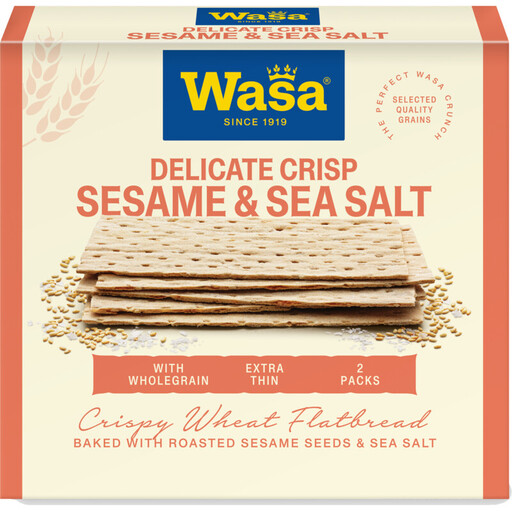 No image available
Wasa Thin Crisp Sesame, 190 g
Worth considering as a thin, crunchy sesame option, provided its shape suits the children’s individual chewing ability.
Read the ingredients, nutritional information and allergen information on the current pack. When serving a brittle product, consider the piece size and level of supervision during lunch.
View at Joybuy
Frequently asked questions
Is seeded toast suitable for everyday nursery lunch?
Don’t automatically choose seeded toast for everyday bread-based lunches: the Netherlands Nutrition Centre recommends wholemeal or brown bread for childcare because of its fibre content. Toast can add variety if its ingredients, allergens and texture suit the children and your setting’s policy.
Should I check both the grain ingredients and sesame?
Yes. Read the full ingredients and allergen information on the pack you’ve chosen. The Netherlands Food and Consumer Product Safety Authority explains how allergens must be listed on the labels of prepacked foods; also check any warnings about possible cross-contamination against the individual dietary plan.
What should I do if a product says ‘may contain’?
Take the warning into account when checking the product against the individual dietary plan and your setting’s allergen policy. You can’t assume that a product is suitable for every child based on its name or the warning alone.
Can I give crunchy toast to toddlers?
It depends on the child’s individual chewing ability, the shape of the toast and the supervision they receive while eating. The Netherlands Nutrition Centre recommends staying close by, ensuring children eat calmly while seated, and making food smaller or softer if you’re unsure whether a young child can chew it properly.


