
If you want sesame on your drinks party platter
You’re looking for a crisp base for toppings such as tapenade or soft cheese, and want sesame to be listed as an ingredient on the packaging.


Choose sesame Melba toast if you’re mainly looking for a crisp, nutty base for Italian toppings. If fibre matters more to you, compare wholemeal and multigrain varieties by their fibre content per 100 g; seeds don’t automatically make toast wholemeal. Also check the allergens and salt content on the label, and don’t rely on the product name alone if you want to know whether it contains iodised baker’s salt.
You’re looking for a crisp base for toppings such as tapenade or soft cheese, and want sesame to be listed as an ingredient on the packaging.
As well as flavour, you’re interested in wholemeal flour and want to compare the stated fibre content per 100 g across different types of toast.
You need to take ingredients such as sesame, cereals containing gluten or soya into account. Terms such as ‘seeds’, ‘multigrain’ and ‘Italian’ don’t tell you which allergens a product contains.
Before your Italian aperitivo, decide what matters most: sesame texture, fibre, allergens or the nutritional information on the label. Then compare products in the form you’re looking for; a flavoured cracker is different from seeded Melba toast.
| What to consider | What to check when buying | Who it matters to |
|---|---|---|
| Sesame and toppings | Check whether sesame is listed as an ingredient and look at the product type. | For a drinks party platter with a variety of toppings, I want a crisp base with noticeable sesame, without the seasoning overpowering the topping. For around 31% of consumers, seed texture is the top priority. |
| Fibre and wholemeal | Check the ingredients and compare fibre per 100 g. | If fibre is my main priority, I don’t want to assume that visible seeds mean the same thing as wholemeal flour. Around 31% of consumers give this comparison priority. |
| Allergens | Read the latest ingredients and allergen information, including any ‘may contain’ warning. | If I need to avoid an allergen, the information on the packaging comes before the flavour or name of the toast. For around 23% of consumers, this check matters most. |
| Salt and type of salt | Compare salt per 100 g and check which type of salt is listed in the ingredients. | I want to compare salt levels on a like-for-like basis and not assume that a product contains iodised baker’s salt because it’s labelled ‘organic’ or ‘seeded’. For around 15% of consumers, checking this information on the label comes first. |
A warning about possible presence doesn’t mean sesame has been added for flavour or texture. Bolletje lists sesame as a possible trace in its Ciabatta Crackers Tomato & Herbs, not as an ingredient.
If you want sesame toast, look for sesame in the ingredients list. If you need to avoid sesame, also check the allergen information and any warning about traces.
The labels shown by Albert Heijn list 5,2 g of fibre per 100 g for AH Organic Melba toast with sesame seeds, compared with 9,7 g for Van der Meulen wholemeal Melba toast and 9 g for the multigrain variety. These figures apply to these specific products.
Check the ingredients for wholemeal flour and compare the fibre content per 100 g rather than relying on the seeds alone.
According to Albert Heijn’s product information, the Van der Meulen wholemeal and multigrain varieties mentioned contain 1,9 g and 2,1 g of salt per 100 g respectively; the organic sesame toast mentioned lists 1,1 g per 100 g.
Compare fibre and salt separately, using the figures per 100 g for each product.
Seeded toast or an organic label won’t tell you which type of salt has been used in that product.
If the type of salt matters to you, check the ingredients of the specific toast or ask the manufacturer.
The Melba toast varieties reviewed offer a choice of sesame, wholemeal and multigrain for your drinks party platter.
AH Organic Melba toast with sesame seeds is a specific own-brand option if you’re looking for Melba toast with sesame as an ingredient.
The products reviewed offer two different cracker options: tomato and herbs for flavour, or mixed seeds in a breakfast cracker.
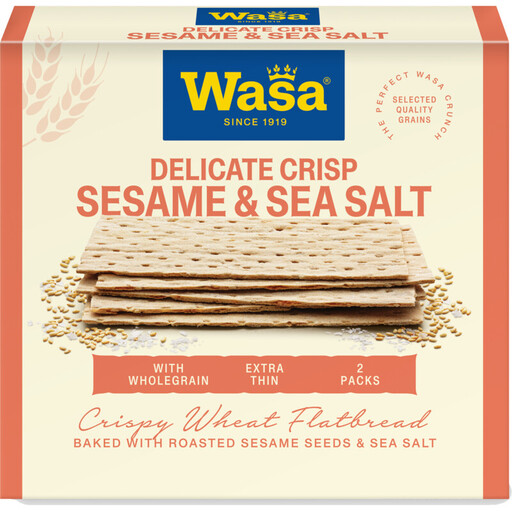
This Joybuy option is a thin sesame crispbread for anyone looking for a crisp base for Italian toppings. Crispbread is a different type of product from the Melba toast varieties discussed above.
 No image available
A sesame crispbread for anyone who wants to serve something different from Melba toast with drinks.
Compare the latest nutritional information per 100 g and check the ingredients and allergens on the packaging.
Don’t choose toast that lists the allergen you need to avoid as an ingredient. The sesame Melba toasts discussed here list ingredients including sesame and cereals containing gluten. Always check the latest ingredients and allergen information, as well as any trace warnings, for the specific product before buying.
No. Seeds in a product don’t tell you whether it contains wholemeal flour. Check the ingredients and compare fibre per 100 g: Albert Heijn lists 9,7 g of fibre per 100 g for Van der Meulen wholemeal Melba toast and 9 g per 100 g for the multigrain variety.
No, you can’t tell which type of salt has been used from the words ‘organic’ or ‘with seeds’. The Netherlands Nutrition Centre points out that bread doesn’t have to be baked with baker’s salt; for toast, check the ingredients of the specific product or ask the manufacturer.
Store the toast according to the instructions on the packaging and, if the topping is moist, add it shortly before serving. Albert Heijn recommends keeping the organic Melba toast discussed here in a sealed tin after opening.