
Holiday cottage cooks looking for seeds and texture
For breakfast, sandwiches or soup, you may want rye bread with noticeable grains or seeds. Check that they’re in the rye bread you choose: a separate seeded multigrain loaf is a different product.


If you want seeds in the rye bread itself, only choose a variety once the ingredients list confirms that it contains them: the word ‘multigrain’ isn’t enough. If you prefer wholemeal, look for an explicit wholemeal label. You can serve a separate seeded multigrain loaf alongside rye bread, but it isn’t rye bread. For a short stay, also make sure the pack size and storage instructions suit your needs.
For breakfast, sandwiches or soup, you may want rye bread with noticeable grains or seeds. Check that they’re in the rye bread you choose: a separate seeded multigrain loaf is a different product.
You’re looking for wholemeal bread and don’t want to rely solely on visible seeds or the word ‘multigrain’. The Netherlands Nutrition Centre describes wholemeal bread as bread that’s high in fibre. For the exact variety, also compare the nutritional information on the packaging.
If you’re staying for a few days, consider how much bread you’ll actually use and how you’ll store the rest. The Netherlands Nutrition Centre’s Storage Guide gives advice on refrigerating and freezing opened dark rye bread. Always check the storage instructions on the packaging first.
First decide whether the seeds need to be in the rye bread itself, or whether you’d be happy to serve a second type of bread alongside it.
Choose this if: you want seeds in the rye bread itself and the ingredients list confirms they’re included.
Bear in mind: ‘multigrain’ or ‘Mehrkorn’ doesn’t tell you which seeds the bread contains.
Choose this if: rye bread matters more to you than seeds. If you prefer wholemeal, look for an explicit wholemeal label.
Bear in mind: don’t assume your chosen variety contains seeds without checking the ingredients.
Choose this if: you want to serve both rye bread and a separate seeded loaf.
Bear in mind: the second loaf won’t necessarily have the same grains or texture as rye bread.
| What to consider | What to check | Who it matters to |
|---|---|---|
| Seeds and texture | Look for seeds or kernels in the rye bread’s ingredients list. Don’t rely solely on ‘multigrain’ or ‘Mehrkorn’. | At breakfast or lunch, I want to be able to see seeds in the rye bread itself. Around 31% of consumers prioritise this combination of seeds and texture. |
| Wholemeal and fibre | Look for an explicit ‘wholemeal’ label and compare the nutritional information for the exact variety. | If I mainly want wholemeal bread, I don’t let visible seeds influence that choice. For around 31% of consumers, wholemeal bread and fibre are a priority. |
| Packaging and storage | Compare the quantity, best-before date and storage instructions with the length of your stay. | If I’m only staying for a few days, I don’t want to be left with unused slices. The right pack size and storage options are the main concern for around 23% of consumers. |
| Allergens and salt | Read the allergen and ingredient information on the specific pack, especially if iodised salt is relevant to your choice. | If I need to take the bread’s ingredients into account, I want to check them before buying. This label check takes priority for around 15% of consumers. |
According to the Netherlands Nutrition Centre, multigrain bread contains at least three types of grain. The name doesn’t mean that the bread is wholemeal.
If you prefer wholemeal, look for a ‘wholemeal’ label on the packaging and consider seeds as a separate feature.
Brood.net Professionals describes the use of iodised bakers’ salt as an agreement within the baking industry. The type of bread alone doesn’t tell you which salt has been used in a particular variety.
If it matters to your choice, check the ingredients list for terms such as ‘bakers’ salt’ or ‘iodised table salt’.
The number of people eating and the meals you have each day can vary during a stay in a holiday cottage. As a result, you may end up with some bread left over if the pack size doesn’t suit your plans.
Compare the pack size with your meal plan and follow the storage instructions if you want to keep bread for later.
If you have a food allergy, the exact ingredients of the bread you choose matter, not just the product name. The Netherlands Food and Consumer Product Safety Authority notes that allergen information for pre-packed products appears on the label, while information for unpackaged products must be made available in another way.
For packaged bread, check the current allergen information. If the bread is unpackaged, ask for the information before choosing.
Albert Heijn has an online category for rye bread and a separate category for multigrain bread.
Jumbo lists several types of rye bread, including Tarwe Roggebrood Mehrkorn, 500 g.
PLUS lists wheat rye bread and wholemeal rye bread in its rye bread category.
Dirk lists rye bread, as well as multigrain farmhouse bread which, according to its own product page, contains grains and seeds.
ALDI describes its multigrain bread as containing grains and seeds, and also lists rye bread in its bread range.
Lidl lists rye bread in wholemeal and Westphalian varieties.
These products include rye bread and separate multigrain breads for anyone who wants to serve another type of bread alongside rye. Before buying, decide whether the rye bread itself needs to contain seeds, and check the ingredients of the variety you choose.
 No image available
This rye bread is a good choice if you want to serve rye bread and don’t consider seeds a given feature of the loaf.
Check the ingredients if seeds are essential. Also compare the quantity and storage instructions with the length of your stay.
 No image available
This multigrain bread is a separate option to serve alongside rye bread, not a variety of rye bread.
Check the ingredients if you’re specifically looking for seeds. Also check how it needs to be prepared and whether the holiday cottage has the right facilities.
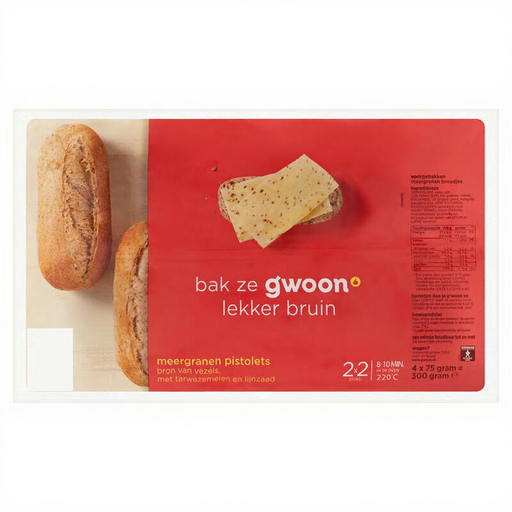 No image available
These multigrain rolls are an option to serve alongside rye bread if you’d like to offer individual rolls.
The name doesn’t make them rye bread or wholemeal bread. Check the packaging for the ingredients, allergens and storage instructions that matter to your group and your stay.
No. According to the Netherlands Nutrition Centre, ‘multigrain’ means bread made with at least three types of grain. It isn’t the same as a wholemeal label. If that’s important to your choice, look specifically for ‘wholemeal’ on the packaging.
No, don’t assume that based on the type of bread alone. Brood.net Professionals describes the use of iodised bakers’ salt as an agreement within the baking industry. If the type of salt matters to your choice, check the ingredients list on the specific pack.
Follow the storage instructions on the packaging of your rye bread. For opened dark rye bread, the Netherlands Nutrition Centre’s Storage Guide recommends keeping it in the fridge for two weeks or in the freezer for one to three months. Freezing may affect its quality.
For pre-packed bread, read the allergen information on the label of the variety you choose. According to the Netherlands Food and Consumer Product Safety Authority, allergen information for unpackaged bread must be made available in another way. Ask for it before choosing.