
Parents looking for wholegrain and fibre
If you’re looking for seeded rusks for a lunchbox, compare the first ingredient and the fibre per 100 g. A seed mix alone doesn’t tell you whether the rusk is made with wholegrain flour.


Choose seeded rusks for a school lunch by checking the ingredients list and allergen information, not just the name: seeds don’t automatically make a rusk wholegrain. Compare the fibre per 100 g and, before packing, check that wheat, sesame and egg are suitable for your child’s needs and any school rules.
If you’re looking for seeded rusks for a lunchbox, compare the first ingredient and the fibre per 100 g. A seed mix alone doesn’t tell you whether the rusk is made with wholegrain flour.
If wheat or other gluten-containing cereals, sesame or egg need to be avoided, check the current packaging and any school rules to see what you can pack.
If you want to pack rusks with a topping, bear in mind that they’re brittle. Storing them in a dry place and packing them carefully can help keep them intact until lunchtime.
First check that the ingredients and allergen information are suitable. Then compare the nutritional information and think about how you’ll pack the rusks.
| What to consider | What to check when buying | Who it matters to |
|---|---|---|
| Wholegrain and fibre | Check which flour comes first in the ingredients list and compare the fibre per 100 g. | If you want to combine seeds with a wholegrain base or are looking for a particular fibre content, the product name alone isn’t enough. This nutritional profile is the top priority for around 42% of consumers. |
| Allergens and school rules | Read the current allergen information and check the rules at your child’s school. | If an allergen needs to be avoided, you’ll want to know whether these rusks are suitable before packing them. For around 33% of consumers, checking this is the first priority. |
| Easy to pack | Consider the texture of the seeds, the packaging and whether the rusks can be packed whole and kept dry. | Your child should enjoy the texture, and the rusks need to arrive in a suitable condition for lunch. This practical aspect matters most to roughly 25% of consumers. |
A rusk can contain several types of seeds even when wheat flour is its first ingredient. For example, Albert Heijn lists wholemeal wheat flour with mixed seeds as the first ingredient in its AH Biologisch wholegrain multiseed rusks, while Bolletje Vezelrijk Meerzaden lists wheat flour first.
If you’re looking for a wholegrain base, check the first ingredient. Also compare the fibre per 100 g on the packaging.
The seeded rusks described by Albert Heijn, Bolletje, Jumbo and PLUS list wheat or other gluten-containing cereals and sesame. The varieties from Albert Heijn, Jumbo and PLUS also list egg.
Check the current label every time you buy them, and check any school rules before packing the rusks.
According to the Netherlands Nutrition Centre, bakers aren’t required to use baker’s salt. So seeing salt in an ingredients list doesn’t confirm that a particular rusk contains iodised baker’s salt.
If this matters when choosing a product, check the label or ask the manufacturer.
Bolletje Vezelrijk Meerzaden rusks are worth considering if you’re looking for a mix of seeds and kernels.
According to the product page, AH Biologisch wholegrain multiseed rusks combine wholemeal wheat flour with linseed, sesame and sunflower seeds.
Jumbo Robuust multigrain rusks are a multigrain option with several listed seeds and kernels.
PLUS luxury plain rusks with seeds are an option if you’re looking for a larger rusk with seeds and kernels.
ALDI lists wholegrain rusks as an alternative if you don’t need a specific seed mix.
These options include two seeded rusks and one wholegrain variety. Check the current ingredients list to see which texture and allergen information suit your child’s school lunch.
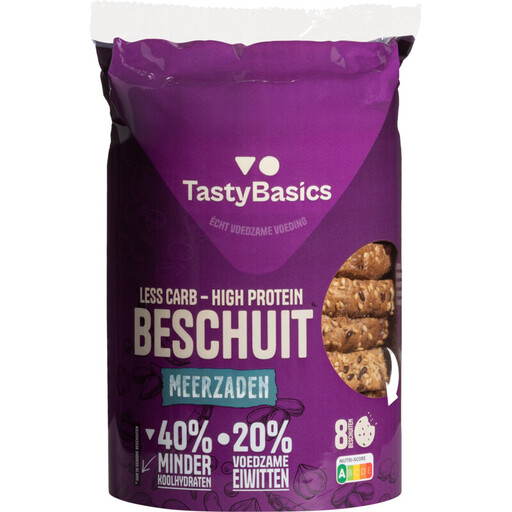 Image unavailable
Seeded rusks for anyone looking for a crunchy lunchbox base; the pack contains 184 g.
Before packing, check the current information for gluten-containing cereals, sesame and egg.
 Image unavailable
For anyone looking for wholemeal rusks as a lunchbox base; this pack contains 10 pieces.
Check the current packaging for any listed seeds and allergens that matter for your child’s school lunch.
 Image unavailable
For anyone looking for rusks with a seeded texture; this pack contains 10 pieces.
Check the current label if a wholegrain base or avoiding wheat and sesame is important to your choice.
No. Seeds can also be added to rusks made with wheat flour. Albert Heijn lists wholemeal wheat flour with mixed seeds as the first ingredient in its AH Biologisch wholegrain rusks; for other varieties, check the ingredients list.
Not the varieties described from Albert Heijn, Bolletje, Jumbo and PLUS: their product information lists wheat or other gluten-containing cereals, as well as sesame. If these allergens need to be avoided, look for an alternative with suitable current allergen information and take any school rules into account.
Yes. If the school has rules about allergens or eating together, these will help determine what you can pack. Check them alongside the label before packing the rusks.
No, you can’t tell from the product category. According to the Netherlands Nutrition Centre, bakers aren’t required to use baker’s salt. Check the label or ask the manufacturer which salt is used in a particular rusk.