Choose seeded rusks for a hotel breakfast buffet if recognisable seeds and the stated fibre content matter to you, but compare the wholemeal base of each product too. Individually wrapped traditional rusks can complement the buffet, but they are not a substitute for the seeded option. If you serve rusks unpackaged, check the allergens in the exact product and make this information available to guests.
Which buffets are they for?
Buffets looking to offer seeded rusks
If you’re looking for a multiseed or wholemeal option alongside plain rusks, compare the types of seeds, fibre per 100 g and the stated wholemeal base. The product name alone won’t tell you how these features compare.
Buffets that need to consider allergens
When rusks are served unpackaged, guests must be able to find information about any allergens present. The Netherlands Food and Consumer Product Safety Authority highlights this information requirement for unpackaged foods. Check each product for the specific gluten-containing cereals, sesame and, where applicable, egg.
Buffets that also want to offer individually wrapped portions
Individually wrapped rusks can be a useful addition if your hotel wants to put fewer opened packs on the buffet. Bolletje offers a traditional single-portion option, but it isn’t a seeded rusk.
What should you look for when choosing?
First decide what role the rusks will play at your hotel breakfast buffet: a seeded option, a product explicitly labelled wholemeal, or an individually wrapped addition. Then check the allergen information and how the product will be served during buffet service.
| What to consider |
What to check when buying |
Who it matters to |
| Fibre, wholemeal and seeds |
Compare fibre per 100 g and check which seeds and wholemeal flour are listed in the ingredients. |
If I want to offer rusks with recognisable seeds, I want to know whether they also meet my requirements for wholemeal flour. For around 42% of consumers, this combination is the top priority when choosing. |
| Allergen information |
Check the latest information for each product, including sesame, egg and the specific gluten-containing cereals. |
If guests are helping themselves to unpackaged rusks, I want them to be able to check on the spot which allergens they contain. For around 33% of consumers, this information is the top priority. |
| Packaging and buffet use |
Check the type of packaging and the storage instructions for an opened pack. |
If a pack is open during breakfast service, I want to be able to store the rusks as directed on the label and top them up as needed. For around 25% of consumers, practical use matters most. |
Common mistakes
-
Presenting seeded rusks as an allergen-friendly choice
The seeded options discussed here contain sesame and gluten-containing cereals; some also contain egg. So seeds on the packaging don’t mean that a rusk is suitable for guests with an allergy.
Use the latest packaging or supplier information for the exact product. When serving rusks unpackaged, make information about the allergens present and the specific gluten-containing cereals easy for guests to find, as required by the Netherlands Food and Consumer Product Safety Authority.
-
Assuming organic rusks contain iodine from baker’s salt
An organic label doesn’t tell you whether iodised baker’s salt was used in that product. The Netherlands Nutrition Centre states that using baker’s salt in baking is not compulsory.
Only make a claim about iodine from baker’s salt if the latest product specification or supplier confirms it for the rusks you’ve chosen.
-
Comparing fibre figures alone
Seeded rusks can also differ in their wholemeal flour, ingredients and salt content. A fibre figure on its own doesn’t tell you which seeds or allergens a product contains.
Compare nutritional values on the same basis, such as per 100 g, and check the ingredients and allergen information too.
-
Putting out an opened pack without a storage routine
For Bolletje Vezelrijk Meerzaden Beschuit, the product information says that, once opened, the pack should be stored in a cool, dry, dark place and kept sealed. The type of packaging therefore also affects how you top up the buffet.
Follow the storage instructions for your chosen product and seal opened packs when they’re not in use.
Brands to consider
Bolletje
Bolletje offers both Vezelrijk Meerzaden Beschuit and traditional, individually wrapped Echte Beschuit Mono. They’re different options for the buffet.
- Bolletje says its multiseed option contains sunflower seeds, linseed, sesame seeds and pumpkin seeds, among other ingredients. The stated fibre content is 10 g per 100 g.
- The multiseed option contains wheat and sesame. The individually wrapped option isn’t seeded and contains rye and egg, among other ingredients.
AH
AH Organic Wholemeal Multiseed Rusks combine a wholemeal option with linseed, sesame seeds and sunflower seeds.
- Albert Heijn states that they contain 11 g of fibre per 100 g and come in a 184 g pack.
- The product contains egg, sesame and gluten-containing cereals. The organic label doesn’t confirm which baker’s salt was used.
PLUS
PLUS Wholemeal Rusks with Seeds are worth considering if wholemeal flour, seeds and kernels are separate requirements for your selection.
- PLUS states that the product contains 49% wholemeal wheat flour, more than 25% seeds and kernels, and 10.6 g of fibre per 100 g.
- The product contains wheat, barley, oats, egg and sesame. Make this information available to guests if you serve the rusks unpackaged on the buffet.
Multiseed rusks for the buffet
These two Joybuy products are multiseed rusks to consider if you want to add a seeded option to your hotel breakfast buffet. If you’re serving them unpackaged, always check the latest allergen information on the chosen pack.
 No image available
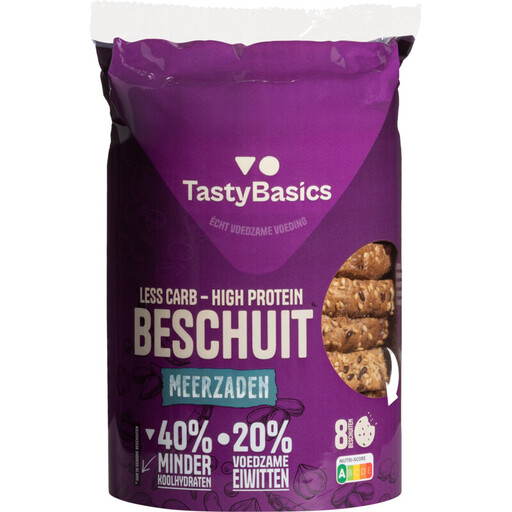
TastyBasics Multiseed Rusks, 184 g
Multiseed rusks to consider for a buffet with a visible seeded option.
184 g pack. Before serving unpackaged, check the latest allergen information, including which gluten-containing cereals may be present.
View at Joybuy
 No image available
Bolletje multiseed rusks, 10 pieces
A multiseed option for buffets looking to offer seeded rusks alongside plain ones.
Pack of 10. If serving unpackaged, check the latest information about sesame and the specific gluten-containing cereals.
View at Joybuy
Frequently asked questions
Does a hotel have to provide allergen information for unpackaged rusks on the buffet?
Yes. The Netherlands Food and Consumer Product Safety Authority says that businesses serving unpackaged food must inform guests about any allergens present. For gluten-containing cereals, it must be clear which cereals are involved. Written or electronic information must be easy to find where the product is offered. Additional conditions apply to providing information verbally.
Are seeded rusks suitable for guests with a sesame or gluten allergy?
Don’t assume they are: the multiseed rusks discussed here contain sesame and gluten-containing cereals. Check the latest packaging or supplier information for every option you choose; some varieties also contain egg or several types of gluten-containing cereals.
Do organic rusks automatically contain iodine from baker’s salt?
No. An organic label doesn’t confirm this. The Netherlands Nutrition Centre states that using baker’s salt in baking is not compulsory. Check the product specification or ask the supplier which salt was used for the exact product before making any claims about it.
How should you store an opened pack of rusks during breakfast service?
Follow the instructions on the packaging of the product you’ve chosen. For Bolletje Vezelrijk Meerzaden Beschuit, the stated instruction after opening is to store it in a cool, dry, dark place and keep it sealed. Bear this in mind when deciding how to top up the buffet.


