What should you look for when choosing?
Start with what matters most for your Easter breakfast: the seed mix, nutritional values, how you’ll serve the rusks with toppings, or any ingredients you need to check.
| What to consider | What to check when buying | Who it matters to |
|---|
| Texture and seed mix |
Check which seeds and kernels are listed in the ingredients; don’t rely on terms such as multigrain alone. |
For my Easter brunch, I want rusks with a clearly recognisable seed mix. Around 31% of consumers prioritise this kind of texture. |
| Fibre and salt |
Compare the nutritional values of similar rusks per 100 g. |
I want to compare products on the same basis before choosing. Around 31% of consumers prioritise fibre and salt. |
| Size and toppings |
Check the size and number of rusks per pack against your brunch plans. |
If I’m serving a range of toppings, I want to know how many rusks I can put out and what size I’m buying. For around 23% of consumers, how the rusks work with toppings matters most. |
| Allergens and baker’s salt |
Read the latest allergen information and check the ingredients for baker’s salt or iodised salt if that’s relevant to your choice. |
I need to know the allergens in the exact rusks I’m serving my guests. I also don’t want to assume baker’s salt is used based on the product name. Around 15% of consumers prioritise checking ingredients like these. |
Seeded rusks at Joybuy
These multiseed rusks are a good fit for an Easter breakfast where you want to serve rusks with toppings and a recognisable seed mix. Check the latest packs to compare fibre, salt and allergens.
 Image unavailable
Bolletje multiseed rusks, 10 pieces
A good choice for an Easter brunch if you want to serve seeded rusks with toppings. Check the latest pack for allergens, and compare fibre and salt per 100 g if those values matter to you.
View at Joybuy
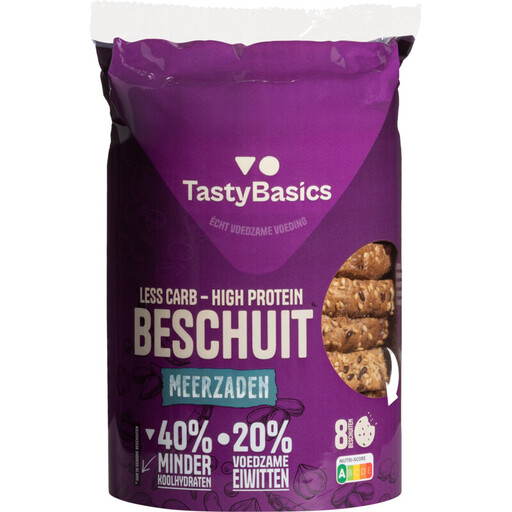 Image unavailable
TastyBasics multiseed rusks, 184 g
An option if you want to serve multiseed rusks with toppings at Easter breakfast. To compare fibre and salt, check the values per 100 g on the pack, and read the allergen information.
View at Joybuy
Frequently asked questions
How do I compare seeded rusks?
Compare the nutritional values of similar rusks per 100 g, as recommended by the Netherlands Nutrition Centre. Then check the ingredients list to see which grains and seeds each variant contains.
Can I serve seeded rusks to someone with a sesame, egg or gluten allergy?
Don’t do so without checking the latest allergen information for the rusks you’ve chosen. For its Volkoren beschuit met zaden, PLUS lists wheat, barley, oats, egg and sesame, among other ingredients; other variants may have a different composition.
Do seeded rusks contain baker’s salt?
No, the presence of seeds doesn’t tell you that. The Netherlands Nutrition Centre says baker’s salt doesn’t have to be used when baking bread. For specific rusks, check the ingredients on the pack.
How should I store rusks until Easter breakfast?
Follow the storage advice on the pack you buy. For its Volkoren beschuit met zaden, PLUS recommends storing the rusks in a cool, dry, dark place. Seal an opened pack securely.


