
Barbecue hosts looking for a crisp base
For small bites with cold toppings, you can choose rusks with clearly visible seeds and kernels. Add moist toppings just before serving to stop the rusks from going soft.


Choose multiseed rusks if you want a crisp base with visible seeds for cold barbecue toppings. Compare the ingredients and nutritional information per 100 g and per serving, and check the allergens on the packaging. The varieties reviewed differ in their seeds, fibre and protein, while several contain sesame and cereals containing gluten.
For small bites with cold toppings, you can choose rusks with clearly visible seeds and kernels. Add moist toppings just before serving to stop the rusks from going soft.
The name ‘multiseed’ doesn’t tell you how much fibre or protein a rusk contains. According to Jumbo’s product information, Bolletje Vezelrijk Meerzaden contains 10 g of fibre and 17 g of protein per 100 g; Albert Heijn lists 11 g and 20 g per 100 g respectively for TastyBasics Beschuit Meerzaden.
The varieties reviewed include ingredients such as sesame, egg and cereals containing gluten. The Netherlands Food and Consumer Product Safety Authority states that allergen information for prepacked products must appear on the label. So always check the packaging of the product you’re actually serving.
Start with the snack you want to serve: are you looking for a pronounced seed texture, do you want to compare nutritional values, or do you first need to rule out certain ingredients? Then compare only rusks that meet your requirements.
| What to consider | What to check when buying | Who it matters to |
|---|---|---|
| Seed texture and crispness | Check which seeds and kernels are listed in the ingredients. Keep the rusks dry and add moist toppings just before serving. | If I’m making small bites with cold toppings, I want the seeds to be visible and the base to stay crisp; around 40% of consumers put this texture first. |
| Nutritional information | Compare fibre, protein and any other relevant values per 100 g, and check the stated serving size too. | If you want to compare products by their labels, using the same basis for measurement is more useful than relying on the name ‘multiseed’ alone. Around 30% of consumers prioritise nutritional profile. |
| Allergens | Read the ingredients and allergen information on the current packaging, even if you’ve bought the product before. | If I need to avoid sesame, egg or certain cereals, the packaging determines whether I can use these rusks; for around 30% of consumers, checking the label is the first priority. |
The multiseed rusks reviewed include sesame and cereals containing gluten; some also contain egg. So the product name doesn’t tell you whether a rusk is suitable if you need to avoid an ingredient.
Read the ingredients, allergen information and any warnings on the packaging. If necessary, ask your healthcare professional what a warning about possible cross-contamination means for you.
A claim about carbohydrates, protein or fibre doesn’t automatically tell you how much you’ll get from one rusk. If a claim compares products, the stated basis for comparison also matters.
Compare the nutritional values per 100 g, then check the serving size and the topping you want to use.
Raw meat and fish can contaminate ready-to-eat rusks and toppings through hands, drips or used kitchen utensils.
Keep raw and cooked foods separate. Voedingscentrum recommends using separate, clean plates and utensils, and washing your hands after handling raw meat.
Vezelrijk Meerzaden Beschuit is an option if you’re specifically looking for a rusk with a variety of clearly visible seeds and kernels.
Beschuit Meerzaden provides specific nutritional values if you want to compare different rusks on a like-for-like basis.
Volkoren Beschuit Meerzaden is worth considering if you want to compare an organic wholemeal variety with seeds.
Beschuit luxe naturel met zaden is a supermarket own-brand option to compare with other rusks for its seed mix and nutritional information.
These rusks suit two ways of choosing a barbecue snack: looking for a recognisable seed mix or comparing protein and fibre. Check the current packaging for the final ingredients and allergen information.
 Image unavailable
An option for cold toppings if you’re looking for rusks with a variety of seeds.
The pack contains 10 pieces. Check the current packaging for wheat, sesame and any mention of other cereals containing gluten.
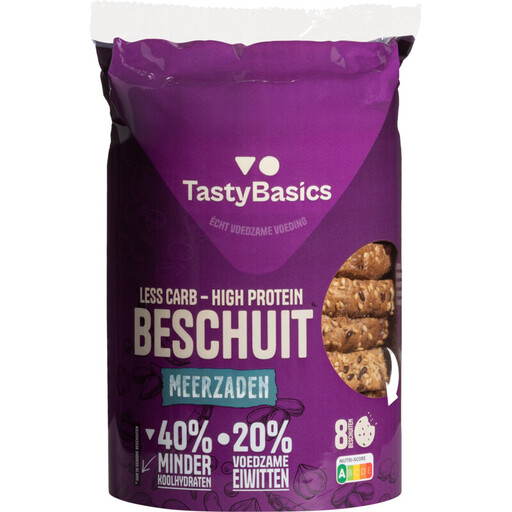 Image unavailable
An option if you mainly want to compare rusks for toppings by their stated nutritional values.
The pack weighs 184 g. Check the current packaging for sesame, egg and cereals containing gluten.
At the very least, check for any ingredients that are relevant to you, including sesame, egg and cereals containing gluten, such as wheat, spelt, barley and oats. The ingredients vary between rusks, so read the allergen information on the current packaging.
Use the online list to make an initial selection, but check the packaging of the product you’ve bought before serving it. Ingredients and product information can change. The Netherlands Food and Consumer Product Safety Authority states that allergen information for prepacked products must appear on the label.
Keep opened rusks dry and in a sealed container, and add moist toppings just before serving. Keep rusks and ready-to-eat toppings away from raw meat and fish; Voedingscentrum recommends using separate plates and utensils for raw and cooked foods.
No. You can’t tell from the name ‘multiseed’ what type of salt has been used. If this matters to you, check the packaging or ask the manufacturer which type of salt is used in that particular rusk.