
Lunch shoppers looking for wholemeal
You want to assess the flour base before choosing a seed mix. Look for the wholemeal label and, if needed, compare the fibre content in the nutritional information for the rolls you’re considering.


If you’re looking for a wholemeal roll for lunch, first check whether it’s explicitly labelled as wholemeal, then see which seeds it contains. According to the Consumers’ Association, the word ‘multigrain’ on its own tells you nothing about how much wholemeal flour the bread contains; visible seeds or a dark crust aren’t enough to tell you either. If size and convenience for taking it with you are more important, compare individual rolls with half or whole loaves too, and check the ingredients and allergens for the variant you choose.
You want to assess the flour base before choosing a seed mix. Look for the wholemeal label and, if needed, compare the fibre content in the nutritional information for the rolls you’re considering.
You’re mainly looking for texture and flavour from ingredients such as linseeds or sunflower seeds. Check the ingredients: a seeded crust doesn’t tell you whether the roll is wholemeal.
You want a handy size that you can take with you without having to slice a whole loaf. Check whether you’re buying an individual roll, a pack of several rolls or half a loaf.
First decide whether a wholemeal base, the convenience of an individual roll or the texture of seeds matters most for your lunch. Before making your final choice, always read the label for the specific variant.
| What to look for | What to check when buying | Who it matters to |
|---|---|---|
| Wholemeal base and fibre | Look for the wholemeal label and compare fibre on a like-for-like basis, such as per 100 g. | If I want a wholemeal roll for lunch, the flour base matters more to me than the seeds on the crust. Around 36% of consumers put this first. |
| Size and convenience for lunch | Check whether you’re buying an individual roll, several rolls, or half or a whole loaf. | For lunch on the go, I want something I can take with me without having to slice a whole loaf first. Around 29% of consumers put this convenience first. |
| Seeds and texture | Check which seeds are listed in the ingredients; assess the flour base separately. | If I’m mainly after a satisfying bite, I choose the seeds I enjoy and don’t assume that makes the roll wholemeal. Around 21% of consumers put this preference first. |
| Allergens and type of salt | Read the allergen information for the variant you’ve chosen and check whether baker’s salt or iodised salt is listed in the ingredients. | If I need to avoid an ingredient or the type of salt matters to me, I can’t rely on the name of the bread. For around 14% of consumers, checking the label is the main consideration. |
According to the Consumers’ Association, ‘multigrain’ doesn’t tell you how much wholemeal flour a loaf contains. The colour and a seeded crust won’t tell you that either.
Look for the wholemeal label, then check the ingredients for the seeds you want.
Rolls with the same type of name can list different grains, seeds and allergens. So a different variant may need a different check.
Read the ingredients and allergen information for the exact variant you’re buying.
According to the Netherlands Nutrition Centre, using baker’s salt isn’t compulsory. The word ‘multigrain’ doesn’t tell you which type of salt has been used.
For packaged bread, check the ingredients for baker’s salt or iodised salt; for unpackaged bread, ask the staff.
If you only need one portion at a time, a whole loaf needs a different approach from an individual roll.
Before you buy, work out how many lunches you’ll get from it and freeze portions if needed.
If bread is left for too long, it may become unusable as portions dry out or go off.
These product examples show why you should check both the size and the information for the specific variant when choosing a roll for lunch.
An individual wholemeal multigrain roll with seeds is a good example for anyone looking for a single roll for lunch.
The half Boeren Donker Volkoren Meergranen loaf is a good fit if you want bread for more than one lunch.
The Meergranenbrood described is an in-store loaf for anyone looking for a mix of grains and seeds.
The luxe meergranen-vloerbrood is a whole loaf for anyone who wants pre-sliced portions for lunch.
The Triangel meergranen bruin is an individual roll for anyone who wants to assess its size and flour base separately.
The range includes a variety of names, including multigrain bread, brown multiseed bread, Multikorn wholemeal bread and multigrain rolls.
These multigrain rolls are an option if you’re looking for seeded rolls for several lunches. Check the packaging separately if wholemeal flour or particular allergens are important to your choice.
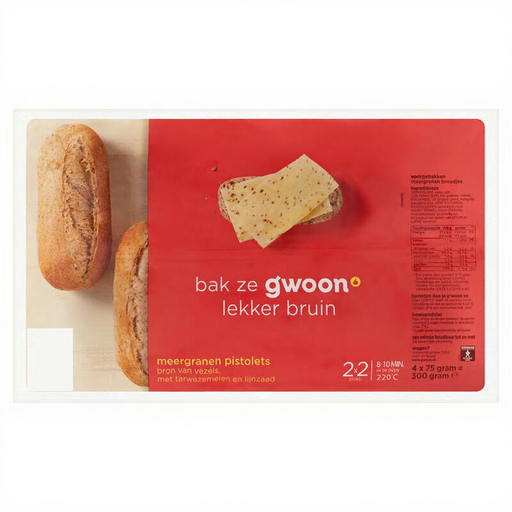 Image unavailable
A pack of four multigrain rolls for anyone looking for more than one portion for lunch.
Check the packaging to see whether the rolls meet your wholemeal preferences. If you have an allergy, carefully check the latest allergen information, paying particular attention to sesame.
No. According to the Consumers’ Association, the word ‘multigrain’ doesn’t tell you how much wholemeal flour the bread contains. Look for the wholemeal label and read the ingredients if the flour base matters to your choice.
Visible seeds don’t tell you whether the flour base is wholemeal. Compare the ingredients and, if you want to compare fibre, the nutritional information for the specific rolls on a like-for-like basis, such as per 100 g.
No. According to the Netherlands Nutrition Centre, using baker’s salt isn’t compulsory. For packaged bread, check the ingredients; for unpackaged bread, ask which type of salt has been used.
Check the ingredients and allergen information for the specific roll; the word ‘multigrain’ and visible seeds aren’t enough. Look for the label that meets your requirements and check any warnings on the packaging too.
If needed, divide the loaf into portions and freeze the ones you’ll use later straight away. For wholemeal bread, the Netherlands Nutrition Centre recommends storing it for 2 to 4 days in a kitchen cupboard or 1 to 3 months in the freezer. Also check the storage instructions for the bread you buy.