
Breakfast fans who specifically want wholemeal
You want seeds in your bread, but you don’t want to assume from the name ‘multigrain’ that it’s entirely wholemeal. Look for the wholemeal label, check the ingredients and compare the fibre per 100 g.


Choose a loaf explicitly labelled wholemeal if wholemeal is your priority: according to the Netherlands Nutrition Centre, multigrain means that a loaf contains at least three types of grain, not that it is entirely wholemeal. If you’re mainly looking for a substantial slice with seeds to go with savoury toppings, compare the ingredients, loaf shape and preparation method. Check the nutrition information and allergens for each product.
You want seeds in your bread, but you don’t want to assume from the name ‘multigrain’ that it’s entirely wholemeal. Look for the wholemeal label, check the ingredients and compare the fibre per 100 g.
You’re looking for a slice with kernels or seeds and a type of loaf that suits your toppings. Compare sliced bread with a crusty loaf or baguette, and factor in the preparation time if you’re choosing bake-at-home bread.
If allergens or iodised salt are important to your choice, check the latest ingredients and allergen information. Don’t assume another loaf has the same ingredients.
First decide whether wholemeal, the texture of the seeds, label information or a suitable size is most important to you. Then compare only the features that are relevant to your choice.
| What to consider | What to check when buying | Especially useful for |
|---|---|---|
| Wholemeal and fibre | Look for the wholemeal label and compare fibre on the same basis, per 100 g. | If I want wholemeal bread, the ingredients need to make that clear; a layer of seeds alone isn’t enough. Around 36% of consumers prioritise wholemeal and fibre when making their choice. |
| Seeds and loaf shape | Check which seeds are listed and whether you’re choosing sliced bread, a crusty loaf or a bake-at-home option. | With substantial savoury toppings, I’m mainly looking for a loaf shape and texture that work well; baking time also matters if I want to finish it in the oven. This is the main priority for around 29% of consumers. |
| Allergens and salt | Read the latest allergen information and check whether iodised salt is explicitly listed in the ingredients. | If sesame or gluten matters to me, or I want to know which salt has been used, the label needs to give me a clear answer. For around 21% of consumers, this is their first consideration. |
| Size and availability | Choose a pack that suits how much you use and check what the retailer in question has available. | If I only have bread for breakfast occasionally, I want to choose an amount I can use or store. Around 14% of consumers prioritise this practical consideration. |
According to the Netherlands Nutrition Centre, multigrain refers to at least three types of grain. The name doesn’t tell you whether the bread is entirely wholemeal.
Look for the wholemeal label, then check the ingredients and nutrition information for the specific loaf.
Seeded bread may contain sesame and gluten-containing grains, among other ingredients. Some products also carry warnings about the possible presence of other allergens.
Check the latest ingredients and allergen information every time you buy, even if you’ve bought the bread before.
The fact that a loaf is sold by a Dutch retailer, or called multigrain, doesn’t tell you which salt has been used in that specific bread.
If it affects your choice, check the ingredients list for iodised salt or baker’s salt.
A whole loaf or a pack of bake-at-home bread won’t necessarily suit how often you have it for breakfast.
Compare the pack size and read the storage or freezing instructions before you choose.
The AH Liefde & Passie Meergranen reviewed is a sliced brown loaf with seeds.
Jumbo Boeren Donker Volkoren Meergranen Half is an example with an explicit wholemeal label, kernels and seeds.
Lidl includes both wholemeal and multigrain options in its oven-fresh bread range.
Aldi offers Boeren volkoren meergranen in a half-loaf version, as well as part-baked multigrain baguettes from De Afbakker.
PLUS Korenlanders Licht Meerzaden is a whole brown loaf with listed seeds and nutrition information.
Dirk describes its Vloerbrood meergranen heel as a substantial loaf with grains and seeds.
These are multigrain baguettes for anyone considering a different type of bread from sliced bread for a savoury breakfast. The Lekhaven options need preparation; for all three products, check the latest packaging if wholemeal content, nutritional values or allergens will affect your choice.
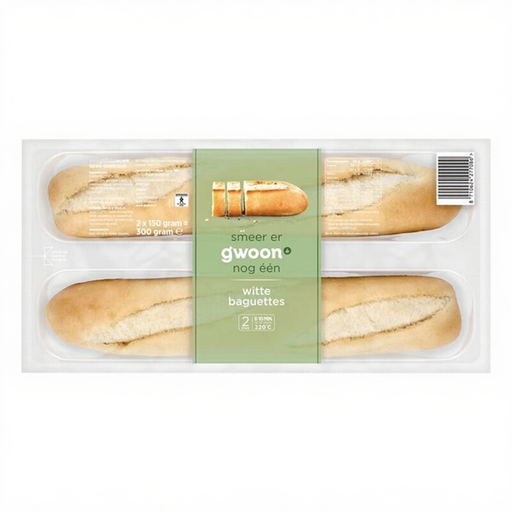 Image unavailable
The pack title describes two multigrain baguettes weighing 300 g in total. If you specifically want wholemeal bread, check the ingredients; only compare fibre values once you know what quantity they refer to.
Check the latest allergen information if wheat or possible traces of sesame are relevant to you. Also check the preparation instructions before choosing these baguettes for breakfast.
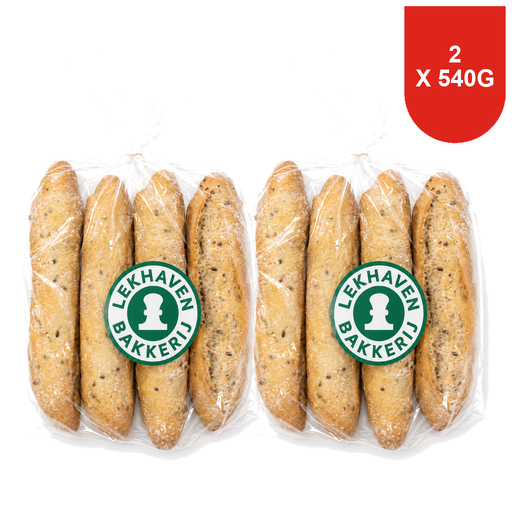 Image unavailable
These multigrain baguettes are a good fit for a breakfast when you have time to defrost and bake the bread. Check the baking time on the packaging; product listings give different times.
Check the latest packaging to confirm the number of baguettes. Also check the label if wholemeal content, allergens or iodised salt matter to you.
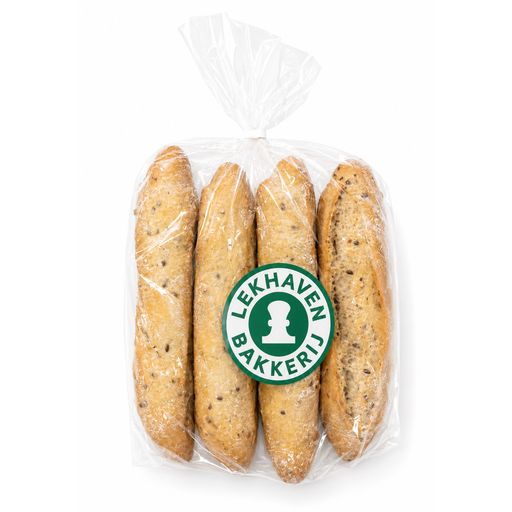 Image unavailable
This option is for anyone who wants to defrost and bake multigrain baguettes for breakfast. The title says 4 x 135 g; check the number of baguettes on the packaging before choosing a size.
Check the latest label for wholemeal content, allergens and iodised salt. Only compare nutritional values when it’s clear what quantity they refer to.
No. According to the Netherlands Nutrition Centre, multigrain bread contains at least three types of grain, but that doesn’t mean it’s entirely wholemeal. Look for the explicit wholemeal label and check the ingredients of the bread you want to buy.
Check the allergen information for the specific loaf, including gluten-containing grains and sesame if these are relevant to you. Also look for any warnings about the possible presence of other allergens; ingredients vary between products.
No, don’t assume that every loaf does. Check the ingredients list for iodised salt or baker’s salt; for the AH Liefde & Passie Meergranen reviewed, Albert Heijn explicitly lists iodised salt.
Bake-at-home baguettes are a good choice if you have time to prepare them in the oven; sliced bread can be eaten without that step. Aldi gives an oven time of 8–10 minutes for the part-baked De Afbakker multigrain baguettes reviewed. For another product, follow the instructions on its packaging.