
If you want to serve wholemeal bread
Look beyond the name ‘multigrain’ when choosing, and compare the wholemeal label, ingredients and nutritional information. Voedingscentrum distinguishes between multigrain bread and wholemeal bread.


Choose wholemeal multigrain bread with seeds if a wholemeal base is your priority for a coffee morning; ‘multigrain’ on its own doesn’t mean that a loaf is wholemeal. Also consider which bread shape will be easiest to serve, how much preparation you can manage, and whether the ingredients and allergens are suitable for your guests.
Look beyond the name ‘multigrain’ when choosing, and compare the wholemeal label, ingredients and nutritional information. Voedingscentrum distinguishes between multigrain bread and wholemeal bread.
Look for visible seeds or kernels, and choose a shape that suits the way you’ll serve it: slices from a loaf, pieces of rustic bread or individual rolls. The products described by retailers including Jumbo and ALDI show how much these formats can vary.
Check the ingredients and allergen information for each loaf, even if it contains seeds. If a guest needs to eat gluten-free, don’t assume ordinary multigrain bread is safe: Voedingscentrum highlights that grains used for bread can contain gluten.
First decide whether a wholemeal base is important to you. Then choose a bread shape and preparation method to suit the number of guests, and check the allergen information for the specific product before serving.
| What to consider | What to check when buying | Who it matters most to |
|---|---|---|
| Wholemeal and fibre | Look for the ‘wholemeal’ label, read the ingredients list and compare the fibre per 100 g in the nutritional information. | I don’t want to rely on the name ‘multigrain’ alone when I’m looking for wholemeal bread. This wholemeal and fibre choice could be the main consideration for around 36% of consumers. |
| Seeds and presentation | Check which seeds are listed and decide whether you want to serve sliced bread, a whole loaf or individual rolls. | When I serve bread with coffee, I want a shape that’s easy to share and shows off the texture of the seeds. This combination could be the priority for around 29% of consumers. |
| Portions and preparation | Choose an amount to suit the number of guests, and check whether the bread needs to be defrosted or baked before serving. | For a small coffee morning, I don’t want to prepare more bread than necessary. If it’s bake-off bread, I’ll also need to fit oven time into my plans. The right quantity and preparation could matter most to around 21% of consumers. |
| Allergens and gluten | Read the ingredients, allergen information and any ‘may contain’ warning. For unpackaged bread, ask for allergen information. | If a guest needs to avoid an allergen or eats gluten-free, I want to know whether this specific bread is suitable before serving it. This check could be the first priority for around 14% of consumers. |
According to Voedingscentrum, multigrain bread is made with at least three types of grain; this doesn’t automatically mean it has a wholemeal base. For example, the light seeded multigrain bread described by PLUS contains both wholemeal wheat flour and wheat flour.
Check the wholemeal label and ingredients list. If you’re choosing based on fibre, also compare the nutritional values per 100 g.
Bread with seeds may contain gluten-containing grains and allergens such as sesame or soya. The Netherlands Food and Consumer Product Safety Authority explains which allergen information must be shown on prepacked food.
Read the information for the specific bread, or ask about it if the bread is unpackaged. If a guest needs to eat gluten-free, choose a suitable product that is explicitly labelled gluten-free, and avoid contact with crumbs from ordinary bread.
A half loaf, a whole loaf and individual rolls each need to be portioned differently for your guests. Bake-off bread also needs to be prepared before serving.
Think about how many slices or rolls you want to serve, and check the pack instructions for bake-off varieties.
If the quantity doesn’t suit your group, you could end up with leftover bread.
A general statement or rule about baker’s salt doesn’t confirm which ingredients were used in a particular loaf.
If the salt’s composition matters to your choice, check the information for the specific product or ask the baker or retailer.
Albert Heijn offers a range of multigrain breads, including sliced bread and rustic loaves.
Jumbo describes, among other products, a wholemeal multigrain loaf with kernels and seeds.
Lidl describes a multigrain bread with grains and seeds, and provides separate ingredients and allergen information for oven-fresh bread.
ALDI describes, among other products, sliced multigrain rustic loaves and multigrain rolls to bake at home.
PLUS offers Korenlanders breads in seeded and multigrain varieties, including half loaves.
Dirk describes, among other products, a multigrain rustic loaf and multigrain rolls with seeds and kernels.
This selection includes small baguettes and round multigrain loaves from Lekhaven Bakkerij. Choose the shape and quantity to suit your guests, and allow time to prepare these bake-off products. If wholemeal content, seeds or allergens are important, check the current packaging.
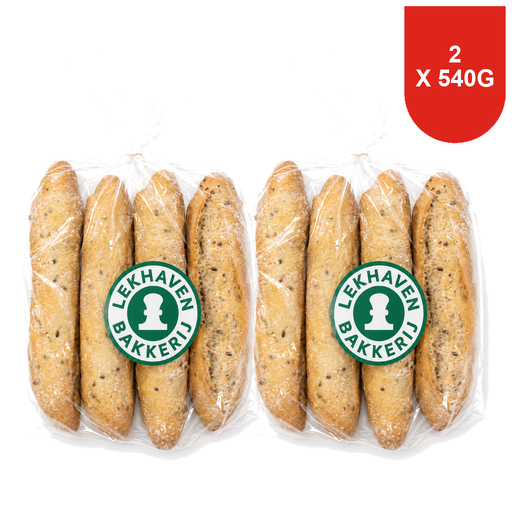 Image unavailable
These small baguettes are ideal for a table where you want to serve individual portions. The pack contains 4 × 135 g × 2; allow time to defrost and bake them before serving.
Check the packaging for ingredients, allergens and any wholemeal labelling if these are important to your guests.
 Image unavailable
Four 135 g baguettes give you individual loaves to share. Allow time to defrost and bake them before serving, and follow the pack instructions for baking time.
Check the current ingredients and allergen information; ‘multigrain’ on its own doesn’t confirm that the bread has a wholemeal base.
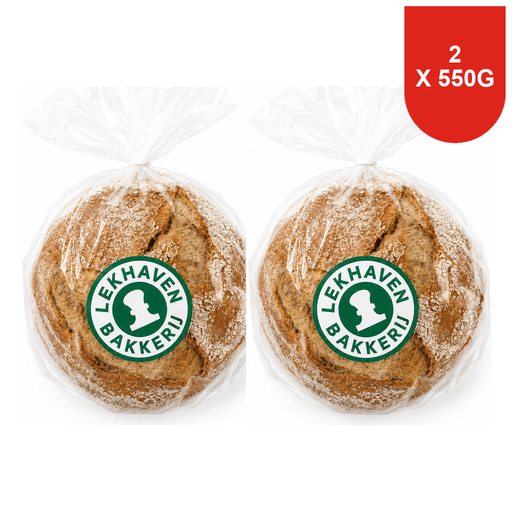 Image unavailable
The two 550 g round loaves are a good fit for a coffee morning where you want to slice and share bread. Allow time for defrosting, baking and cooling before slicing.
Check the ingredients and allergens for this variety, and look separately for wholemeal labelling.
 Image unavailable
A 550 g round loaf is a good option if you want to slice and share one loaf. Allow time for defrosting, baking and cooling before slicing, and follow the baking instructions on the packaging.
If you’re choosing based on wholemeal content, seeds or allergens, check the information for this specific loaf.
No. According to Voedingscentrum, multigrain bread is made with at least three different types of grain, but that doesn’t mean the flour used is wholemeal. Look for the wholemeal label and check the ingredients list for the bread you choose.
Don’t assume it’s suitable: ordinary multigrain breads may contain gluten-containing grains. Choose a product that’s explicitly labelled gluten-free, check the product information and avoid contact with crumbs from ordinary bread when serving.
Ask the retailer before you buy. According to the Netherlands Food and Consumer Product Safety Authority, allergen information for unpackaged food must be made available in a way other than on a packaging label.
No. General information about baker’s salt doesn’t tell you what’s in every individual loaf. If this matters to your choice, check the ingredients information for the specific loaf or ask the baker or retailer for product-specific details.
Plan when to defrost and bake the bread around the time you want to serve it, following the instructions on the packaging. If you’re serving a whole loaf, allow it to cool before slicing.