
Eaters who reject bits in bread
If visible seeds or an unfamiliar texture put them off, start with a small portion and no pressure to eat. This follows the Netherlands Nutrition Centre’s advice on fussy eating in children.


Start with a texture the eater is willing to try: bread with fewer seeds listed and a small first portion can be a gentle introduction, but the label won’t tell you exactly how the seeds will feel. If fibre matters, look for an explicit wholemeal description and compare the fibre content per 100 g. If there’s an allergy, always check the current ingredients and warnings; multigrain doesn’t automatically mean wholemeal.
If visible seeds or an unfamiliar texture put them off, start with a small portion and no pressure to eat. This follows the Netherlands Nutrition Centre’s advice on fussy eating in children.
If you’re looking for bread the eater is willing to try and want to compare fibre content too, the wholemeal description and nutritional information per 100 g are more useful than the word ‘multigrain’ alone.
Ingredients and warnings can vary between seeded breads. The Jumbo and PLUS breads described here list, among other things, cereals containing gluten, soya or sesame; check the current packaging for the version you choose.
For a fussy eater, start with a texture and portion size you’re happy to try. Then compare the wholemeal description and nutritional information, and check allergens if they’re relevant to the eater.
| What to consider | What to check | Who is it important for? |
|---|---|---|
| Texture and first taste | Check which seeds and kernels are listed, and consider choosing half a loaf for the first taste. | If visible seeds are a sticking point, I want to start with a small portion and no pressure to eat. This is the main priority for around 33% of consumers. |
| Fibre and wholemeal | Look for an explicit wholemeal description and compare fibre per 100 g, rather than relying on the name ‘multigrain’ alone. | I want bread that will be eaten, but the wholemeal base and fibre content are decisive for me. This is the first consideration for around 27% of consumers. |
| Allergens | Check the current packaging for the ingredients and the ‘contains’ and ‘may contain’ statements. | If I have an allergy, I need to know which ingredients and cross-contamination warnings apply to this bread. Around 27% of consumers give this check priority. |
| Quantity and where to shop | Check whether the version you want is available as half a loaf or in individual portions, and read the storage advice. | I want to try a small amount of bread first, so there’s less left over if I don’t like the new texture. This small first taste matters most to around 13% of consumers. |
According to the Netherlands Nutrition Centre, multigrain bread contains at least three types of grain. The name doesn’t tell you whether all the flour used is wholemeal.
When comparing fibre, look for an explicit wholemeal description and check the nutritional information per 100 g.
The seeds or coarse texture may be exactly why a fussy eater rejects the bread.
Start with a small portion, perhaps from half a loaf, and don’t put pressure on them to eat it. For fussy eating, the Netherlands Nutrition Centre recommends small portions and no pressure to eat.
If they don’t like the texture, you may have more bread left over from a whole loaf than from half a loaf.
As well as cereals containing gluten, seeded bread may also contain sesame or soya. Warnings about possible cross-contamination vary by product.
Check the current ingredients and both the ‘contains’ and ‘may contain’ statements every time you buy it, especially if someone has an allergy.
The type of bread alone doesn’t tell you which salt was used in that particular product.
If the use of baker’s salt matters to you, check the packaging or ask the baker.
Jumbo stocks products including Boeren Donker Volkoren Meergranen Half and Stevig Meergranen.
PLUS Korenlanders Licht Meerzaden is a brown multigrain bread with sunflower seeds, linseed and sesame.
ALDI stocks products including Boeren Volkoren Meergranen and a multigrain baguette with seeds and kernels.
Lidl stocks a multigrain bread with seeds and a white multigrain baguette with kernels and seeds.
Dirk stocks products including Bakker van der Akker Bakkers meergranen half and multigrain rolls with seeds and kernels.
Albert Heijn stocks several multigrain options, including sliced multigrain bread.
These multigrain baguettes and rolls can be tried individually if you want to offer a small amount first. If you have a question about wholemeal content or allergens, check the current packaging for the version you choose.
 Image unavailable
You can try a small first portion from one baguette without using all four at once.
Allow time to defrost and bake. The product information recommends defrosting for around 4 hours and baking for 5–7 minutes at 220 °C. If you have an allergy, check the current packaging. For a fibre comparison, first check whether the nutritional values are given per 100 g or per portion.
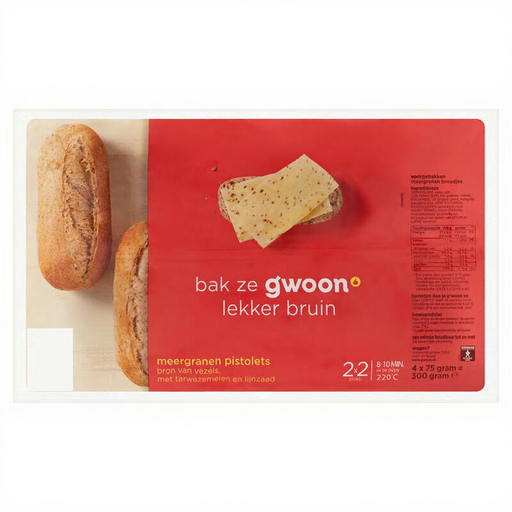 Image unavailable
With four individual rolls, you can start with just one if the eater wants to try a new texture.
Check the current packaging for allergen information, especially the sesame warning. For a fibre comparison, also check whether the nutritional values are given per 100 g or per portion.
No. According to the Netherlands Nutrition Centre, multigrain bread is made with at least three types of grain; that doesn’t automatically make it wholemeal. Look for an explicit wholemeal description and compare fibre per 100 g if that matters to your choice.
Start with a small portion and don’t put pressure on them to eat it. This follows the Netherlands Nutrition Centre’s advice for children who eat little or are fussy eaters. Then see how they react to the seeds and texture before offering them more of the same bread.
If you have an allergy, check all the ingredients and warnings on the current packaging for the bread you choose. The versions described from Jumbo and PLUS list, among other things, cereals containing gluten, soya and sesame; possible cross-contamination warnings vary by product.
Check the packaging or ask the baker. The description ‘multigrain bread’ alone doesn’t tell you whether baker’s salt has been used in that loaf.