
Families who look for wholemeal bread and fibre
The name ‘multigrain’ doesn’t tell you whether a loaf is wholemeal. If that distinction matters to you, check the wholemeal wording on the packaging and compare the fibre content per 100 g.


When choosing seeded multigrain bread for a large family, look beyond the name and visible seeds: first check whether it is wholemeal, then compare fibre per 100 g and allergen information. A whole loaf works well for a family that gets through it quickly. If your consumption varies, freezing it in portions as soon as you buy it helps you save some for later.
The name ‘multigrain’ doesn’t tell you whether a loaf is wholemeal. If that distinction matters to you, check the wholemeal wording on the packaging and compare the fibre content per 100 g.
If the number of slices eaten each day varies, you may find some of a whole loaf is left over. The Netherlands Nutrition Centre (Voedingscentrum) recommends freezing bread in portions as soon as you buy it, and taking out only what you need.
If someone has an allergy or coeliac disease, the current allergen information is essential when choosing bread. Check the packaging before you buy, or ask for the available information when buying unwrapped bread.
Start with the grain base and any allergens that matter to your household. Then choose a size that suits how much bread you actually eat.
| What to consider | What to check when buying | Who it matters most to |
|---|---|---|
| Wholemeal and fibre | Check whether the bread is labelled wholemeal and compare fibre per 100 g in the nutritional information. | If fibre is a priority in our everyday family bread, I don’t want to rely on the word ‘multigrain’ alone; around 31% of consumers give this grain base top priority. |
| Size and storage | Consider whether a whole or half loaf suits your household’s consumption, and whether you can freeze it in portions straight away. | When we need a different number of slices each day, I don’t want to have to use a whole loaf at once. Suitable storage is a top priority for around 31% of consumers. |
| Seeds and texture | Check the ingredients list to see which seeds have been added, and choose a type of bread that suits when you’ll eat it. | For variety at breakfast or lunch, I specifically look for bread with seeds. This preference for flavour and texture comes first for around 23% of consumers. |
| Allergens | Check the current allergen information, including warnings about possible cross-contamination. If the bread is unwrapped, ask before buying. | If someone at home has a relevant allergy, I first need to know whether this particular bread is suitable. Around 15% of consumers say this is their main concern when buying bread. |
Having several types of grain or visible seeds doesn’t prove that a loaf is wholemeal. Its grain base may therefore be different from what you’d expect from the name.
Look for the wholemeal wording on the packaging and, if fibre matters to you, compare the nutritional information per 100 g.
Even in a large family, daily bread consumption can vary. That could mean some of a whole loaf is left over.
As the Voedingscentrum recommends, divide the loaf into convenient portions as soon as you buy it, then freeze any bread you won’t eat soon.
Bread with seeds may also contain allergens that you can’t identify from the outside. If you have a relevant allergy, you’ll need the full product information.
Check the current allergen information every time you buy bread, and ask for it before buying unwrapped bread.
A half loaf, a whole loaf and individual rolls provide different numbers of portions. Nutritional values are also only easy to compare when they’re given on the same basis.
First check the weight and intended number of portions, then compare the nutritional information per 100 g.
These examples show the product information you can compare across different types of bread. Details for one variety don’t necessarily apply to a brand’s entire range.
Albert Heijn offers, among other products, wholemeal multiseed rolls.
Jumbo lists a half loaf of wholemeal multigrain bread with seeds.
Lidl describes a multigrain bread containing, among other ingredients, wheat, barley and buckwheat.
ALDI offers a whole farmhouse wholemeal multigrain loaf.
PLUS describes Korenlanders Licht Meerzaden rond heel as a whole loaf weighing 800 g.
Dirk offers multigrain rolls with seeds in packs of four.
These two Lekhaven Bakkerij varieties differ in pack size: one round loaf weighing 550 g or two round loaves weighing 550 g each. Choose the quantity to suit your family’s consumption, and allow time for defrosting, baking and cooling before eating.
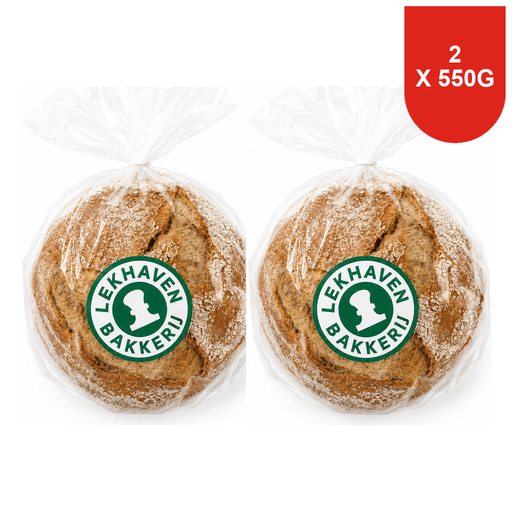 Image unavailable
This pack of two round multigrain loaves is a good fit for a household that wants to have more than one loaf on hand. According to the product name, each loaf weighs 550 g. Allow time for defrosting, baking and cooling before eating. If fibre is a priority, check the wholemeal wording and fibre per 100 g on the current packaging. If you have a relevant allergy, read the allergen information.
 Image unavailable
This 550 g round multigrain loaf is an option if one loaf suits your family’s consumption better than a pack of two. It needs to be defrosted, baked and cooled before eating. Check the current packaging for the wholemeal wording, fibre per 100 g and allergen information if these matter to your choice.
No. Multigrain and wholemeal don’t mean the same thing. Check the wholemeal wording and ingredients information. According to the Voedingscentrum, only multigrain bread that is wholemeal may contain slightly more nutrients than standard wholemeal bread.
Freeze the bread in portions as soon as you buy it, and take out only what you need. This is the Voedingscentrum’s storage advice and means you won’t have to use a whole loaf on a day when you eat less.
For pre-packed bread, read the current allergen information on the label. If the bread is unwrapped, ask for this information before you buy it. If you have a relevant allergy, also check for warnings about possible cross-contamination, and don’t rely only on the seeds you can see.
No. The name ‘multigrain bread’ doesn’t tell you how much iodine a particular loaf contains. Check the ingredients list if you want to know whether baker’s salt has been used. Even then, the label won’t tell you the exact amount of iodine in the loaf.