
If you look for wholemeal and fibre
For a late-night snack, you want to know whether the bread contains wholemeal flour, and compare the fibre content of specific products on the same basis.


If you want to eat a slice of bread straight away late in the evening, compare sliced multigrain breads by their ingredients, fibre content and the seeds you enjoy. Choose a bake-at-home option if warm, crusty bread matters more to you and you have time to prepare it. According to the Netherlands Nutrition Centre, ‘multigrain’ does not automatically mean ‘wholemeal’, so check the label on the specific loaf.
For a late-night snack, you want to know whether the bread contains wholemeal flour, and compare the fibre content of specific products on the same basis.
You enjoy bread with ingredients such as sunflower seeds, linseed or sesame for added texture, but you also check the ingredients and allergen information.
You’d rather have a freshly baked snack than a slice that’s ready to eat straight away, as long as the preparation fits into your evening.
First decide whether you want to eat straight away or bake the bread. Then compare the ingredients and nutritional information of the breads you’re considering for your snack.
| What to consider | What to check | Who this matters to |
|---|---|---|
| Wholemeal and fibre | Look for wholemeal flour in the ingredients list and compare fibre per 100 g or per slice, using the same basis each time. | If you’re looking for wholemeal bread for a late-night snack, don’t rely on the word ‘multigrain’ alone. For around 33% of consumers, wholemeal and fibre are the main considerations. |
| Seeds and allergens | Check which seeds are listed and look for both ‘contains’ and ‘may contain’ on the packaging. | If I choose bread for its seeds, the label also needs to suit any allergens I have to consider. For around 25% of consumers, this combination of texture and checking the label matters most. |
| Eat straight away or bake | Check whether the bread is ready to eat or needs to be defrosted and baked first; follow the preparation instructions for bake-at-home products. | Warm bread sounds appealing, but near bedtime I want to know how much preparation it involves. Around 25% of consumers prioritise the choice between eating straight away and preparing the bread. |
| Pack size and storage | Check the pack size, storage instructions and whether the bread is available at the shop where you want to buy it. | If you only have a small late-night snack occasionally, you won’t want to open or prepare more bread than you need. For around 17% of consumers, this practical consideration comes first. |
According to the Netherlands Nutrition Centre, multigrain bread is made using at least three types of grain. The name doesn’t tell you whether wholemeal flour has been used.
If wholemeal matters to you, check the ingredients list and compare the fibre content of the specific breads.
Breads with seeds may contain ingredients such as sesame and gluten-containing grains; some products also list soya. Ingredients vary from one bread to another.
If you have a relevant allergy, check the current ingredients list, allergen information and any cross-contamination warnings.
A value per slice cannot be compared directly with a value per 100 g. For bake-at-home products, the values shown may also apply to the product before preparation, as PLUS states for its multigrain baguette.
Compare like with like and check the packaging to see which stage of preparation the nutritional information applies to.
Ingredients and product information can change. If you’re checking for allergens or a specific nutritional value, the current label is the one that matters.
Check the packaging before eating the bread, and if it’s a product sold at a particular shop, check whether it’s available at your local branch.
Albert Heijn describes its sliced Liefde & Passie Meergranen as bread containing ingredients including sunflower seeds, sesame seeds and sprouted rye.
Jumbo lists both a half loaf of Boeren Donker Volkoren Meergranen and a whole loaf of Stevig Meergranen with seeds.
PLUS offers a par-baked multigrain sourdough baguette for anyone who wants to bake their bread at home.
Lidl lists a 600 g organic rustic multigrain sourdough loaf with seeds.
ALDI describes its Boeren Volkoren Meergranen as a whole loaf made with grains and seeds.
Dirk’s range includes multiseed and wholemeal multigrain breads, among other varieties.
These two baguette options are suited to anyone who wants to bake a seeded snack for later in the evening. Allow time to defrost them, and check the packaging if wholemeal flour, allergens or fibre are important factors in your choice.
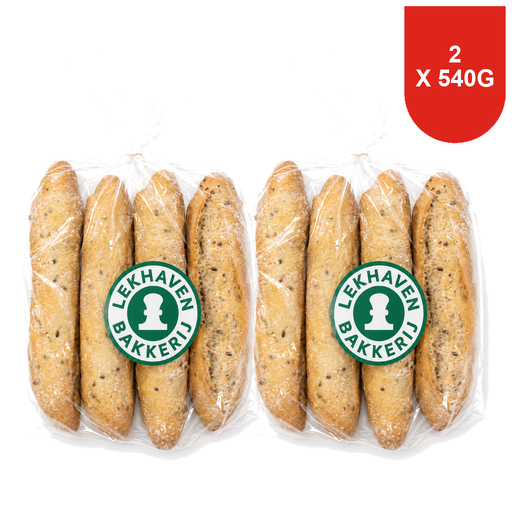 Image unavailable
For a warm snack you can plan ahead: the product description says to defrost before baking, either for around four hours or overnight in the fridge.
The description lists sunflower seeds, sesame seeds and linseed. The title and description don’t give the same pack size, so check how many baguettes are included. If you have a relevant allergy, read the current information about wheat, sesame and possible cross-contamination.
 Image unavailable
For anyone who wants to bake individual baguettes: the product information lists four baguettes weighing 135 g each, and says to defrost for around four hours or overnight in the fridge.
Sunflower seeds, sesame seeds and linseed are listed. The preparation information gives two different baking times, so follow the instructions on the current packaging. Check the allergen information there too, especially if you’re concerned about wheat or sesame.
No. According to the Netherlands Nutrition Centre, multigrain bread contains at least three types of grain, but the name alone doesn’t mean the bread is wholemeal. If that’s a requirement for you, look for wholemeal flour in the ingredients list.
Compare the fibre in specific breads per 100 g, or per slice if the slices weigh the same. The Netherlands Nutrition Centre gives 2,8 g of fibre for a 35 g slice of wholemeal bread with seeds; another bread may have a different value.
Check the ingredients and both the ‘contains’ and ‘may contain’ information on the current packaging. The breads described here have different ingredients and list gluten-containing grains, sesame or soya, among other things. If you have a relevant allergy, don’t rely on the name of the bread alone.
For bake-at-home products, follow the defrosting and preparation instructions on the packaging rather than relying on the bread’s name. According to their product information, the Lekhaven Bakkerij baguettes shown here need to defrost for several hours first. If you want to eat straight away, choose bread that’s ready to eat.
Check the pack size and storage instructions before choosing a whole loaf or a pack of bake-at-home baguettes. Albert Heijn says its sliced Liefde & Passie Meergranen can be frozen on the day of purchase; for any bread, follow the instructions on its own packaging.