
Breakfast lovers who want to taste the seeds
You’re looking for a roll with kernels or seeds to enjoy with jam, fruit or nut butter, but want to know whether you’ll also get the shape of a Kaiser roll.


If seeds and a firmer bite are your priority with sweet toppings, consider multiseed or multigrain rolls too; they aren’t automatically Kaiser rolls. Choose a white Kaiser roll if the classic shape is what matters most. If you’re choosing based on wholemeal flour or fibre, check the ingredients and nutritional information: according to the Netherlands Nutrition Centre, ‘multigrain’ doesn’t automatically mean ‘wholemeal’.
You’re looking for a roll with kernels or seeds to enjoy with jam, fruit or nut butter, but want to know whether you’ll also get the shape of a Kaiser roll.
You want to look beyond the colour or the word ‘multigrain’, so you check the ingredients and fibre per 100 g.
You want to know how to prepare and store the rolls, or you’re looking for a product explicitly labelled gluten-free and checking its allergen information too.
Choose this if: seeds matter more to you than the classic Kaiser shape.
Bear in mind: a triangular roll or baguette isn’t a Kaiser roll; according to the Netherlands Nutrition Centre, ‘multigrain’ alone doesn’t mean that the bread is wholemeal.
Choose this if: you specifically want a Kaiser roll to go with your sweet toppings.
Bear in mind: a white Kaiser roll isn’t necessarily seeded or made with wholemeal flour.
Choose this if: you’re looking for a product explicitly labelled gluten-free; Albert Heijn offers a multiseed roll like this.
Bear in mind: it isn’t a classic Kaiser roll, and gluten-free doesn’t mean it’s free from other allergens.
First decide whether the Kaiser shape, seeds or a specific dietary requirement is your priority. Then compare the information for the roll you’re actually planning to buy.
| What to consider | What to check when buying | Who it matters to |
|---|---|---|
| Seeds and texture | Check which kernels and seeds are listed in the ingredients, and read the allergen information. | With sweet toppings, I want to be able to taste the seeds without mistaking a different type of roll for a Kaiser roll. This seed-rich texture is the top priority for around 37% of consumers. |
| Wholemeal flour and fibre | Check whether wholemeal flour is listed and compare fibre per 100 g; don’t rely on ‘multigrain’ alone. | If I’m choosing a roll for its wholemeal flour or fibre, I want to assess that from the label rather than the colour of the crust. This is the top priority for around 27% of consumers. |
| Gluten and allergens | If needed, look for an explicit gluten-free label and read the full allergen and ‘may contain’ information. | If I need to avoid gluten or another allergen, I don’t assume a seed-rich appearance tells me what’s in the product. Around 18% of consumers put this check first. |
| Preparation and packaging | Compare the number of rolls with your plans and check the preparation and storage instructions. | For a small breakfast, I want to use the rolls within the stated storage period and with the equipment I have at home. Practicality matters most to around 18% of consumers. |
According to the Netherlands Nutrition Centre, ‘multigrain’ refers to bread made with at least three different types of grain. The term doesn’t tell you how much wholemeal flour or fibre the roll contains.
Read the ingredients and compare fibre per 100 g if these qualities are important to your choice.
Seeds tell you nothing about whether a product contains gluten. According to PLUS, its multigrain triangular rolls contain, among other things, gluten-containing cereals and sesame. Other allergens may also be present in rolls labelled gluten-free.
If you need a gluten-free product, check for an explicit gluten-free label and read the full allergen information too.
A pack may not be the best fit for a small breakfast if you can’t use it according to the storage instructions.
Choose an amount you can use, and check whether the supplier says that each product can be frozen. For example, Albert Heijn states that its gluten-free multiseed rolls aren’t suitable for home freezing.
Baker’s salt is iodised salt, but according to the Netherlands Nutrition Centre, bakers aren’t required to use it.
If the type of salt matters to your choice, check the ingredients on packaged bread or ask about it when buying unwrapped bread.
Worth considering if you’re looking for a multiseed roll explicitly labelled gluten-free.
Worth considering if you want to compare Kaiser rolls with other types of bread.
Worth considering when comparing the ingredients and nutritional information of a multigrain bake-at-home alternative.
Worth considering if you’re looking for Kaiser rolls to bake at home.
Worth considering if you want to compare white bake-at-home Kaiser rolls with multigrain bake-at-home bread.
Worth considering if you want to check how to prepare bake-at-home Kaiser rolls in advance.
These products are seed-rich or multigrain alternatives for a breakfast with sweet toppings. The brioche is a roll; the baguettes and round loaf have a different shape. None of these products is described here as a Kaiser roll.
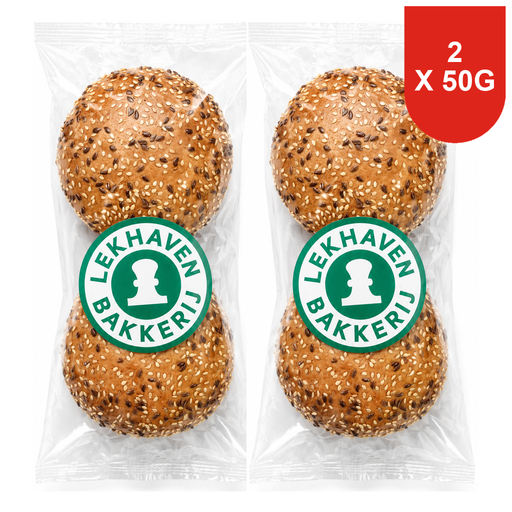 Image unavailable
A brioche roll to consider if you specifically want sesame and linseed with sweet toppings; it isn’t a Kaiser roll. If you have allergies, check the full packaging information. Compare the nutritional information per 100 g if fibre matters to you.
 Image unavailable
For anyone considering a multigrain baguette with sweet toppings instead of a Kaiser roll. The product name states that there are four baguettes weighing 135 g each. Check the ingredients for the seeds you’re looking for, and check separately for wholemeal flour and fibre per 100 g.
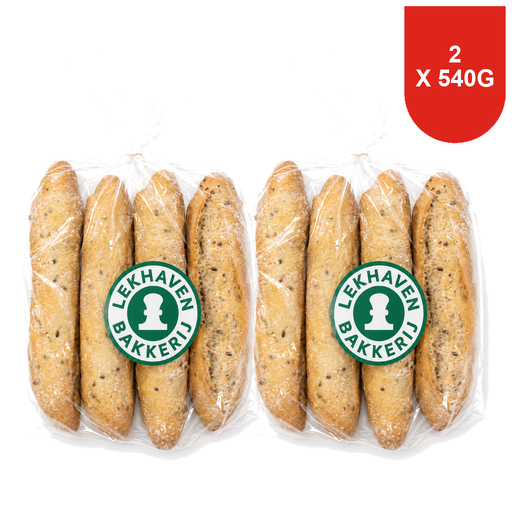 Image unavailable
A multigrain baguette as an alternative to a roll with sweet toppings, not a Kaiser roll. The title states 4 × 135 g × 2, while the description gives a different pack size, so check the quantity before buying. Check the information for this variety to find out about its seeds, wholemeal flour and fibre.
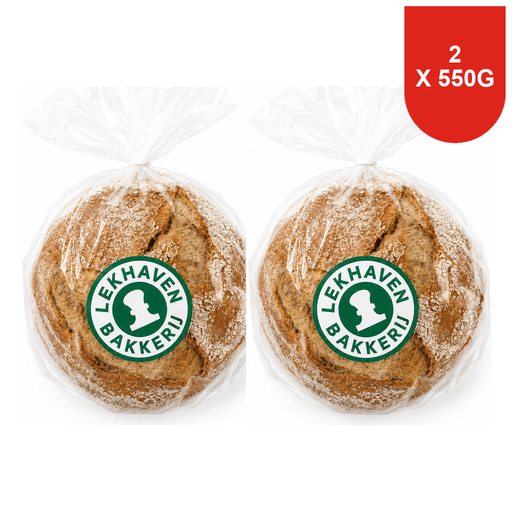 Image unavailable
For anyone who’d rather buy a whole multigrain loaf for several breakfasts than individual Kaiser rolls. The product name states that there are two round loaves weighing 550 g each. Consider whether that quantity suits your needs, and check the ingredients and nutritional information if seeds or fibre are important to your choice.
Not automatically. According to the Netherlands Nutrition Centre, ‘multigrain’ means that bread is made with at least three different types of grain. Check the ingredients separately for wholemeal flour, and compare fibre per 100 g.
No, you can’t assume that every roll does. Baker’s salt is iodised salt, but according to the Netherlands Nutrition Centre, bakers aren’t required to use it. Check the ingredients on packaged bread or ask about it when buying unwrapped bread.
Seeds don’t automatically make a roll gluten-free. According to PLUS, its multigrain triangular rolls contain gluten-containing cereals. Albert Heijn, by contrast, explicitly labels its gluten-free multiseed rolls as gluten-free. For both types, check the information about other allergens too.
That depends on the instructions for the specific product. PLUS recommends cooking its multigrain triangular rolls for four minutes in a preheated air fryer at 200 °C. Don’t assume the same instructions apply to another roll, and follow your appliance’s instructions too.
Compare the number of rolls with how many you can use according to the storage instructions. Check whether each product can be frozen: Albert Heijn says its gluten-free multiseed rolls aren’t suitable for home freezing.