
If you’re specifically looking for seeds
You want a small roll with seeds, not just a plain Kaiser roll. Check the ingredients: the name of the roll alone doesn’t confirm what it contains or what’s on top.


If you want both the Kaiser shape and seeds, choose a roll whose ingredients confirm that it contains seeds. If you’re mainly after the texture of seeds, a multiseed roll in a different shape could be a good fit. Compare fibre content separately per 100 g, and check the allergens and preparation time for the option you choose.
You want a small roll with seeds, not just a plain Kaiser roll. Check the ingredients: the name of the roll alone doesn’t confirm what it contains or what’s on top.
The shape of the roll matters less to you than whether it’s listed as wholemeal or its nutritional value. Compare the ingredients and fibre per 100 g; according to the Netherlands Nutrition Centre, multigrain doesn’t automatically mean wholemeal.
You’re looking for a small top-up for breakfast or lunch. Check how many rolls are in the pack and whether you can prepare them in time using the oven or air fryer you have available.
Start by asking yourself whether the Kaiser shape is essential. If seeds matter more than the shape, you can compare other types of rolls too. Then check whether they’re wholemeal, their allergens and how to prepare them for each product.
| What to consider | What to check before buying | Who it matters to |
|---|---|---|
| Seeds and roll shape | Look for seeds in the ingredients list, and separately check whether the roll has the Kaiser shape you want. | I want the texture of seeds, but I don’t want to come home with plain Kaiser rolls. Around 40% of consumers give confirmed seeds the highest priority. |
| Wholemeal and fibre | Check whether wholemeal is stated explicitly and compare fibre per 100 g; multigrain isn’t another word for wholemeal. | If the shape matters less, I want to be able to compare rolls by whether they’re wholemeal or by their fibre content. Around 30% of consumers say this matters most to them. |
| Preparation | Check the preparation time and whether the option you choose needs an oven, an air fryer or time to defrost. | For an unexpected lunch, I want to know when the rolls will be ready, not just how many are in the pack. Quick or immediate preparation comes first for around 20% of consumers. |
| Allergens and salt | Check the allergen information, including sesame and cereals containing gluten. If needed, also look for baker’s salt or iodised salt. | I want to know before buying whether relevant allergens or my preferred type of salt are listed. For around 10% of consumers, this ingredient information is the highest priority. |
Plain white Kaiser rolls and multiseed rolls may appear alongside each other in a range without being the same type of bread. Multigrain on its own doesn’t confirm that a roll contains seeds.
Check the ingredients and the shape of the roll before choosing an alternative.
According to the Netherlands Nutrition Centre, multigrain refers to using at least three types of grain. The name doesn’t automatically mean that a roll is wholemeal.
Look for an explicit wholemeal claim and compare fibre per 100 g if that’s one of your buying criteria.
A topping doesn’t tell you everything about allergens. The Netherlands Food and Consumer Product Safety Authority lists sesame seeds and cereals containing gluten as allergens that consumers must be informed about.
Read the label on packaged rolls. For unpackaged rolls, ask about allergen information before buying.
Not all bread is made with baker’s salt, according to the Netherlands Nutrition Centre. The shape or name of a roll doesn’t tell you which type of salt it contains.
If it matters to your choice, check the ingredients list for baker’s salt or iodised salt.
If you’d like to look at multiseed rolls in a different style as well as Kaiser rolls.
For comparing plain and wholemeal Kaiser rolls with rolls in other shapes.
If you want to compare Kaiser rolls with multigrain bread or rolls in a triangular shape.
For a small top-up of bake-at-home Kaiser rolls or multigrain rolls in a different shape.
For comparing white bake-at-home Kaiser rolls with a separate multiseed product.
If you’re looking for white bake-at-home Kaiser rolls in a small pack.
If seeds matter more than the classic Kaiser shape, you could also consider a brioche roll with sesame and linseed. Bear in mind that this option needs time to defrost.
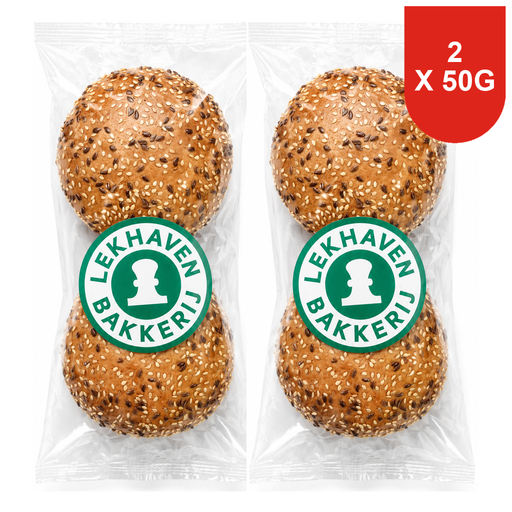 Image unavailable
An option if you’re looking for sesame and linseed and would prefer a brioche roll to a Kaiser roll.
The pack contains two 50 g rolls. According to the product description, allow around four hours to defrost. This isn’t an option you can bake and serve straight away.
If you have allergies, check the latest allergen information on the packaging. Also check the type of salt listed if that matters to your choice.
No. According to the Netherlands Nutrition Centre, multigrain means that at least three different types of grain have been used. Check separately whether wholemeal is stated and, if needed, compare fibre per 100 g.
Check the allergen information for the specific roll before buying. For example, the PLUS Korenlanders multiseed baguette lists sesame seeds. For unpackaged rolls, you can ask in store for the allergen information.
No. The Netherlands Nutrition Centre says that bakers aren’t required to use baker’s salt. Check the ingredients list for the roll you choose to see whether it lists baker’s salt or iodised salt.
It depends on the option you choose and its preparation instructions. PLUS recommends four minutes in a preheated air fryer at 200 °C for its white Kaiser rolls. For other rolls, follow the instructions on their packaging.