When choosing a school lunch, don’t focus on visible seeds alone. If wholemeal flour and fibre matter to you, check the ingredients and compare the nutritional information per 100 g. A multigrain roll isn’t automatically wholemeal, and it may have a different shape from a Kaiser roll. Before packing it, check the current allergen label, bear your school’s rules in mind and plan ahead if you’re buying rolls that need baking at home.
Who might find this choice important?
Pupils looking for wholemeal flour and fibre
For anyone who doesn’t consider seeds a deciding factor on their own. The ingredients list shows whether wholemeal flour has been used, while the nutritional information lets you compare fibre per 100 g. According to the Netherlands Nutrition Centre, multigrain doesn’t automatically mean wholemeal.
Families checking allergens and school rules
For anyone who needs to check which grains and seeds a roll contains before packing it, as well as any statements on the packaging about possible traces. Check your school’s own rules too: the product name alone won’t tell you whether it’s suitable.
Families planning lunches ahead
For anyone buying several rolls at once and choosing between bread that’s ready to eat and rolls to bake at home. Preparation time and the storage instructions on the packaging both matter. The Netherlands Nutrition Centre suggests freezing bread in portions as an option.
What should you look for when choosing?
First, decide whether ingredients, allergens or the size of the roll will limit your options. Then compare the nutritional information and check that storage and preparation will fit into your school-morning routine.
| What to consider |
What to check when buying |
Who is this important to? |
| Wholemeal flour and fibre |
Look for wholemeal flour in the ingredients list and compare fibre per 100 g, rather than relying on the name or visible seeds alone. |
If I’m looking for a different lunch roll specifically because I want wholemeal flour and fibre, I want to know what’s in the dough. This is the main priority for around 36% of consumers. |
| Allergens and school rules |
Check the current label for both the ingredients and any statements about possible traces of allergens. Check your school’s rules too. |
If an allergy or school rule determines what I can pack, I can’t rely on the name of the bread. For around 29% of consumers, these checks are the top priority. |
| Storage and preparation |
Check the preparation method and storage instructions, including after opening. |
When planning for several school days, I want to be able to organise the rolls without baking them getting in the way of the morning routine. Around 21% of consumers prioritise this kind of planning. |
| Shape and availability |
If a classic Kaiser shape isn’t essential, consider wholemeal rolls or multigrain triangles too. Compare the number of rolls in each pack. |
If a roll needs to fit in a lunchbox, I look for a suitable size in my shop, even if it isn’t called a Kaiser roll. This is the first consideration for around 14% of consumers. |
Common mistakes
-
Assuming multigrain or visible seeds mean wholemeal
According to the Netherlands Nutrition Centre, multigrain bread is made with at least three types of grain. The term alone doesn’t mean that the roll is wholemeal.
If wholemeal flour matters to you, check the ingredients list and compare specific products using the amount of fibre per 100 g.
-
Judging whether a roll is suitable for someone with an allergy by its appearance
A seeded roll may contain sesame, and allergen information matters even for bread without visible seeds. PLUS lists sesame and gluten-containing cereals among the ingredients in its multigrain Triangles.
Before packing a roll, check the current label, including any statements about possible traces, and check your school’s rules.
-
Choosing a roll to bake at home without allowing time to prepare it
A roll that needs baking isn’t ready to go straight into a lunchbox. Preparation methods vary by product.
Read the instructions before buying and choose a roll that suits the time and equipment you have available. If you’re stocking up, follow the storage instructions on the packaging too.
-
Assuming every roll contains iodised baker’s salt
According to the Netherlands Nutrition Centre, using baker’s salt in bread isn’t compulsory. The bread category alone won’t tell you which salt has been used.
If you want to know whether a particular roll contains baker’s salt, check the ingredients on the packaging.
Brands and ranges to consider
These product ranges show why it’s worth looking beyond Kaiser rolls to wholemeal rolls and seeded rolls too. Always check the ingredients, allergens and preparation instructions for each product.
Albert Heijn
Albert Heijn offers a white bake-at-home Kaiser roll and a wholemeal Kaiser roll as two different options.
- Albert Heijn lists 7,1 g of fibre per 100 g for the AH Kaiserbroodje volkoren, giving you a useful point of comparison if fibre matters.
- The wholemeal roll contains gluten-containing cereals and may contain sesame. Check availability at your store before buying too.
Jumbo
Jumbo’s white Kaiser rolls are an option if you’re looking for a classic bake-at-home roll in a pack of 10.
- Jumbo lists 2,9 g of fibre per 100 g and recommends baking for 6–8 minutes at 220 °C.
- This white roll isn’t the same as a seeded roll. If seeds or wholemeal flour are the reason you’re buying, check the ingredients.
Lidl
For Lidl’s fresh-from-the-oven bread, you can check the ingredients and allergen information for the roll you want to buy.
- Lidl publishes ingredients and allergen information for its fresh-from-the-oven bread range.
- Check the current information for each roll and what’s available at your local store. The general range page doesn’t tell you what a specific roll contains.
ALDI
ALDI’s De Afbakker Meergranentriangels are an alternative if seeds matter more to you than the classic Kaiser shape.
- ALDI describes these part-baked seeded rolls as 2 pieces with a total weight of 180 g, and gives a baking time of 6–8 minutes.
- Check the packaging for the full ingredients and allergen information before packing them for school.
PLUS
PLUS multigrain Triangles are an alternative for anyone looking for a roll with listed grains and seeds.
- PLUS lists wholemeal wheat flour, sunflower seeds, linseed and sesame seeds among the ingredients.
- The product contains gluten-containing cereals and sesame. PLUS also states that it may contain egg, soya and milk. If you have a relevant allergy, check the current label.
Dirk
Dirk lists 1 de Beste Triangels donker meergranen as a different roll shape for lunch.
- According to Dirk, the pack contains 2 triangles with a total weight of 180 g.
- Don’t rely on the dark colour or name to tell you whether the product contains seeds or specific allergens. Check the label of the product you choose.
Rolls on Joybuy
This multigrain roll could suit you if you’re looking for an alternative to a Kaiser roll for a school lunch. If you specifically want a Kaiser roll or a roll confirmed to be wholemeal, check those details separately.
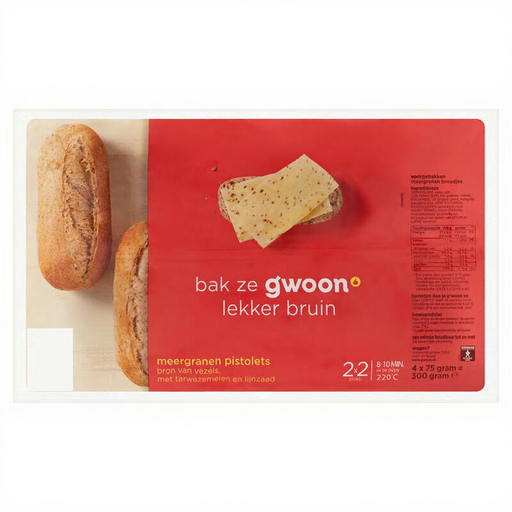 Image unavailable
g'woon Multigrain Rolls, 4 rolls
A pack of 4 multigrain rolls for anyone planning several lunches who isn’t set on the Kaiser shape.
Only compare the fibre content with other rolls once the packaging makes clear whether the amount given is per serving or per 100 g. Before packing, check the current label for gluten-containing cereals, sesame and any statements about possible traces. Remember to check your school’s rules too.
View on Joybuy
Frequently asked questions
Is a multigrain roll automatically wholemeal?
No. According to the Netherlands Nutrition Centre, multigrain refers to bread made with at least three different types of grain; it doesn’t automatically mean it contains wholemeal flour. Check the ingredients list if wholemeal matters to your choice.
Can I choose a seeded roll if gluten is a concern?
Don’t assume that a seeded roll is free from gluten-containing cereals. Check the current ingredients and allergen information for the specific product. PLUS multigrain Triangles list gluten-containing cereals and sesame.
Should I also look for ‘may contain’ statements when packing a school lunch?
Yes, if a relevant allergy or school rule applies. Check both the ingredients and any statement about possible traces on the current label, and ask your school what rules it has for packed lunches.
How can I plan rolls for several school days?
For rolls that need baking, follow the storage and preparation instructions for the product you’ve chosen. For bread, the Netherlands Nutrition Centre suggests freezing it in portions straight after buying, so you can take out the amount you need each day.
Does every roll contain iodised baker’s salt?
No. According to the Netherlands Nutrition Centre, using baker’s salt when baking isn’t compulsory. Check the ingredients for the specific roll if you want to know whether it has been used.


