If fibre is your priority, choose a roll explicitly labelled wholemeal; according to the Netherlands Nutrition Centre, wholemeal bread generally contains more fibre than white bread. If you’re mainly looking for seeds and a different texture, check the ingredients: a multigrain roll isn’t necessarily wholemeal or a seeded Kaiser roll. For a coffee break, also consider whether the person eating it enjoys a crusty texture and seeds, and check the allergens and preparation instructions for the product you choose.
Who might this choice matter to?
Older adults looking for fibre
If fibre is an important factor when choosing a roll to have with your coffee, look for one explicitly labelled wholemeal and compare the fibre content. The Netherlands Nutrition Centre lists wholemeal bread as a source of fibre; the nutritional information for each individual roll can be found in the product details.
Older adults who prioritise ease of eating
A familiar white roll may be more appealing if a firm crust or seeds are uncomfortable to eat. Consider the texture from the perspective of the person who’ll be eating it. If they have ongoing difficulties eating or chewing, it’s worth seeking personalised advice from a healthcare professional.
People shopping for someone with an allergy
If someone has an allergy or coeliac disease, the current allergen information is essential. Check the label on packaged rolls and ask for allergen information for unpackaged bread. Don’t assume a product is suitable based on its visible seeds or name.
What should you look for when choosing?
First, decide what matters most for your coffee break: fibre, ease of eating, allergens or preparation. If you’re looking for seeds, check the ingredients list separately, whatever shape of bread you choose.
| What to consider | What to check when buying | Especially relevant for |
|---|
| Fibre and wholemeal |
Look for the wholemeal label and compare fibre per 100 g on the same preparation basis. Multigrain doesn’t automatically mean wholemeal. |
I want a roll to have with my coffee, with wholemeal and fibre as my top priorities. Around 37% of consumers prioritise fibre and wholemeal. |
| Texture and ease of eating |
Check whether the person eating it enjoys a firm crust or seeds, and follow the preparation instructions for bake-at-home rolls. |
If a hard crust or seeds aren’t comfortable to eat, I mainly want a roll that’s easy to eat. Ease of eating is the top priority for around 27% of consumers. |
| Allergens and gluten-free |
Read the current ingredients, allergen information and warnings. If you need a gluten-free product, choose one explicitly labelled gluten-free. |
I’m serving someone who needs to avoid an allergen or gluten, so the suitability of the specific roll comes before its shape. Around 18% of consumers prioritise this check. |
| Preparation and quantity |
Check the preparation method and the number of rolls in the pack. For freshly baked bread, check the range available at your local branch. |
I want enough rolls for the coffee break without preparing more than I need. This is the first consideration for around 18% of consumers. |
Common mistakes
-
Assuming multigrain, wholemeal and seeded mean the same thing
A multigrain name doesn’t tell you how much wholemeal grain or fibre a roll contains. Seeds on top don’t automatically make it wholemeal either.
Check the ingredients and compare fibre per 100 g on the same preparation basis if fibre is important to you.
-
Judging by visible seeds alone
A seeded roll won’t necessarily suit someone’s allergies or preference for a softer texture.
Read the current allergen information and ask the person eating it whether they like the crust and seeds. For unpackaged bread, ask for the allergen information.
-
Relying on an old product description
Ingredients and nutritional information can change. The range of freshly baked products can also vary by branch, as Lidl points out.
Check the packaging or current product details shortly before buying or serving, especially if someone has an allergy or a specific preference for seeds.
-
Buying more rolls than you’ll serve
A pack of several bake-at-home rolls may leave you with leftovers if you’re serving a small group.
Choose a quantity that suits your guests, and check the storage instructions if you plan to keep any rolls.
Uneaten rolls need to be stored or thrown away.
Brands to compare
Check each product to see whether you’re looking at a Kaiser roll, a wholemeal option or another seeded roll. The supermarket name alone won’t tell you which it is.
Albert Heijn
Worth considering if you want to compare a wholemeal Kaiser roll with a separate gluten-free multiseed roll.
- Albert Heijn lists an AH Wholemeal Kaiser Roll and AH Gluten-Free Multiseed Rolls, 2-pack.
- The multiseed roll isn’t a Kaiser roll, so check the ingredients, nutritional information and allergens for each product.
Jumbo
Worth considering if you want to look at different types of rolls within one range.
- Jumbo lists white and frozen wholemeal Kaiser rolls, multigrain rolls and Schär gluten-free Kaiserbrötchen, among other products.
- The fact that multigrain rolls are available doesn’t tell you whether the Kaiser rolls contain seeds. Read the details for each product.
Lidl
Worth considering if you’re looking for a freshly baked Kaiser roll in store.
- Lidl includes Kaiser rolls in its range of freshly baked products.
- Lidl says this range may vary by branch. Ask for the allergen information for the roll you’re buying.
ALDI
Worth considering if you want to weigh up white Kaiser rolls against other bake-at-home rolls.
- ALDI lists white Kaiser rolls, as well as multigrain petit pains and baguettes.
- These multigrain products have a different shape, so don’t treat them as seeded Kaiser rolls.
PLUS
Worth considering if you want to compare the product information for a white Kaiser roll and a wholemeal one.
- PLUS states that its wholemeal Kaiser roll contains 67% wholemeal wheat flour and 6,9 g of fibre per 100 g.
- The white option lists iodised salt and states that it may contain sesame. Check the current information for the option you’re buying; being wholemeal or white doesn’t in itself tell you whether it contains seeds.
Dirk
Worth considering if you want to compare bake-at-home Kaiser rolls with separate multigrain products.
- Dirk lists 1 de Beste Kaiser Rolls, 4-pack, as a bake-at-home product and gives a preparation time of 6 to 8 minutes.
- If you’re looking for seeds, fibre or allergen information, check the details for the roll you choose.
Seeded bread alternatives at Joybuy
These products are alternatives for anyone who values seeds more than the classic Kaiser shape: they’re a brioche roll, baguettes and a round loaf, not Kaiser rolls. Compare their texture and preparation with what suits your coffee break.
 No image available
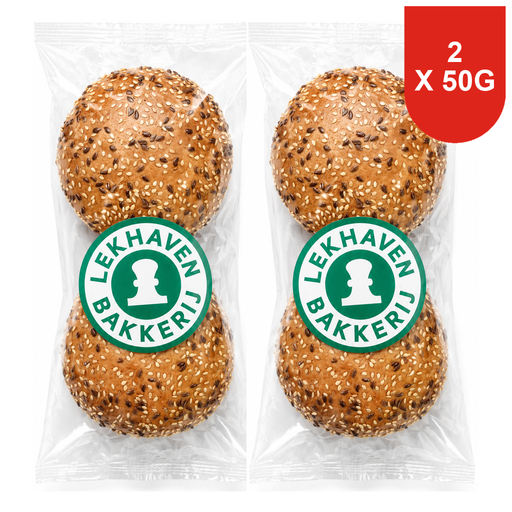
Lekhaven Bakkerij Brioche Roll Sesame/Flaxseed, 2 × 50 g
An alternative for a small coffee break if seeds matter more than the Kaiser shape. The ingredients include sesame seeds and linseed; the product information also lists milk, egg and wheat. Check the current allergen information and allow around four hours to defrost.
View at Joybuy
 No image available
Lekhaven Bakkerij Multigrain Rustic Baguette, 4 × 135 g
Four individual baguettes for anyone who wants to serve seeded bread and prefers the baguette shape. The ingredients include sunflower seeds, sesame seeds and linseed. The baguettes are baked from frozen; check the baking time on the packaging and consider whether the crust will be comfortable to eat.
View at Joybuy
 No image available
Lekhaven Bakkerij Multigrain Country Bread Round, 550 g
A round loaf to slice if you’d rather decide the portions for your coffee break yourself. The ingredients include sunflower seeds, linseed and hulled sesame seeds. The loaf needs to be defrosted, baked and cooled; check the baking time on the packaging and the current allergen information.
View at Joybuy
Frequently asked questions
Is a multiseed roll wholemeal too?
Not necessarily. The name alone doesn’t tell you how much wholemeal grain or fibre the roll contains. If fibre is a priority, look for the wholemeal label and compare the nutritional information for the products you’re considering.
Where can I check allergens in seeded rolls?
Check the packaging of pre-packed rolls, and ask for allergen information for unpackaged bread. The Netherlands Food and Consumer Product Safety Authority lists gluten-containing cereals, milk, nuts and sesame, among others, as allergens that must be declared. Also read any warnings such as ‘may contain’.
Does every Kaiser roll contain iodised salt?
Don’t assume so. PLUS lists iodised salt in its white Kaiser rolls, but you’ll need to check the ingredients list for any other roll.
How do I prepare bake-at-home Kaiser rolls for coffee?
Follow the instructions for the specific roll and allow time for it to cool. PLUS recommends baking its white Kaiser rolls for 6–8 minutes in an oven at 220 °C or for 4 minutes in a preheated air fryer at 200 °C; these settings won’t necessarily apply to other products. Before serving, consider whether the crust will be comfortable for the person eating it.


